Final Hour

(2016) A novel of Egypt’s changing times and their effects on the lives of three generations of one family Hamid Burhan, a retired government employee, and his loyal wife Saniya have built themselves a home in the quiet southern suburb of Helwan, where they raise their son and two daughters, expecting life to remain as blessed as it was in the photograph of the happy family at a picnic in a Nileside park in the early 1930s. Events in the wider world impinge—wars, revolution, peace with Israel—while Saniya and the old house in Helwan remain the bedrock of the family’s values. But everyone else is buffeted in one way or another by the tumultuous processes of change in Egyptian politics and society. In this compact novel written in 1982, Naguib Mahfouz again uses a family saga, as he did in his Cairo Trilogy, to reflect on the processes of enormous social transformation that Egypt underwent in the space of a few generations in the twentieth century.

Miramar

(2016) The master storyteller’s allegory of modern Egypt, set in an Alexandrian boarding house The setting is Alexandria in the early 1960s where six characters, all made exiles by circumstances, are brought together in the decayed elegance of the Pension Miramar. The central figure is Zohra, the beautiful peasant girl, whose relationship with the other five characters symbolically reflects the most basic political and social realities of the period.

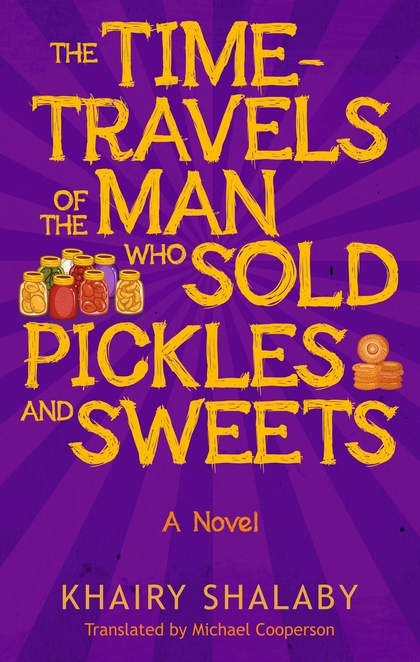
Time-Travels of the Man Who So

(2016) Ibn Shalaby, like many Egyptians, is looking for a job. Yet, unlike most of his fellow citizens, he is prone to sudden dislocations in time. Armed with his trusty briefcase and his Islamic-calendar wristwatch, he bounces uncontrollably through Egypts rich and varied past, with occasional return visits to the 1990s. Through his wild and whimsical adventures, he meets, befriends, and falls out with sultans, poets, and an assortment of celebritiesfrom Naguib Mahfouz to the founder of the city of Cairo. Khairy Shalabys nimble storytelling brings this witty odyssey to life.

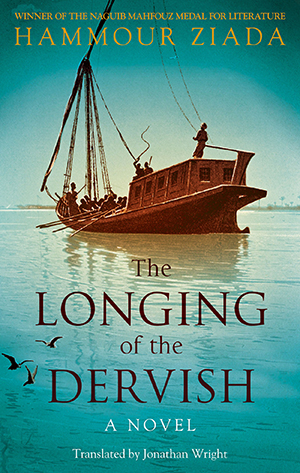
Longing of the Dervish

(2016) At the close of the nineteenth century in Sudan, freed slave Bakhit is let out of prison with the overthrow of the Mahdist state. On the brink of death, the memory of his beloved Theodora is all that has sustained him through seven years of grim incarcerationthat and his vow to avenge her killing. Set against a backdrop of war, religious fervor, and the massive social and political upheavals of the time, The Longing of the Dervish is a love story in the most unlikely of circumstances. Lyrical and evocative, Hammour Ziadas masterfully crafted novel confronts sorrow, hope, and the cruelty of fate.

Otared

(2016) Ahmed Otared is a Cairene police officer and trained sniper. When the country is invaded and occupied by a force of foreign mercenaries he joins the underground resistance, embarking on a new bloodthirsty career. As the violence he encounters and participates in intensifies, a terrifying reality, bubbling below the surface of normal life, is revealed to him, and he finds himself in a fantasia of torture and torment, a hellscape from which there is no deliverance. This unflinching and grisly tale is made vivid through Mohammed Rabies brutally beautiful writing.

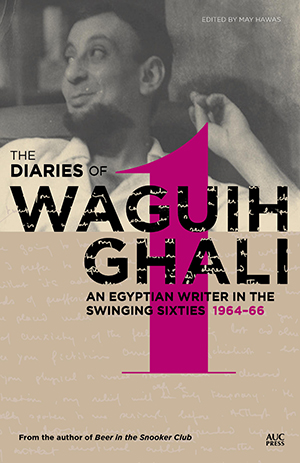
Diaries of Waguih Ghali

(2017) The captivating diaries of an Egyptian political exile, novelist, and libertine intellectual in sixties Europe

In 1968 Egyptian novelist and political exile Waguih Ghali committed suicide in the London flat of his editor, friend, and sometime lover, Diana Athill. Ghali left behind six notebooks of diaries that for decades were largely inaccessible to the public. The Diaries of Waguih Ghali: An Egyptian in the Swinging Sixties, in two volumes, is the first publication of its kind of the journals, casting fascinating light on a likable and highly enigmatic literary personality. Waguih Ghali (1930?–69), author of the acclaimed novel Beer in the Snooker Club, was a libertine, sponger, and manic depressive, but also an extraordinary writer, a pacifist, and a savvy political commentator. Covering the last four years of his life, Ghali’s Diaries offer an exciting glimpse into London’s swinging sixties. Volume 1 tells of Ghali’s life in Rheydt, West Germany, providing unique insights from the perspective of an Egyptian immigrant on postwar Germany and shedding light on Ghali’s own writing and personality when he was at the peak of his depression. This volume also includes his reminiscences of his childhood in Alexandria and Cairo, drawing in bittersweet nostalgia a picture of a bygone era in Egypt, while in the background loom what would become milestone events in his adopted countries in subsequent decades: the Treblinka trials and the gains of the National Democratic Party in Germany and the rise of the Labour Party in Britain. Including an interview conducted by Deborah Starr with celebrated literary editor Diana Athill OBE, the Diaries bring together those most familiar with Ghali’s life and work, and offer a fresh take on a distinctive author and a vibrant decade.

Final Bet

(2016) The first Arabic detective novel to be translated into English Young, handsome Othman found his ticket out of a life of desperate poverty in the slums of Casablanca when he married Sofia. Sophisticated, French, rich, and forty years his senior. But when she is brutally murdered in their bedroom one night, the police quickly zero in on Othman as the prime suspect. Set to inherit everything and with his mistress, the love of his life, waiting in the wings he certainly has motive. But is he guilty? Or is he an innocent man, framed by circumstance and an overzealous corrupt police force?

Naguib Mahfouz Reader

(2016) Naguib Mahfouz, the first and only writer of Arabic to be awarded the Nobel prize for literature, wrote prolifically from the 1930s until shortly before his death in 2006, in a variety of genres: novels, short stories, plays, screenplays, a regular weekly newspaper column, and in later life his intensely brief and evocative Dreams. His Cairo Trilogy achieved the status of a world classic, and the Swedish Academy of Letters in awarding him the 1988 Nobel prize for literature noted that Mahfouz “through works rich in nuance-now clear-sightedly realistic, now evocatively ambiguous-has formed an Arabic narrative art that applies to all mankind.”

Here Denys Johnson-Davies, described by Edward Said as “the leading Arabic-English translator of our time,” makes an essential selection of short stories and extracts from novels and other writings, to present a cross-section through time of the very best of the work of Egypt’s Nobel literature laureate

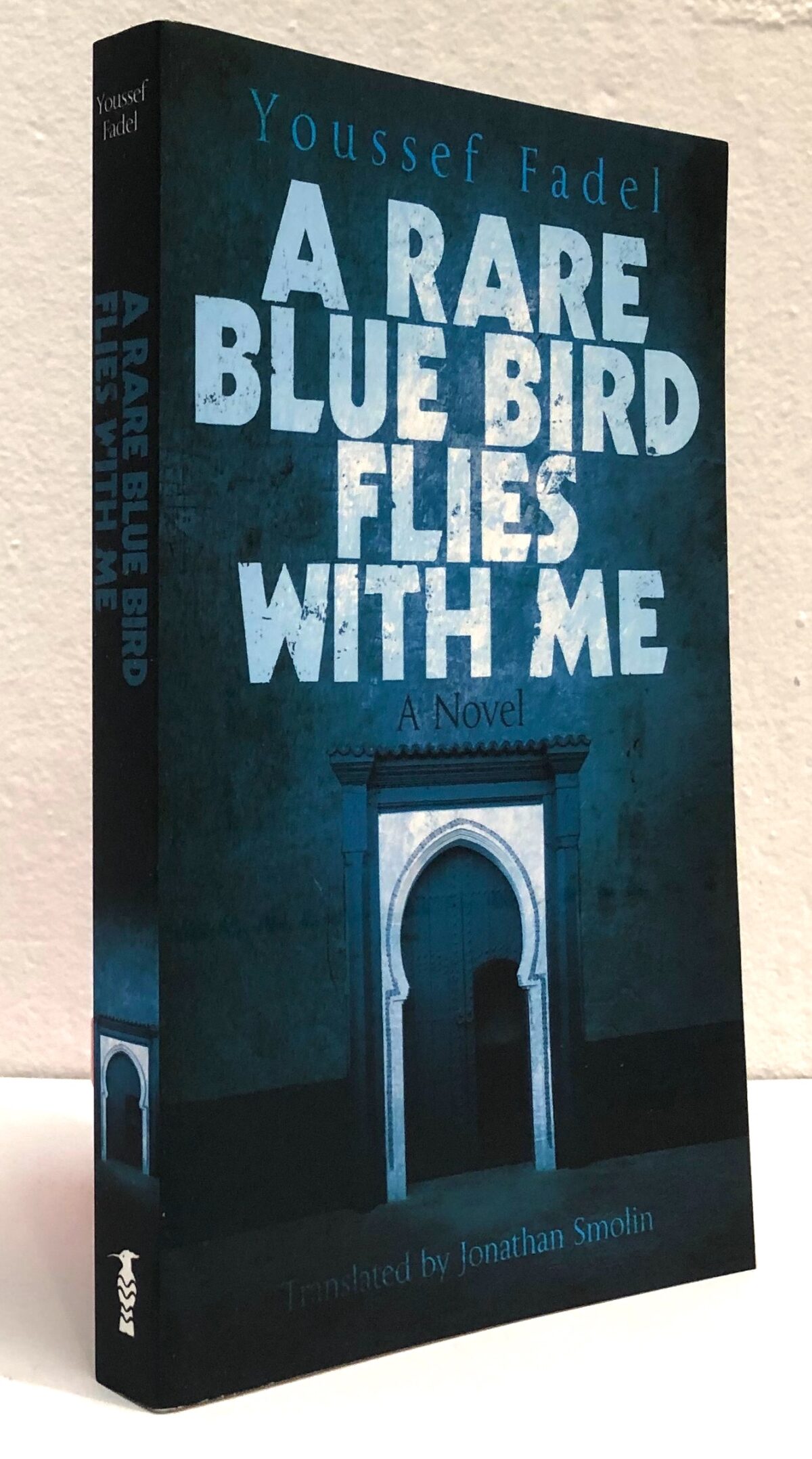
Rare Blue Bird Flies with Me

(2016) Spring, 1990. After years of searching in vain, a stranger presses a scrap of paper into Zina’s pocket. It’s from Aziz: the man who vanished the day after their wedding almost two decades ago. It propels Zina on a final quest for a secret desert jail in southern Morocco, where her husband crouches in despair, dreaming of his former life. Fadel pays powerful testament to a terrible period in Morocco’s history, known as ‘the years of cinders and lead,’ and masterfully evokes the suffering inflicted on those who supported the failed coup against King Hassan II in 1972

Whitefly

(2016) The traffickers. The drug dealers. The smugglers. They know what it takes to get a gun into Morocco, and so does Detective Laafrit. When a fourth corpse in three days washes up in Tangier with a bullet in the chest, Laafrit knows this isn’t just another ‘illegal’ who didn’t make it to the Spanish coast. As his team hunts for the murder weapon, Laafrit follows a hunch and reveals the killer at the heart of an international conspiracy. A fast-paced crime thriller from the Arab west