My Favourite Kitten

(2019) In My Favourite Kitten, older babies and toddlers can have lots of fun opening the peekaboo flaps with the easy-to-grab pull-down flaps and turning the wheel to choose their favourite character. From the cheeky kitten playing hide and seek to the sleepy kitten curled up for a nap, which kitten will your little one pick?

With delightful question-and-answer rhyme and appealing illustrations from Daniel Roode, My Favourite Kitten is sure to focus and engage even the youngest of children.

My Favourite Puppy

(2019) In My Favourite Puppy, older babies and toddlers will have lots of fun playing peekaboo with the easy-to-grab pull-down flaps and turning the wheel to choose their favourite character. From the adorable puppy with a rumbly tummy to the cheeky puppy who loves to dig, which one will your little one pick?

With a delightful question-and-answer rhyme and appealing illustrations from Daniel Roode, My Favourite Puppy is sure to focus and engage even the youngest of children.

Amazing Animals

(2018) Amazing Animals is jam-packed with novelty and features the tallest, fastest and biggest animals on our planet, from the giraffe and cheetah to the colossal blue whale. Find out how giraffes sleep, how far a kangaroo can jump, how fast a cheetah can run and much, much more!

Pairing bold, colourful scenes from illustrator Lon Lee with rhyming text and a page full of information, this is the perfect novelty book for children just starting to find out more about the world around them.

With amazing, funny facts, bright infographics and a mixture of novelties that includes 30 flaps, Amazing Animals is accessible and visual, with all facts checked by Barbara Taylor, a former Science Editor at London’s Natural History Museum

First Pharaohs

(2021) A richly illustrated account of the rulers of the first three dynasties of the ancient Egyptian civilization, written by renowned Egyptologist Aidan Dodson

The five centuries that followed the unification of Egypt around 3100 BC–the first three dynasties–were crucial in the evolution of the Egyptian state. During this time all the key elements of the civilization that would endure for three millennia were put in place, centered on the semidivine king himself. The First Pharaohs: Their Lives and Afterlives looks at what we know about the two-dozen kings (and one queen-regent) who ruled Egypt during this formative era, from the scanty evidence for the events of their reigns, through to their surviving monuments. It also considers how they were remembered under their successors, when some of the earliest kings’ names were attributed to allegedly ancient ideas and events, and the ways in which some of their monuments became tourist attractions or were even wholly repurposed.

Aidan Dodson recounts how two centuries of modern scholarship have allowed these rulers to emerge from an oblivion so total that some archaeologists had come to doubt their very existence outside the works of ancient chroniclers. Then, within a decade at the end of the nineteenth century, archaeological discoveries revealed a whole series of tombs and other monuments that not only confirmed these rulers’ existence, but also showcased the skills of Egyptian craftsmen at the dawn of history.

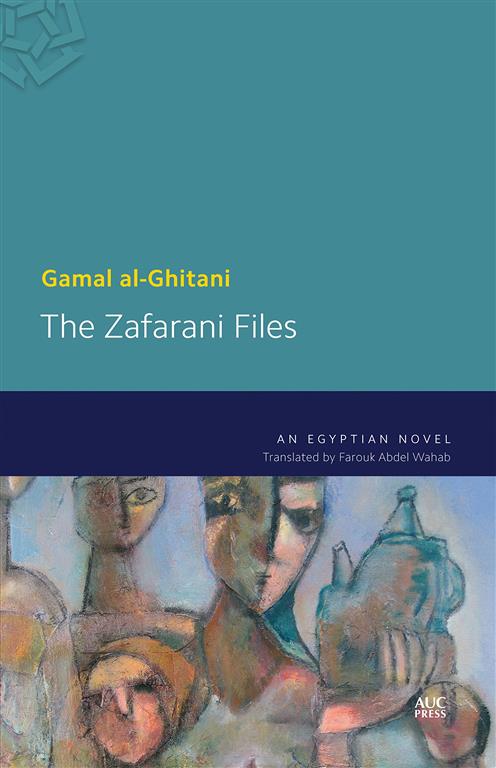
The Zafarani Files An Egyptian Novel

An unknown observer is watching the residents of a small, closely-knit neighborhood in Cairo’s old city, making notes. The college graduate, the street vendors, the political prisoner, the café owner, the taxi driver, the beautiful green-eyed young wife with the troll of a husband—all are subjects of surveillance. The watcher’s reports flow seamlessly into a narrative about Zafarani Alley, a village tucked into a corner of the city, where intrigue is the main entertainment, and everyone has a secret. Suspicion, superstition, and a wicked humor prevail in this darkly comedic novel. Drawing upon the experience of his own childhood growing up in al-Hussein, where the fictional Zafarani Alley is located, Gamal al-Ghitani has created a world richly populated with characters and situations that possess authenticity behind their veils of satire.

Illustrated Guide to Luxor Tombs ,Temples and Museums Spanish

The scale and richness of the tombs and temples on the banks of the Nile at Luxor have attracted and fascinated travelers for thousands of years. Now finally comes the vade mecum that generations of visitors would have loved to have.

The Illustrated Guide to Luxor and the Valley of the Kings, fully illustrated with superb color photographs, not only provides a comprehensive itinerary through the tombs and monuments of ancient Thebes and the museums of modern Luxor but also has extensive chapters devoted to the history of the city and Egyptian religion, as well as advice for the modern traveler on hotels and restaurants. Simple but detailed itineraries lead us first through the sites on the east bank of the Nile, including Karnak and Luxor temples, the Luxor Museum, and the Museum of Mummification. Then we cross to the west bank for a thorough exploration of the temples—the Ramesseum, Deir al-Bahari, Medinet Habu, and more—and the tombs of the Kings, the Queens, and the Nobles. A glossary of archaeological and ancient Egyptian terms and an extensive bibliography are included at the end of the book.

The combination of authoritative texts, full-color photographs, planimetric maps, and descriptions of every major tomb and monument in Luxor will facilitate and enhance any visitor’s tour of one of the world’s richest and most significant collections of archaeological sites.


The Pyramids and the Sphinx Art and Archaeology German

For centuries, the Pyramids and Great Sphinx have been the visible reminders of the power and enduring legacy of ancient Egypt. Mysterious and irresistible to the eye, these monumental structures—over eighty of which remain, scattered along the west bank of the Nile—evoke the religious system and beliefs of one of the most highly refined and evolved of ancient civilizations. Even today, we don’t entirely understand how they were constructed and what techniques were used, but the most recent research and excavations have thrown new light on life at the building sites and on the daily existence of generations of designers and craftsmen who dedicated their lives to these immense constructions. Replete with full-color photographs and drawings, this beautifully illustrated book serves as a wonderful introduction to these royal monuments. This straightforward text explains the history and significance not only of the famous Sphinx and the Pyramids of Giza—the emblems and legacy of the powerful Fourth Dynasty—but also of the lesser-known tombs that stretch from Saqqara to Meidum and Dahshur. The Pyramids and the Sphinx draws on the most recent archaeological findings to lead the reader on a discovery of the most fascinating aspects of Egyptian civilization. Here, too, are the pharaohs who ordered the pyramids’ construction, the treasures found in the most famous tombs, and the men who revealed their secrets. Combining majestic aerial shots with close-up photographs of interior artwork and statuary, this guide offers a close look at some of the most impressive monuments in human history. Also available in French, German, Italian, Russian, and Spanish.

Illustrated Guide to Luxor Tombs ,Temples and Museums German

The scale and richness of the tombs and temples on the banks of the Nile at Luxor have attracted and fascinated travelers for thousands of years. Now finally comes the vade mecum that generations of visitors would have loved to have.

The Illustrated Guide to Luxor and the Valley of the Kings, fully illustrated with superb color photographs, not only provides a comprehensive itinerary through the tombs and monuments of ancient Thebes and the museums of modern Luxor but also has extensive chapters devoted to the history of the city and Egyptian religion, as well as advice for the modern traveler on hotels and restaurants. Simple but detailed itineraries lead us first through the sites on the east bank of the Nile, including Karnak and Luxor temples, the Luxor Museum, and the Museum of Mummification. Then we cross to the west bank for a thorough exploration of the temples—the Ramesseum, Deir al-Bahari, Medinet Habu, and more—and the tombs of the Kings, the Queens, and the Nobles. A glossary of archaeological and ancient Egyptian terms and an extensive bibliography are included at the end of the book.

The combination of authoritative texts, full-color photographs, planimetric maps, and descriptions of every major tomb and monument in Luxor will facilitate and enhance any visitor’s tour of one of the world’s richest and most significant collections of archaeological sites.

Luxor and the Valley of the Kings

While all of Egypt holds archaeological riches of immeasurable importance, the priceless evidence of one the longest-lasting and most outstanding civilizations in human history, the archaeological district formed by Luxor and the Valley of the Kings is still today a historical and artistic treasure chest awaiting the modern visitor. This book takes the reader on a complete tour of these magnificent temples and tombs, with photographs, plans, and concise yet information-laden texts. Fully illustrated with more than 300 color photographs and maps and plans, Luxor and the Valley of the Kings covers the archaeological riches of ancient Thebes in depth, with comprehensive chapters on Luxor’s splendid Karnak and Luxor temples, as well as the treasures of ancient Thebes preserved in the Luxor Museum. The ‘land of the dead,’ stretching out on the Theban west bank, is represented by the mortuary temples of the pharaohs, including those of Hatshepsut, Amenhotep III, Seti I, Ramesses II, and Ramesses III. In addition, numerous tombs in the Valley of the Kings and the Valley of the Queens are shown in detail, as well as the colorful tombs at Deir al-Medina and in the private necropolises. Through a review of the most important sites, the splendid works of art contained in the tombs, and the most recent archaeological discoveries, this book reconstructs historical events buried for centuries under the sand and offers the reader a fabulous voyage through ancient Egypt.

Abu Simbel, Aswan, and the Nubian

In ancient times, Egypt’s influence extended over Nubia, a vast geographical area that starts south of Aswan and ends at the confluence of the White Nile and the Blue Nile. Because of its strategic importance, the area of Nubia around Lake Nasser and Aswan is full of archaeological treasures and impressive monuments. This fully illustrated book gives a concise history of the exploration of Nubia and the sites and temples of Lower Nubia, as well as explaining in depth the archaeological rescue mission that captured the world’s imagination in the 1960s: the salvage of Abu Simbel and the Nubian temples. Detailed descriptions, plans, maps, and photographs are given of all the sites involved, including the temples that were dismantled and rebuilt in new locations above the rising waters, as well as those that were donated in thanks to nations assisting in the rescue. The most up-to-date scientific research, color photographs, and maps allow the reader to make a virtual visit to the archaeological sites and absorb the history of Nubia in all its complexity.