An Artist in Abydos: The Life and Letters of Myrtle Broome

An Artist in Abydos is the first book to recognize Myrtle Broome’s great contribution to the work done during this golden age of excavation in Upper Egypt. In this remarkable account, Lee Young tells the story of Broome, who died in 1978, largely through her letters. An only child and a prolific writer, Broome wanted her parents to know every facet of her life in Egypt. Her frequent letters to them vividly capture life in the villages, the traditions of the local people, the work of artisans, such as weaving and pot-making, and festivals, ceremonies, and music. In fascinating detail, the letters also depict Broome’s living conditions providing us with a personal account of what it was like to be an English, working woman living abroad in Egypt in the 1930s.
Myrtle Florence Broome was born in 1888 to artistically inclined middle-class parents in the district of Holborn in London. Between 1911 and 1913, she studied at University College London under the legendary Sir William Petrie. In 1927 she was invited to join the excavations at Qau el-Kebir as an artist for the British School of Archaeology in Egypt, later traveling, in 1929, to work at the now famous Seti Temple in Abydos for the Egypt Exploration Society. Broome spent eight seasons there, copying the painted scenes in the Temple. Regarded then as one of the greatest copyists working in Egypt, she left invaluable renditions of some of ancient Egypt’s most beautiful monuments.

The Pyramids: The Archaeology and History of Egypt’s Iconic Monuments

A pyramid, as the posthumous residence of a king and the place of his eternal cult, was just a single, if dominant, part of a larger complex of structures with specific religious, economic, and administrative functions. The first royal pyramid in Egypt was built at the beginning of the Third Dynasty (ca. 2592–2544 BC) by Horus Netjerykhet, later called Djoser, while the last pyramid was the work of Ahmose I, the first king of the Eighteenth Dynasty (ca. 1539–1292 BC).
Nearly two decades have passed since distinguished Egyptologist Miroslav Verner’s seminal The Pyramids was first published. In that time, fresh explorations and new sophisticated technologies have contributed to ever more detailed and compelling discussions around Egypt’s enigmatic and most celebrated of ancient monuments. In this newly revised and updated edition, including color photographs for the first time, Verner brings his rich erudition and long years of site experience to bear on all the latest discoveries and archaeological and historical aspects of over 70 of Egypt’s and Sudan’s pyramids in the broader context of their more than one-thousand-year-long development.
Lucidly written, with 300 illustrations, and filled with gripping insights, this comprehensive study illuminates an era that is both millennia away and vividly immediate.

The Precinct of Mut At South Karnak: An Archaeological Guide

Mut was an important deity perhaps best known as the consort of Amun-Re and the mother of Khonsu, but her earlier and far more independent role was as the daughter of the sun god, much akin to Hathor. Like Nekhbet and Wadjet and the other lioness goddesses (referred to as Sekhmet) she was the “Eye of Re,” who could be both benign and dangerous. In human form, Mut protected the king and his office; as Sekhmet she could destroy Egypt if not pacified.
The Mut precinct was a major religious center from the Eighteenth Dynasty to the Roman Period, but evidence suggests the existence of an even earlier temple. It expanded during the reign of the Kushite king, Taharqa and attained its present size during the fourth century BCE, sheltering three major temples, several small chapels, and eventually, a village within the protection of its massive enclosure walls. One of its most striking features is the hundreds of Sekhmet statues.
In 1976, the Brooklyn Museum began the first systematic exploration of the precinct as a whole. Since 2001, Brooklyn has shared the site with an expedition from the Johns Hopkins University, both teams working cooperatively toward the same goal.
This richly illustrated guide seeks to bring the goddess and her temple precinct the attention they deserve.

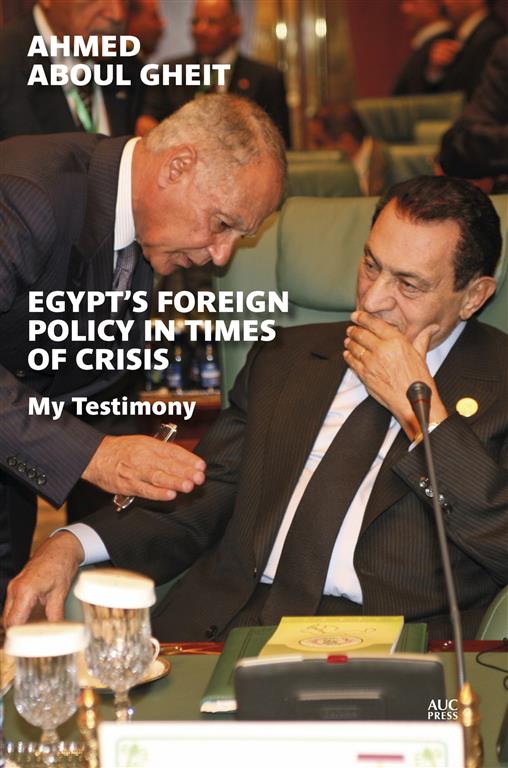
Egypt’s Foreign Policy in Times of Crisis

Ahmed Aboul Gheit served as Egypt’s minister of foreign affairs under President Hosni Mubarak from 2004 until 2011. In this compelling memoir, he takes us inside the momentous years of his time in office, revealing the complexities and challenges of foreign-policy decision-making and the intricacies of interpersonal relations at the highest levels of international diplomacy.
Readable, discerning, often candid, Egypt’s Foreign Policy in Times of Crisis brims with minutiae of Aboul Gheit’s working relationship with the Egyptian president and his encounters with both his own colleagues and politicians on the world stage, providing rich behind-the-scenes insight into the machinery of government and the interplay of power and personality within. He paints a vivid picture of Egyptian–U.S. relations during the challenging years that followed September 11 and the 2003 U.S. invasion of Iraq, as we navigate the bumpy terrain of negotiations, discussions, and private meetings with the likes of Colin Powell, Condoleezza Rice, Dick Cheney, and Hillary Clinton. Successive attempts by Egypt to revive Palestinian–Israeli negotiations, U.S. assistance to Egypt, and the issue of NGO funding get full play in his account, as do other matters of paramount concern, not least Egypt’s strenuous attempts to reach an agreement with fellow riparian states over the sharing of the Nile waters; Sudan, Libya, and Cairo’s engagement with the wider African continent; the often tense negotiations surrounding UN Security Council reform; and relations with Iran and the Gulf states.
More than a memoir, this book by a senior statesman and veteran of Egypt’s foreign affairs is a tour de force of Middle Eastern politics and international relations in the first decade of the twenty-first century and an account of the powers and practice of one of Egypt’s most stable and durable institutions of state.

The Architecture of Ramses Wissa Wassef

The pioneering Egyptian architect and teacher Ramses Wissa Wassef (1911–74) is best known for his founding in 1951 of the Ramses Wissa Wassef Art Center in Harraniya, a small village near the Giza Pyramids in Greater Cairo. The center, internationally acclaimed for its tapestries and sculptures, began partly as an art school for young villagers, reflecting Wissa Wassef’s aim of reviving traditional Egyptian architecture and crafts, and his belief in the innate creative power and potential of children.

Less well known are Wissa Wassef’s prolific architectural output and his efforts and influence beyond the confines of the Harraniya center to promote artistic expression among Egyptian youth. This generously illustrated volume is the first comprehensive survey of Wissa Wassef’s architectural works, both extant and non-extant, shedding light on his legacy and significant engagement with vernacular and contemporary Egyptian architecture. Wissa Wassef renounced self-promotion and monetary reward in his work, placing human physical and psychological well-being at the center of his architectural philosophy. An astute observer and modest personality, he saw himself as part of the people and began experimenting with participatory design and people-centered architecture before they became popular.

The Architecture of Ramses Wissa Wassef reveals Wissa Wassef’s profuse architectural oeuvre, which spanned private villas and rural houses, as well as public buildings, such as churches, schools, and museums, highlighting his rich contribution to Egypt’s architectural heritage at a moment when that heritage is at risk of being lost.

Lughatuna al-Fusha A New Course in Modern Standard Arabic

Modern Standard Arabic (MSA) is the literary language of today’s books, media, and formal communication throughout the Arab world, the region’s principal shared language of written and official discourse. The sixth book in this new series for the classroom is designed for the Advanced levels, the mid- and high-advanced stages of the ACTFL proficiency level, and C1 in the Common European Framework for Arabic learners. The aim of this book is to help students to read and write long and complex factual and literary texts in order to appreciate different writing styles. Its main feature is the tools it gives students to allow them to learn how to debate and discuss different ideas, describe problems, and present solutions to those problems with the use of idioms and expressions.
The students’ facility with sentence structure and vocabulary is increased by reading newspapers and listening to news broadcasts, and by writing about real-life interests such as social, economic, political, human rights, and gender issues. The chapters guide students through the gradual acquisition of vocabulary and grammar. Exercises at the end of each chapter cover all essential skills, with emphasis on reading, writing, and discussion. The accompanying DVD includes audio material for all listening activities, dialogs, and reading exercises. The book is further supported by online interactive reading and writing drills, and authentic television debate programs.

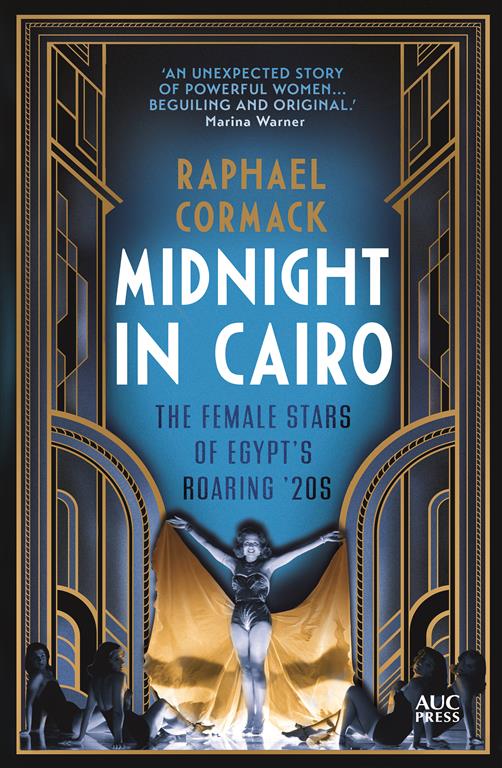
Midnight in Cairo

1920s Cairo saw singers pressing hit records, new theaters and dramatic troupes springing up, and cabarets packed—a counter-culture was on the rise. In bars, hash-dens and music halls, people of all classes and backgrounds came together as a passionate group of eccentrics, narcissists, and idealists strove to entertain Egyptian society.
Of these performers, Cairo’s biggest stars were female, and they asserted themselves on the stage like never before. Two of the most famous troupes were run by women; Badia Masabni’s dancehall became the hottest nightspot in town; pioneer of Egyptian cinema Aziza Amir made her stage debut; and legendary singer Umm Kulthum first rose to fame. It is these women, who knew both the opportunities and prejudices that this world offered, who best reveal this cosmopolitan and raucous city’s secrets.
Introducing a thrilling cast of characters, Midnight in Cairo reveals a world of revolutionary ideas and provocative art—one which laid the foundations of Arab popular culture today. It is a story of modern Cairo as we have never known it before.

Sacred Flames

(2021) A fascinating examination of the role of lighting in ancient Egyptian culture

Artificial lighting is one of the earliest tools used by humans. By the time we began to paint cave walls, we were producing lamps consisting of an illuminant, a fat or oil, and a wick, such as a strip of fabric or a piece of reed or wood.

Drawing on archaeological, textual, and iconographic sources, Meghan Strong examines the symbolic part that artificial lighting played in religious, economic, and social spheres in ancient Egyptian culture. From the earliest identifiable examples of lighting devices to the infiltration of Hellenistic lamps in the seventh century BC, Sacred Flames explores the sensory experience of illumination in ancient Egypt, the shadows, sheen, color, and movement that resulted when lighting interacted with different spaces and surfaces. The soft, flickering light from lamps or hand-held lighting devices not only facilitated the navigation of darkened environments, such as allowing workers to see in underground chambers in the Valley of the Kings, or served as temple offerings, but also impacted upon the viewer’s perception of a space and the objects within it.

Sacred Flames illustrates the active role that lighting played in Egyptian society, providing a richer understanding of the symbolic and social value of artificial light and the role of lighting in ritual space and performance in ancient Egyptian culture, while serving as a case study of the broader impact of artificial light in the ancient world.

Dealing with the Dead in Ancie

(2021) An intimate look at the true story of the funerary business of a Theban mortuary priest 2800 years ago as unearthed by an ancient papyrus

Petebaste son of Peteamunip, the choachyte, or water-pourer, lived during the first half of the seventh century BCE in the reigns of the Twenty-fifth Dynasty Kushite kings Shabaka and Taharqa and was responsible for the comfortable and carefree afterlife of his deceased clients by bringing their weekly libations.

But Petebaste was also responsible for a wide range of other activities–he provided a tomb to the family of the deceased, managed the costs of the personnel and commodities, and took care of all necessary paperwork, while also tending to the gruesome preparation of the mortal remains of the deceased.

Drawing on an archive of eight abnormal hieratic papyri in the Louvre that deal specifically with the affairs of a single family, Donker van Heel takes a deep dive into the business dealings of this Theban mortuary priest. In intimate detail, he illuminates the final stage of the embalming and coffining process of a woman called Taperet (‘Mrs. Seedcorn’) on the night before she would be taken from the embalming workshop to her final resting place, providing fascinating insight into the practical day-to-day aspects of funerary practices in ancient Egypt.

Afterlives of Egyptian History

(2021) An examination of the myriad lifetimes lived by ancient Egyptian artifacts

Egypt has a particular longue durée, a continuity of preservation in deep time, not seen in other parts of the world. Over the centuries, ancient buildings have been adopted for purposes that differed from the original. Temple sites have been transformed into places of worship for new deities or turned into houses and tombs. Tombs, in turn, have been adapted to function as human dwellings already in the Late Antique Period.

The Afterlives of Egyptian History expands on the traditional academic approach of studying the original function and sociopolitical circumstances of ancient Egyptian objects, texts, and sites to examine their secondary lives by exploring their reuse, modification, and reinterpretation.

Written in honor of the Egyptologist, Edward Bleiberg, this volume brings together a group of luminous scholars from a wide range of fields, including Egyptian archaeology, philology, conservation, and art, to explore the historical circumstances, as well as political and economic situations, of people who have come into contact with ancient Egypt, both in antiquity and in more recent times.

Contributor Affiliations:

Yekaterina Barbash, Brooklyn Museum, Brooklyn, NY USA

Lisa Bruno, Brooklyn Museum, Brooklyn, NY USA

Simon Connor, F.R.S.–FNRS, Brussels, Belgium and University of Liege, Liege, Belgium

Kathlyn (Kara) Cooney, UCLA, Los Angeles, CA USA

Richard Fazzini, Brooklyn Museum, Brooklyn, NY USA

Peter Lacovara, Ancient Egyptian Archaeology and Heritage Fund, Albany, NY USA

Ronald J. Leprohon, University of Toronto, Canada

Mary McKercher, Brooklyn Museum, Brooklyn, NY USA

Edmund Meltzer, Pacifica Graduate Institute, Carpinteria, California USA

Joachim Friedrich Quack, Heidelberg University, Tiffin, Ohio USA

Paul Edmund Stanwick, independent scholar, New York, NY USA

Emily Teeter, University of Chicago, Chicago, IL USA

Kathy Zurek-Doule, Brooklyn Museum, Brooklyn, NY USA