

Archives

(2009) New updated and expanded edition of the groundbreaking book that ignited a firestorm in the scientific world with its radical approach to evolution – Explains how past forms and behaviors of organisms determine those of similar organisms in the present through morphic resonance – Reveals the nonmaterial connections that allow direct communication across time and space When A New Science of Life was first published the British journal Nature called it “the best candidate for burning there has been for many years.” The book called into question the prevailing mechanistic theory of life when its author, Rupert Sheldrake, a former research fellow of the Royal Society, proposed that morphogenetic fields are responsible for the characteristic form and organization of systems in biology, chemistry, and physics–and that they have measurable physical effects. Using his theory of morphic resonance, Sheldrake was able to reinterpret the regularities of nature as being more like habits than immutable laws, offering a new understanding of life and consciousness. In the years since its first publication, Sheldrake has continued his research to demonstrate that the past forms and behavior of organisms influence present organisms through direct immaterial connections across time and space. This can explain why new chemicals become easier to crystallize all over the world the more often their crystals have already formed, and why when laboratory rats have learned how to navigate a maze in one place, rats elsewhere appear to learn it more easily. With more than two decades of new research and data, Rupert Sheldrake makes an even stronger case for the validity of the theory of formative causation that can radically transform how we see our world and our future.

(2017) “Significant…The book is both instructive and surprisingly moving.” -The New York Times Ray Dalio, one of the world’s most successful investors and entrepreneurs, shares the unconventional principles that he’s developed, refined, and used over the past forty years to create unique results in both life and business-and which any person or organization can adopt to help achieve their goals. In 1975, Ray Dalio founded an investment firm, Bridgewater Associates, out of his two-bedroom apartment in New York City. Forty years later, Bridgewater has made more money for its clients than any other hedge fund in history and grown into the fifth most important private company in the United States, according to Fortune magazine. Dalio himself has been named to Time magazine’s list of the 100 most influential people in the world. Along the way, Dalio discovered a set of unique principles that have led to Bridgewater’s exceptionally effective culture, which he describes as “an idea meritocracy that strives to achieve meaningful work and meaningful relationships through radical transparency.” It is these principles, and not anything special about Dalio-who grew up an ordinary kid in a middle-class Long Island neighborhood-that he believes are the reason behind his success. In Principles, Dalio shares what he’s learned over the course of his remarkable career. He argues that life, management, economics, and investing can all be systemized into rules and understood like machines. The book’s hundreds of practical lessons, which are built around his cornerstones of “radical truth” and “radical transparency,” include Dalio laying out the most effective ways for individuals and organizations to make decisions, approach challenges, and build strong teams. He also describes the innovative tools the firm uses to bring an idea meritocracy to life, such as creating “baseball cards” for all employees that distill their strengths and weaknesses, and employing computerized decision-making systems to make believability-weighted decisions. While the book brims with novel ideas for organizations and institutions, Principles also offers a clear, straightforward approach to decision-making that Dalio believes anyone can apply, no matter what they’re seeking to achieve. Here, from a man who has been called both “the Steve Jobs of investing” and “the philosopher king of the financial universe” (CIO magazine), is a rare opportunity to gain proven advice unlike anything you’ll find in the conventional business press.

(2019) A rich, poetic, and socially relevant version of the great spiritual and philosophical classic of Taoism from one of America’s leading literary figures. In this landmark modern-day rendition of the ancient Taoist classic, Ursula K. Le Guin presents Lao Tzu’s time-honored and astonishingly powerful philosophy like never before. Drawing on a lifetime of contemplation and including extensive personal commentary throughout, she offers an unparalleled window into the text’s awe-inspiring, immediately relatable teachings and their inestimable value for our troubled world.
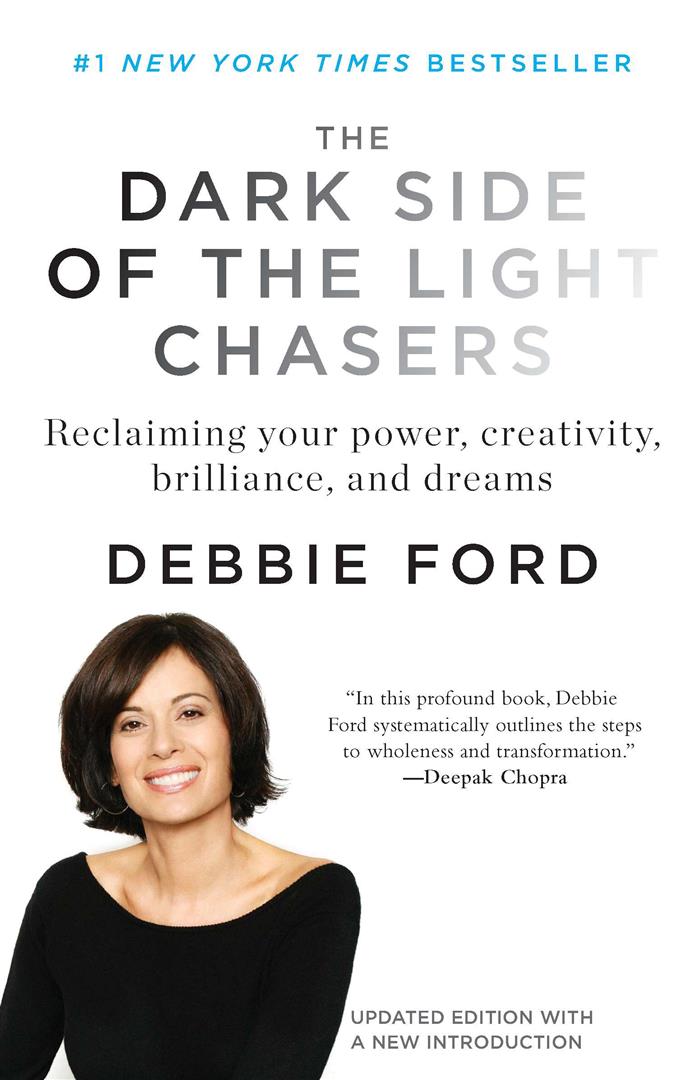
(2010) Debbie Ford believes that we each hold within us a trace of every human characteristic that exists, the capacity for every human emotion. We are born with the ability to express this entire spectrum of characteristics. But, Ford points out, our families and our society send us strong messages about which ones are good and bad. So when certain impulses arise, we deny them instead of confronting them, giving them a healthy voice, then letting them go.
It is to these feelings that Ford turns our attention, these parts of our selves that don’t fit the personae we have created for the rest of the world. She shows us the effects of living in the dark, of keeping all our supposedly unsavory impulses under wraps. We find ourselves disproportionately frustrated and angry at the selfishness of friends, the laziness of colleagues, the arrogance of siblings. When we are unable to reconcile similar impulses in ourselves, Ford explains, we waste our own energy judging others instead of empathizing. But most important, we deny ourselves the power and freedom of living authentically.
Through the stories and exercises in The Dark Side of the Light Chasers, Debbie Ford shows us not only how to recognize our hidden emotions, but also how to find the gifts they offer us. This is for fans of Marianne Williamson, Neale Donald Walsch, and Deepak Chopra. The very impulses we most fear may be the key to what is lacking in our lives.

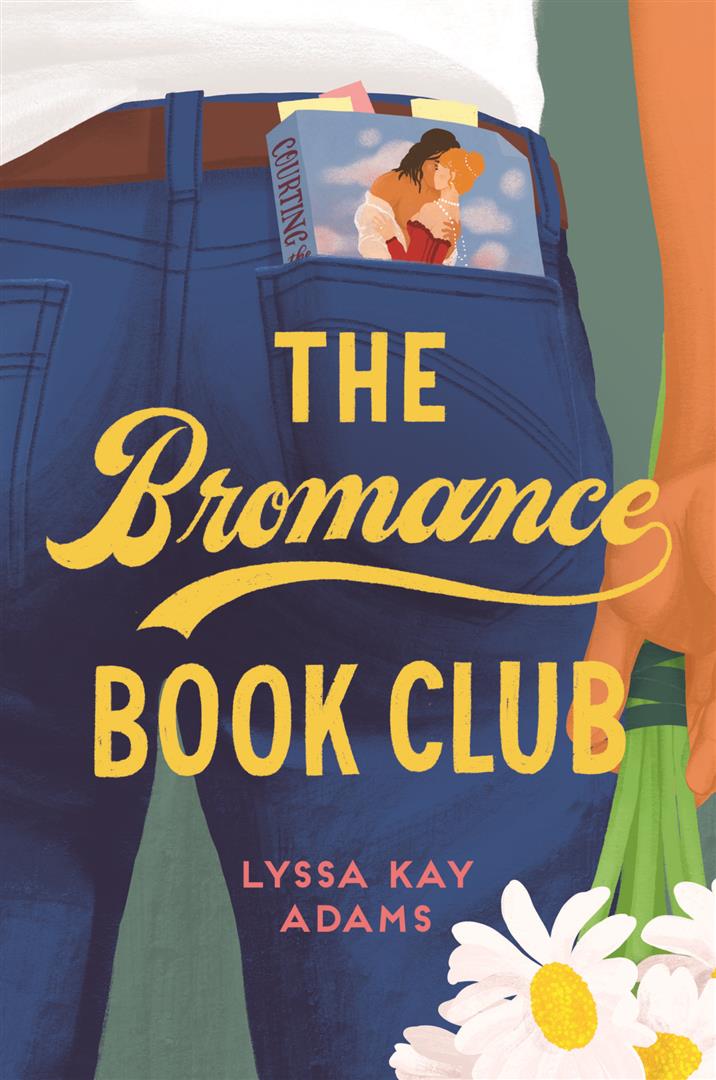
(2019) The first rule of book club: You don’t talk about book club. Nashville Legends second baseman Gavin Scott’s marriage is in major league trouble. He’s recently discovered a humiliating secret: his wife Thea has always faked the Big O. When he loses his cool at the revelation, it’s the final straw on their already strained relationship. Thea asks for a divorce, and Gavin realizes he’s let his pride and fear get the better of him. Welcome to the Bromance Book Club. Distraught and desperate, Gavin finds help from an unlikely source: a secret romance book club made up of Nashville’s top alpha men. With the help of their current read, a steamy Regency titled Courting the Countess, the guys coach Gavin on saving his marriage. But it’ll take a lot more than flowery words and grand gestures for this hapless Romeo to find his inner hero and win back the trust of his wife.

(2020) “This book, practical and realistic as well as visionary, will keep that positive message before the reader’s eyes. Joy is after all one of the best motivations we can have for change.” – Dr Rowan Williams.
Finally! A book about saving our planet that is fast, funny and inspiring too. Written in short chapters for busy people, Isabel doesn’t bother with an examination of the problem but gets right on with the solutions. Her aim: to look for every single way we can take care of the planet; how we live and work, travel, shop, eat, drink, dress, vote, play, volunteer, bank – everything. And to do this wholeheartedly, energetically and joyfully.
Beginning with losing her cool in a restaurant that will only provide plastic cutlery, Isabel journeys through native tree planting in the Highlands of Scotland, playing Samba drums with Extinction Rebellion, interviewing in person the people that supply her energy and food – through every solution she can find – until both narrator and reader are fully equipped to be part of the pollution solution.
“She gave my spirit a lift and my feet somewhere to stand.” – Sir Mark Rylance

(2011) Murder mystery, family saga, love story, and financial intrigue combine into one satisfyingly complex and entertainingly atmospheric novel, the first in Stieg Larsson’s thrilling Millenium series featuring Lisbeth Salander.
Harriet Vanger, a scion of one of Sweden’s wealthiest families disappeared over forty years ago. All these years later, her aged uncle continues to seek the truth. He hires Mikael Blomkvist, a crusading journalist recently trapped by a libel conviction, to investigate. He is aided by the pierced and tattooed punk prodigy Lisbeth Salander. Together they tap into a vein of unfathomable iniquity and astonishing corruption.

(2018) The greatest haunted house story ever written and the inspiration for a 10-part Netflix series directed by Mike Flanagan and starring Michiel Huisman, Carla Gugino, and Timothy Hutton. First published in 1959, Shirley Jackson’s The Haunting of Hill House has been hailed as a perfect work of unnerving terror. It is the story of four seekers who
arrive at a notoriously unfriendly pile called Hill House: Dr. Montague, an occult
scholar looking for solid evidence of a haunting; Theodora, his lighthearted
assistant; Eleanor, a friendless, fragile young woman well acquainted with
poltergeists; and Luke, the future heir of Hill House. At first, their stay seems
destined to be merely a spooky encounter with inexplicable phenomena. But Hill
House is gathering its powers–and soon it will choose one of them to make its
own.