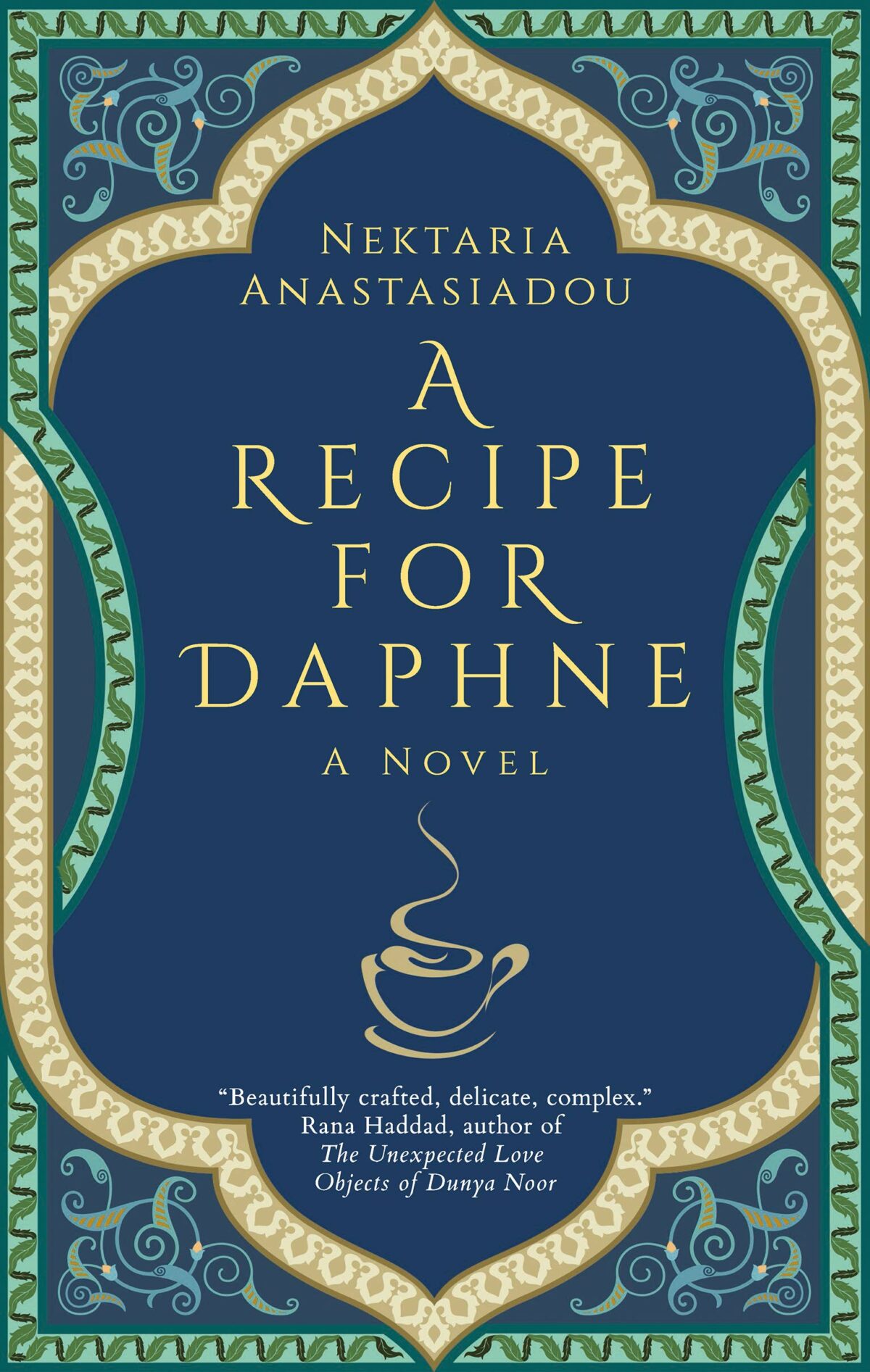
A Recipe For Daphne

An American-born traveler to one of Istanbul’s oldest communities receives an unexpected welcome in this heart-warming and romantic debut
Fanis, a charming widower with an eye for the ladies, is at the center of a dwindling yet stubbornly proud community of Rum, Greek Orthodox Christians, who have lived in Istanbul for centuries.

Daphne, the American-born niece of an old friend, arrives in the city in search of her roots. She is met with a hearty welcome and, as a beautiful yet aloof outsider, she turns many heads.

Kosmas, a master pastry chef on the lookout for a good Rum wife, falls instantly in love with Daphne. Fanis is smitten too, but finds himself disturbed by memories of the 1955 pogrom and the fiancée he lost.

Can Kosmas win Daphne’s affections? Or will a family secret, one deeply rooted in the painful history of the city itself, threaten their chances?

This story of love, hopeful new beginnings, and ancient traditions introduces a sparkling new literary voice sure to transport and entertain.
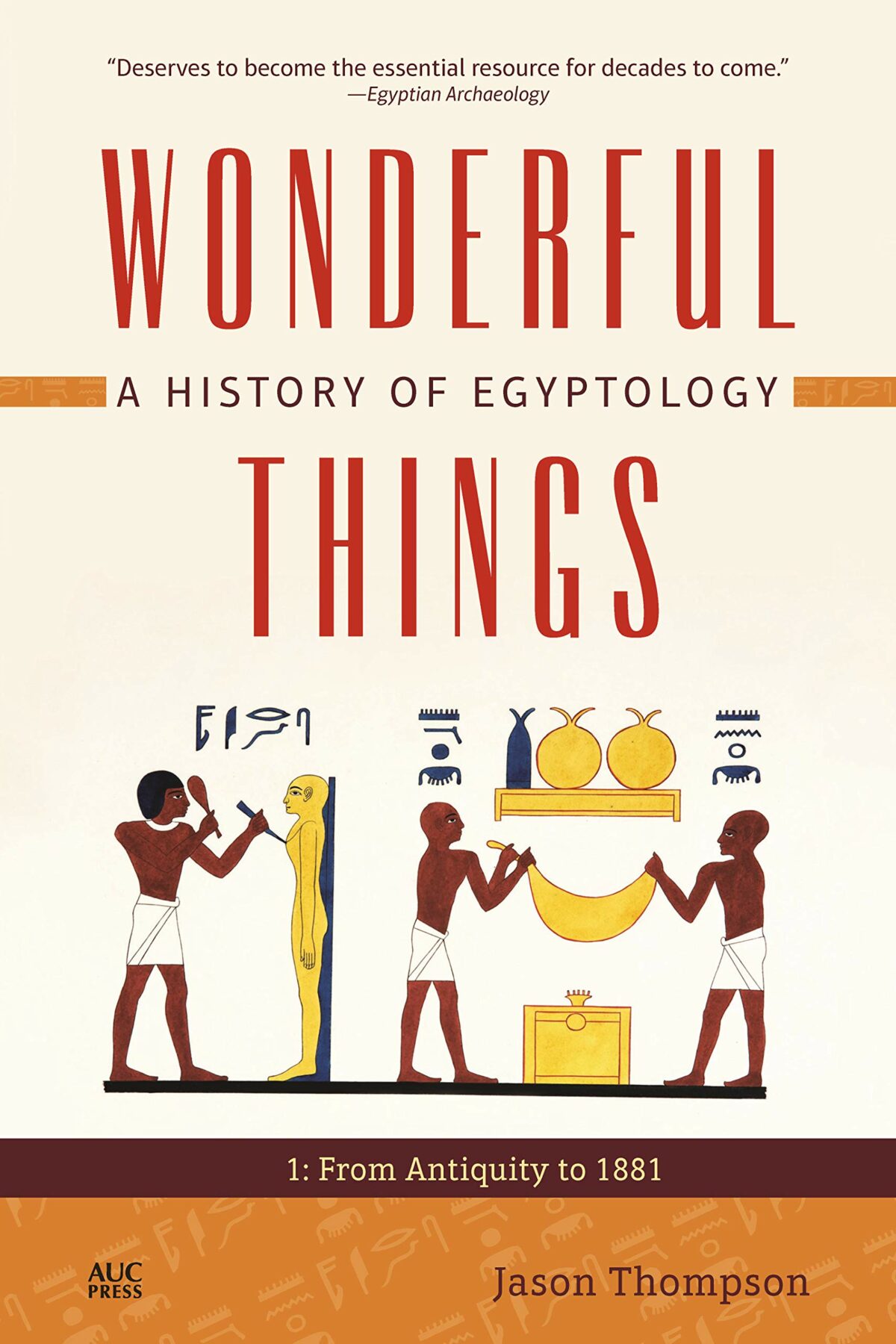
Wonderful Things: A History of Egyptology: 1: From Antiquity to 1881

The discovery of ancient Egypt and the development of Egyptology are momentous events in intellectual and cultural history. The history of Egyptology is the story of the people, famous and obscure, who constructed the picture of ancient Egypt that we have today, recovered the Egyptian past while inventing it anew, and made a lost civilization comprehensible to generations of enchanted readers and viewers thousands of years later. This, the first of a three-volume survey of the history of Egyptology, follows the fascination with ancient Egypt from antiquity until 1881, tracing the recovery of ancient Egypt and its impact on the human imagination in a saga filled with intriguing mysteries, great discoveries, and scholarly creativity. Wonderful Things affirms that the history of ancient Egypt has proved continually fascinating, but it also demonstrates that the history of Egyptology is no less so. Only by understanding how Egyptology has developed can we truly understand the Egyptian past.

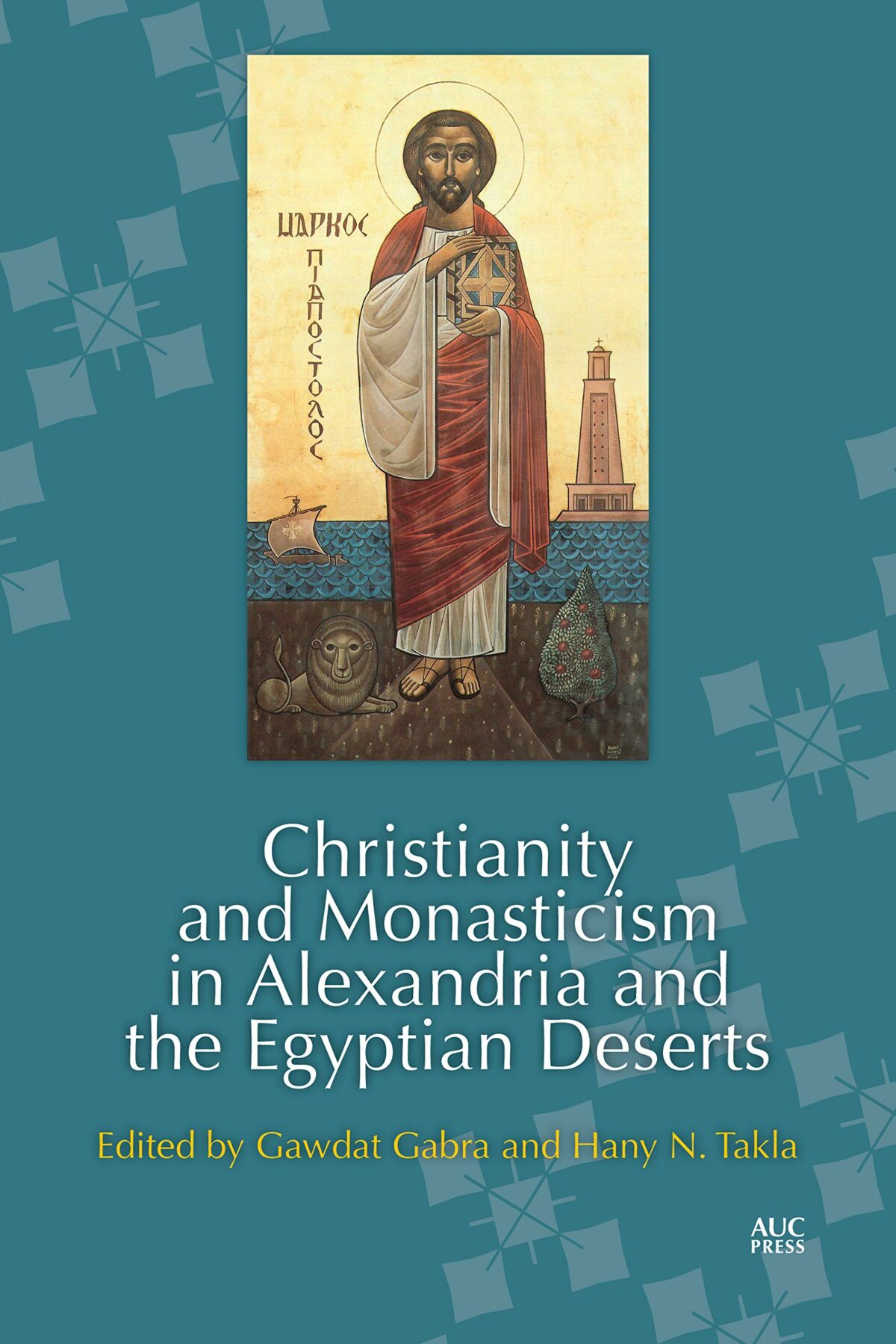
Christianity And Monasticism in Alexandria and the Egyptian Deserts

The great city of Alexandria is undoubtedly the cradle of Egyptian Christianity, where the Catechetical School was established in the second century and became a leading center in the study of biblical exegesis and theology. According to tradition St. Mark the Evangelist brought Christianity to Alexandria in the middle of the first century and was martyred in that city, which was to become the residence of Egypt’s Coptic patriarchs for nearly eleven centuries. By the fourth century Egyptian monasticism had begun to flourish in the Egyptian deserts and countryside. The contributors to this volume, international specialists in Coptology from around the world, examine the various aspects of Coptic civilization in Alexandria and its environs and in the Egyptian deserts over the past two millennia. The contributions explore Coptic art, archaeology, architecture, language, and literature. The impact of Alexandrian theology and its cultural heritage as well as the archaeology of its university are highlighted. Christian epigraphy in the Kharga Oasis, the art and architecture of the Bagawat cemetery, and the archaeological site of Kellis (Ismant al-Kharab) with its Manichaean texts are also discussed.

Missions Impossible: Higher Education And Policymaking In The Arab World

None of the momentous challenges Arab universities face is unique either in kind or degree. Other societies exhibit some of the same pathologies—insufficient resources, high drop-out rates, feeble contributions to research and development, inappropriate skill formation for existing job markets, weak research incentive structures, weak institutional autonomy, and co-optation into the political order. But, it may be that the concentration of these pathologies and their depth is what sets the Arab world apart.

Missions Impossible seeks to explain the process of policymaking in higher education in the Arab world, a process that is shaped by the region’s politics of autocratic rule. Higher education in the Arab world is directly linked to crises in economic growth, social inequality and, as a result, regime survival. If unsuccessful, higher education could be the catalyst to regime collapse. If successful, it could be the catalyst to sustained growth and innovation—but that, too, could unleash forces that the region’s autocrats are unable to control. Leaders are risk-averse and therefore implement policies that tame the universities politically but in the process sap their capabilities for innovation and knowledge creation. The result is suboptimal and, argues John Waterbury in this thought-provoking study, unsustainable.

Skillfully integrating international debates on higher education with rich and empirically informed analysis of the governance and finance of higher education in the Arab world today, Missions Impossible explores and dissects the manifold dilemmas that lie at the heart of educational reform and examines possible paths forward.

Description Of Egypt

The launching of this hitherto unpublished book by the great nineteenth-century British traveler Edward William Lane (1801–76), a name known to almost everyone in all the many fields of Middle East studies, is a major publishing event. Lane was the author of a number of highly influential works: An Account of the Manners and Customs of the Modern Egyptians (1836), his translation of The Thousand and One Nights (1839–41), Selections from the Kur-an (1843), and the Arabic–English Lexicon (1863–93). Yet one of his greatest works was never published: after years of labor and despite an enthusiastic reception by the publishing firm of John Murray in 1831, publication of his first book, Description of Egypt, was delayed and eventually dropped, mainly for financial reasons. The manuscript was sold to the British Library by Lane’s widow in 1891, and has only now been salvaged for publication by Dr. Jason Thompson, nearly 170 years after its completion. This enormously important book, which takes the form of a journey through Egypt from north to south, with descriptions of all the ancient monuments and contemporary life that Lane explored along the way, will be of immense interest to both ancient and modern historians of Egypt, and will become an essential companion to his Manners and Customs.

Egypt’s Housing Crisis The Shaping of Urban Space

Along with football and religion, housing is a fundamental cornerstone of Egyptian life: it can make or break marriage proposals, invigorate or slow down the economy, and popularize or embarrass a ruler. Housing is political. Almost every Egyptian ruler over the last eighty years has directly associated himself with at least one large-scale housing project. It is also big business, with Egypt currently the world leader in per capita housing production, building at almost double China’s rate, and creating a housing surplus that counts in the millions of units.
Despite this, Egypt has been in the grip of a housing crisis for almost eight decades. From the 1940s onward, officials deployed a number of policies to create adequate housing for the country’s growing population. By the 1970s, housing production had outstripped population growth, but today half of Egypt’s one hundred million people cannot afford a decent home.
Egypt’s Housing Crisis takes presidential speeches, parliamentary reports, legislation, and official statistics as the basis with which to investigate the tools that officials have used to ‘solve’ the housing crisis—rent control, social housing, and amnesties for informal self-building—as well as the inescapable reality of these policies’ outcomes. Yahia Shawkat argues that wars, mass displacement, and rural–urban migration played a part in creating the problem early on, but that neoliberal deregulation, crony capitalism and corruption, and neglectful planning have made things steadily worse ever since. In the final analysis he asks, is affordable housing for all really that hard to achieve?

Keda Mazbuut: A Grammar Book of Egyptian Colloquial Arabic with Exercises

This easy-to-use beginner’s level guide to Egyptian Colloquial Arabic (ECA) grammar is the ideal supplement for students of ECA as a foreign language. Keda Mazbuut is divided into twenty-five lessons, each devoted to a key grammatical rule, with examples to illustrate usage followed by a variety of exercises. Drawing on twenty-five years of experience as a full-time teacher of Arabic, Mona Hassan has organized the lesson topics to gradually progress in difficulty, from basic nominal sentences to more complex grammatical structures such as the imperative and conditional sentences. All rules are explained in straightforward English, while words and phrases are provided in both Arabic script and transcribed Arabic, accompanied by audio files to facilitate students’ ECA pronunciation. With its clear, user-friendly structure, Keda Mazbuut is designed to encourage students to work through grammatical rules at home, allowing them to devote more class time to the speaking activities that reinforce those rules.

Clarity Cleanse

(2018) A GOOP insider and advisor to Gwyneth Paltrow, Emily Blunt, Tim Robbins, Stella McCartney and others, Dr Sadeghi shows you how to turn obstacles into healing and energising opportunities.

Based on the powerful mind-body strategy Dr Habib Sadeghi developed to help himself recover from cancer more than twenty years ago, THE CLARITY CLEANSE will enable you to clear your mind and heal your body.

The Clarity Cleanse has two components: DIETARY and EMOTIONAL. The diet is designed to negate the physical residue of repressed emotions in the organs most affected by negativity. By following this diet for 10 days a month while alternating between emotional purging exercises – 12-minute writings and 12-minute dialogues – readers will find emotional clarity, clarity of vision and clarity of action in their daily lives.

With THE CLARITY CLEANSE you learn how to:

* Create clear intention

* Purge negative emotions

* Practice compassionate self-forgiveness

* Refocus negative energy to move beyond doubt and fear

* Ask the kind of questions that will help your relationships

By following the twelve steps in this book, you will achieve a sense of peace and control, raise your self-esteem, and assert yourself in new ways to achieve positive and lasting change. Then, finally, you will be able to express your true, authentic self.

Restoring Prana

(2019) One of the most common issues clients face is lack of energy, vitality or prana and this book presents a simple yet revolutionary breathing approach to restore balance. Grounded in the yogic teachings, this text introduces the Buteyko breathing method as a more contemporary way of understanding the original intention of pranayama. Through extensive research, Robin Rothenberg establishes that as with Dr. Buteyko’s breath retraining technique, the ancient yogis prescribed breathing less not more. Vedic science and physiology are broken down and explained in accessible ways. The book presents a new understanding and application of breathing to address a wide range of ailments, including COPD, asthma, hay-fever, autoimmune disorders, anxiety, sleep apnoea and neurological conditions.

This Savage Song

(2016) Kate Harker and August Flynn’s families rule opposite ends of Verity, a grisly metropolis where violent acts summon real monsters: bloodsucking Malchai; clawing Corsai; and soul-stealing Sunai. The truce that keeps the families at peace is crumbling, and August is sent to spy on Kate. But when Harker’s men try to kill her and pin it on the Flynns, August and Kate find themselves running from both sides, in a city where monsters are real…