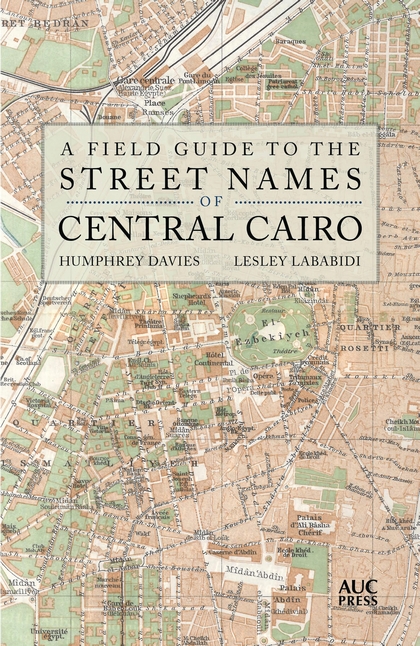
Field Guide to the Street Name

(2018) A richly intriguing map of Cairo’s enthralling history through its street names The map of a city is a palimpsest of its history. In Cairo, people, places, events, and even dates have lent their names to streets, squares, and bridges, only for those names often to be replaced, and then replaced again, and even again, as the city and the country imagine and reimagine their past. The resident, wandering boulevards and cul-de-sacs, finds signs; the reader, perusing novels and histories, finds references. Who were ?Abd el-Khaleq Sarwat Basha or Yusef el-Gindi that they should have streets named after them? Who was Nubar Basha and why did his street move from the north of the city to its center in 1933? Why do older maps show two squares called Bab el-Luq, while modern maps show none? Focusing on the part of the city created in the wake of Khedive Ismail’s command, given in 1867, to create a “Paris on the Nile” on the muddy lands between medieval Cairo and the river, A Field Guide to the Street Names of Cairo lists more than five hundred current and three hundred former appellations. Current street names are listed in alphabetical order, with an explanation of what each commemorates and when it was first recorded, followed by the same for its predecessors. An index allows the reader to trace streets whose names have disappeared or that have never achieved more than popular status. This is a book that will satisfy the curiosity of all, be they citizens, long-term residents, or visitors, who are fascinated by this most multi-layered of cities and wish to understand it better.
History of the World

(2011) In a narrative beginning almost 1.5 million years ago with the emergence of Homo erectus, Frank Welsh takes the reader from the Middle Ages to the Enlightenment, from the Industrial Revolution to the age of terrorism.

Using his masterly storytelling skills, he recounts the epic story of human growth, survival and achievement across all continents and ages.

Providing insight into the lives of ordinary people in every corner of the globe, this comprehensive book is the perfect introduction to the human history of our planet.

Underground

(2019) When Will Hunt was sixteen years old, he discovered an abandoned tunnel that ran beneath his house in Providence, Rhode Island. His first tunnel trips inspired a lifelong fascination with exploring underground worlds, from the derelict subway stations and sewers of New York City to sacred caves, catacombs, tombs, bunkers and ancient underground cities in more than twenty countries around the world. Underground is both a personal exploration of Hunt’s obsession and a panoramic study of how we are all connected to the underground, how caves and other dark hollows have frightened and enchanted us through the ages. In a narrative spanning continents and epochs, Hunt follows a cast of subterraneaphiles who have dedicated themselves to investigating underground worlds. He tracks the origins of life with a team of NASA microbiologists a mile beneath the Black Hills, camps out for three days with urban explorers in the catacombs and sewers of Paris, descends with an Aboriginal family into a 35,000-year-old mine in the Australian outback, and glimpses a sacred sculpture moulded by Paleolithic artists in the depths of a cave in the Pyrenees. Each adventure is woven with findings in mythology and anthropology, natural history and neuroscience, literature and philosophy – this is a graceful meditation on the allure of darkness, the power of mystery, and our eternal desire to connect with what we cannot see

Fire and Fury

(2018) The first nine months of Donald Trump’s term were stormy, outrageous – and absolutely mesmerising. Now, thanks to his deep access to the West Wing, bestselling author Michael Wolff tells the riveting story of how Trump launched a tenure as volatile and fiery as the man himself.

In this explosive book, Wolff provides a wealth of new details about the chaos in the Oval Office. Among the revelations:

– What President Trump’s staff really thinks of him

– What inspired Trump to claim he was wire-tapped by President Obama

– Why FBI director James Comey was really fired

– Why chief strategist Steve Bannon and Trump’s son-in-law Jared Kushner couldn’t be in the same room

– Who is really directing the Trump administration’s strategy in the wake of Bannon’s firing

– What the secret to communicating with Trump is

– What the Trump administration has in common with the movie The Producers

Never before has a presidency so divided the American people. Brilliantly reported and astoundingly fresh, Michael Wolff’s Fire and Fury shows us how and why Donald Trump has become the king of discord and disunion.

Rumi, The Big Red Book

(2010) Considered one of the masterpieces of world literature, The Big Red Book is perhaps the greatest work of Rumi, the medieval Sufi mystic who also happens to be the bestselling poet in America.

Rumi was born in 1207 to a long line of Islamic theologians and lawyers on the eastern edge of the Persian Empire in what is now Afghanistan. In order to escape the invading Mongol armies of Genghis Khan, his family moved west to a town now found in Turkey, where he eventually became the leader of a school of whirling dervishes. It was a fateful day in 1244 when he met Shams Tabriz, a wild mystic with rare gifts and insight. The renowned scholar Rumi had found a soul mate and friend who would become his spiritual mentor and literary muse. “What I had thought of before as God,” Rumi said, “I met today in a human being.”

Out of their friendship, Rumi wrote thousands of lyric poems and short quatrains in honor of his friend Shams Tabriz. They are poems of divine epiphany, spiritual awakening, friendship, and love. For centuries, Rumi’s collection of these verses has traditionally been bound in a red cover, hence the title of this inspired classic of spiritual literature.

Coffeehouse

Mahfouz’s last novel, an evocative depiction of life in Egypt in the twentieth century as told through the lives of a group of friends, is now available in paperback for the first time

On a school playground in the stylish Cairo suburb of Abbasiya, five young boys become friends for life, making a nearby café, Qushtumur, their favorite gathering spot forever. One is the narrator, who, looking back in his old age on their seven decades together, makes the other four the heroes of his tale, a Proustian, and classically Mahfouzian, quest in search of lost time and the memory of a much-changed place.

In a seamless stream of personal triumphs and tragedies, their lives play out against the backdrop of two world wars, the 1952 Free Officers coup, the defeat of 1967 and the redemption of 1973, the assassination of a president, and the simmering uncertainties of the transitional 1980s. But as their nation grows and their neighborhood turns from the green, villa-studded paradise of their youth to a dense urban desert of looming towers, they still find refuge in the one enduring landmark in their ever-fading world: the humble coffeehouse called Qushtumur.

The Coffeehouse is a powerful and timeless novel of loss and memory from one of Egypt’s most celebrated literary masters.

Certain Woman

In this prize-winning novel, Nahid is a woman determined to go on a journey of self discovery and understanding. As we accompany her in her sometimes delirious, sometimes lucid journey, we are given rare glimpses of the inner thoughts and feelings of a woman confronting questions of love and intimacy within and outside of marriage. It is a story of one woman’s quest for liberation, not from a repressive society or a male-dominated world—that is easy and has been done many times before—but from self-imposed taboos that inhibit a woman’s ability to find fulfillment and to confront the many imponderables surrounding sexuality, desire, and love.
Stuck—by conscious choice to keep up the genteel appearances of her middle-class family—in a loveless marriage to Mustafa, the forty-something Nahid finds love and sex with novelist and journalist Omar—himself trapped in a loveless, but not sexless, marriage to Maggie. Although their love story is at the very heart of the novel, we are given broad glimpses of the larger picture of the world outside through Nahid’s work as an archaeologist and Omar’s as a journalist.
The novel was well received by women readers, critics, and reviewers and by a majority of the male audience, while a vociferous minority of male critics felt scandalized by it, finding it unseemly that such issues should be raised by a woman. Now English readers can judge for themselves.

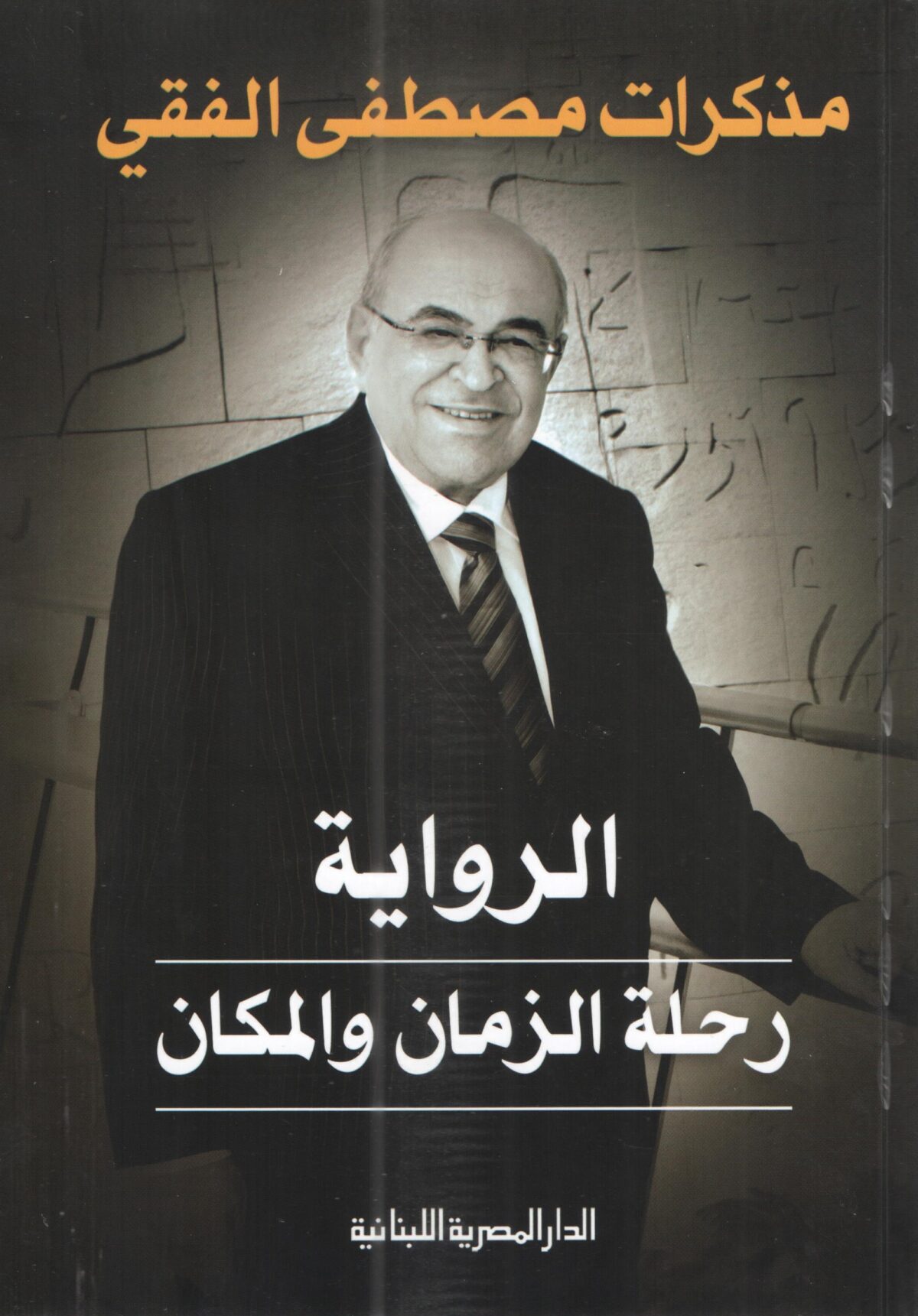
الرواية رحلة الزمان والمكان

ليست هذه صفحات مطوية من مذكرات شخصية، كما أنها ليست سيرة ذاتية بل تتجاوز ذلك كله لكي تكون تعبيرَا أمينًا عن طريق طويل سلكه صاحب الرواية مخترقًا عهود عبدالناصر مراقبًا، والسادات مشاهدًا ومبارك مشاركًا، وقد احتمى المؤلف بالصدق والتجرد والموضوعية مؤمنًا بأن دهاء التاريخ لا يرحم وأن الحياة في مجملها صعود وهبوط، انتصارات وانتكاسات، إنجازات وإخفاقات، إن مسيرة الكاتب تؤكد أن الحياة ليست حقيقة ولكنها أيضًا طريقة لذلك لم يتقمص صاحب الرواية شخصية سواه ولم يزعم لنفسه ما لم يفعل وقد اعتمد المؤلف في صياغته لهذا السفر الأمين على ما شهده أو سمعه ولم يسمح لنفسه باختلاق واقعة أو ادعاء بطولة أو التحامل على غيره، ورغم الحشد الضخم من المعلومات والروايات التي ازدحم بها هذا الكتاب إلا أنها خلاصة تجربة آثر صاحبها ألا يستغرق في التفاصيل وألا يتوه في الفرعيات فجاءت كما يراها القارئ معبرة عن الواقع منصفة للأموات قبل الأحياء.. إنها جزء من ذاكرة أجيال عبرت الطريق في العقود الأخيرة وهي تنظر إلى السماء في تبتل عشقًا للوطن وحبًا لمصر وإيمانًا بأنها عصية على السقوط لأنها الكنانة المحروسة دائمًا.

نادي كتاب ديوان: إبراهيم عيسى

كاتب الشهر إبراهيم عيسى
تدير المناقشة الروائية د. رشا سمير

قراء وكتاب حول بهاء طاهر

بمناسبة عيد ميلاده، نلتقي جميعًا، قراء وكتاب ومحبين، للحديث عن الروائي الكبير بهاء طاهر، أعماله الأدبية وأسلوبه المميز، وكيف أثرت كتابته في الأجيال اللاحقة من الروائيين المصريين والعرب