How Emotions Are Made

(2018) When you feel anxious, angry, happy, or surprised, what’s really going on inside of you?

Many scientists believe that emotions come from a specific part of the brain, triggered by the world around us. The thrill of seeing an old friend, the fear of losing someone we love – each of these sensations seems to arise automatically and uncontrollably from within us, finding expression on our faces and in our behaviour, carrying us away with the experience.

This understanding of emotion has been around since Plato. But what if it is wrong? In How Emotions Are Made, pioneering psychologist and neuroscientist Lisa Feldman Barrett draws on the latest scientific evidence to reveal that our common-sense ideas about emotions are dramatically, even dangerously, out of date – and that we have been paying the price. Emotions aren’t universally pre-programmed in our brains and bodies; rather they are psychological experiences that each of us constructs based on our unique personal history, physiology and environment.

This new view of emotions has serious implications: when judges issue lesser sentences for crimes of passion, when police officers fire at threatening suspects, or when doctors choose between one diagnosis and another, they’re all, in some way, relying on the ancient assumption that emotions are hardwired into our brains and bodies. Revising that conception of emotion isn’t just good science, Barrett shows; it’s vital to our well-being and the health of society itself.

Kokology

Introducing Kokology — the fascinating, addictive pop-psych quiz game that reveals the surprising real you.

Created by a famous Japanese psychologist, kokology is the study of kokoro (“mind” or “spirit” in Japanese). Based on sound psychological principles, Kokology asks you to answer questions about seemingly innocent topics — such as the color of an imaginary bird that has flown in your window — and then reveals what your answers say about you. Kokology offers a unique approach to self-discovery and, when played with others, can provide hilarious insight into the you that they never knew.

Ina May’s Guide to Childbirth

What you need to know to have the best birth experience for you. Drawing upon her thirty-plus years of experience, Ina May Gaskin, the nation’s leading midwife, shares the benefits and joys of natural childbirth by showing women how to trust in the ancient wisdom of their bodies for a healthy and fulfilling birthing experience. Based on the female-centered Midwifery Model of Care, Ina May’s Guide to Natural Childbirth gives expectant mothers comprehensive information on everything from the all-important mind-body connection to how to give birth without technological intervention.

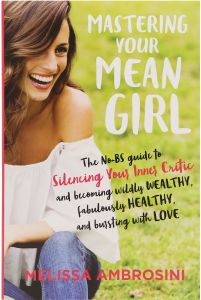
Mastering Your Mean Girl

(2016) You know that sneaky voice inside your head telling you that you’re not good enough, smart enough, pretty enough, whatever enough? That’s your Mean Girl. And she’s doing her best to keep you stuck in Fear Town, too scared to go after the life you always imagined.

But enough’s enough! Melissa Ambrosini has made a life beyond her wildest dreams, all by mastering her Mean Girl, busting through limiting beliefs and karate-chopping through the fears that held her hostage for years. And now she wants to help you remember not only what you are capable of, but how amazing you truly are!

In this inspiring, upbeat guide, Melissa provides a practical plan for creating your own version of a kick-ass life — one that’s wildly wealthy, fabulously healthy and bursting with love. Designed to propel you out of stuck-ness and into action, this is a must read if you’re ready to let go of your Mean Girl and start living the life of your dreams.

How We Feel

2014What can a brain scan, or our reaction to a Caravaggio painting, reveal about the deep seat of guilt?

How can reading Heidegger, or conducting experiments on rats, help us to cope with anxiety in the face of the world’s economic crisis?

Can ancient remedies fight sadness more effectively than anti-depressants?

What does the neuroscience of acting tell us about how we feel empathy, and fall for an actor on stage?

What can writing poetry tell us about how joy works?

And how can a bizarre neurological syndrome or a Shakespearean sonnet explain love and intimacy?

We live at a time when neuroscience is unlocking the secrets of our emotions. But is science ever enough to explain why we feel the way we feel?

Giovanni Frazzetto takes us on a journey through our everyday lives and most common emotions. In each chapter, his scientific knowledge mixes with personal experience to offer a compelling account of the continual contrast between rationality and sentiment, science and poetry. And he shows us that by facing this contrast, we can more fully understand ourselves and how we feel.

This Land Is Our Land

(2019) There are few subjects in American life that prompt more discussion and controversy than immigration. But do we really understand it? In This Land Is Our Land, the renowned author Suketu Mehta attacks the issue head-on. Drawing on his own experience as an Indian-born teenager growing up in New York City and on years of reporting around the world, Mehta subjects the worldwide anti-immigrant backlash to withering scrutiny. As he explains, the West is being destroyed not by immigrants but by the fear of immigrants. Mehta juxtaposes the phony narratives of populist ideologues with the ordinary heroism of laborers, nannies, and others, from Dubai to Queens, and explains why more people are on the move today than ever before. As civil strife and climate change reshape large parts of the planet, it is little surprise that borders have become so porous. But Mehta also stresses the destructive legacies of colonialism and global inequality on large swaths of the world: When today’s immigrants are asked, “Why are you here?” they can justly respond, “We are here because you were there.” And now that they are here, as Mehta demonstrates, immigrants bring great benefits, enabling countries and communities to flourish. Impassioned, rigorous, and richly stocked with memorable stories and characters, This Land Is Our Land is a timely and necessary intervention, and a literary polemic of the highest orde

Games People Play

(2016) The bestselling Games People Play is the book that has helped millions of people understand the dynamics of relationships, by psychiatrist Eric Berne.

We all play games. In every encounter with other people we are doing so. The nature of these games depends both on the situation and on who we meet.

Eric Berne’s classic Games People Play is the most accessible and insightful book ever written about the games we play: those patterns of behaviour that reveal hidden feelings and emotions. Wise and witty, it shows the underlying motivations behind our relationships and explores the roles that we try to play – and are forced to play.

Games People Play gives you the keys to unlock the psychology of others – and yourself. You’ll become more honest, more effective, and a true team player.

‘A brilliant, amusing, and clear catalogue of the psychological theatricals that human beings play over and over again’ Kurt Vonnegut

Eric Berne was a prominent psychiatrist and bestselling author.After inventing his groundbreaking Transactional Analysis, he continued to develop and apply this new methodology leading him to publish Games People Play. This became a runaway success and Berne leaves a remarkable legacy of over 30 other books and articles, as well as the founding of the International Transactional Analysis Association.

Dr Berne’s other works include Principles of Group Treatment, A Layman’s Guide to Psychiatry and Psychoanalysis’, and What Do You Say After You Say Hello? He died in 1970.

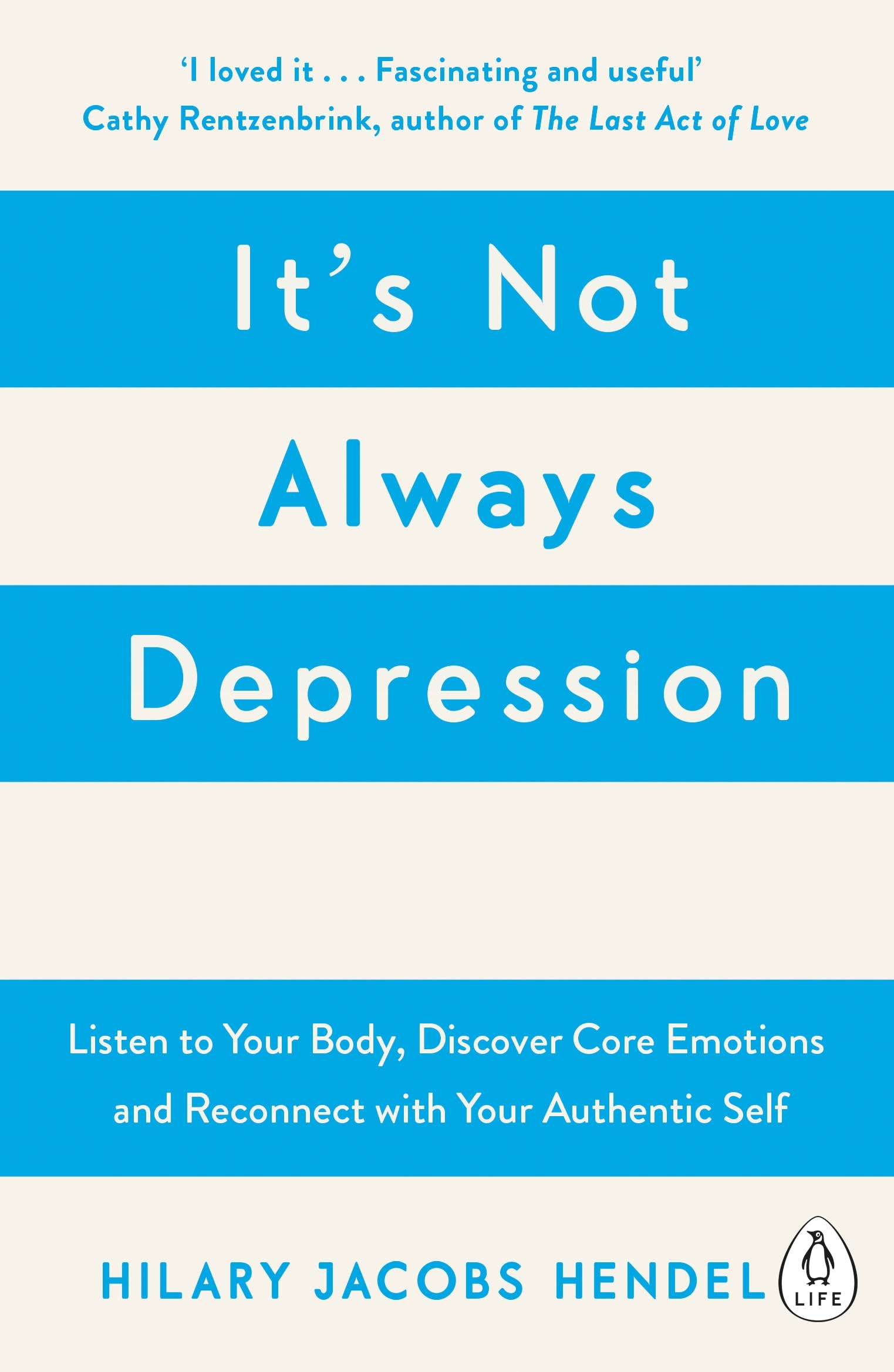
It’s Not Always Depression

(2018) ‘I loved it … I have drawn my own picture of the change triangle – both fascinating and useful’ – Cathy Rentzenbrink

We were all taught that our thoughts affect our emotions, but in truth it is largely the other way around: we have to experience our emotions to truly understand our thoughts, and our full selves. This is why we should think not only about cognitive behavioural therapy or medication, but also about our emotions, when addressing psychological suffering.

In It’s Not Always Depression, pioneering psychotherapist Hilary Jacobs Hendel reveals the most effective techniques for putting us back in touch with the emotions we too often deny – methods which can be used by anyone, any time, anywhere. Drawing on stories from her own practice, she sheds light on the core emotions (such as joy, sadness and fear), defences (anything we do to avoid feeling) and inhibitory emotions (anxiety, shame and guilt), and how understanding their interaction can help us return to mental well-being.

This is the basis of ‘accelerated experiential dynamic psychotherapy:’ it accelerates healing through having an emotional experience in the here and now. It allows you to reacquaint yourself with your feelings, to recover a more authentic self and to be more calm, curious and connected.

Examined Life

(2014) This book is about learning to live.

In simple stories of encounter between a psychoanalyst and his patients, The Examined Life reveals how the art of insight can illuminate the most complicated, confounding and human of experiences.

These are stories about our everyday lives: they are about the people we love and the lies that we tell; the changes we bear, and the grief. Ultimately, they show us not only how we lose ourselves but how we might find ourselves too.

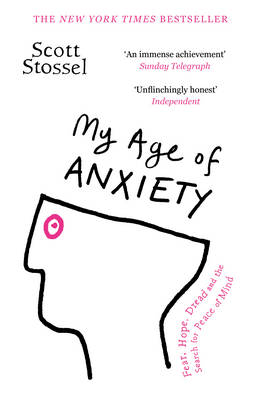
My Age of Anxiety

2014 THE NEW YORK TIMES BESTSELLER

As recently as thirty-five years ago, anxiety did not exist as a diagnostic category. Today, it is the most common form of officially classified mental illness. Scott Stossel gracefully guides us across the terrain of an affliction that is pervasive yet too often misunderstood.

Drawing on his own long-standing battle with anxiety, Stossel presents an astonishing history, at once intimate and authoritative, of the efforts to understand the condition from medical, cultural, philosophical and experiential perspectives. He ranges from the earliest medical reports of Galen and Hippocrates, through later observations by Robert Burton and S?ren Kierkegaard, to the investigations by great nineteenth-century scientists, such as Charles Darwin, William James and Sigmund Freud, as they began to explore its sources and causes, to the latest research by neuroscientists and geneticists. Stossel reports on famous individuals who struggled with anxiety, as well as the afflicted generations of his own family. His portrait of anxiety reveals not only the emotion’s myriad manifestations and the anguish it produces, but also the countless psychotherapies, medications and other (often outlandish) treatments that have been developed to counteract it. Stossel vividly depicts anxiety’s human toll – its crippling impact, its devastating power to paralyse – while at the same time exploring how those who suffer from it find ways to manage and control it.

My Age of Anxiety is learned and empathetic, humorous and inspirational, offering the reader great insight into the biological, cultural and environmental factors that contribute to the affliction.