Milk and Honey

(2015) The book is divided into four chapters, and each chapter serves a different purpose; deals with a different pain; heals a different heartache. milk and honey takes readers through a journey of the most bitter moments in life and finds sweetness in them because there is sweetness everywhere ifyou are just willing to look.

Life Admin

Every day an unseen form of labor creeps into our lives—stealing precious moments of free time, placing a strain on our schedules and our relationships, and earning neither appreciation nor compensation in return. This labor is life the kind of secretarial and managerial work necessary to run a life and a household.

Elizabeth Emens was a working mother with two young children, swamped like so many of us, when she realized that this invisible labor was consuming her. Desperate to survive and to help others along the way, she conducted interviews and focus groups to gather favorite tips and tricks, admin confessions, and the secrets of admin-happy households.

Life Admin tackles the problem of admin in all its forms, from everyday tasks like scheduling doctors appointments and paying bills, to life-cycle events like planning a wedding, a birth, a funeral. Emens explores how this labor is created, how it affects our lives, and how we might avoid, reduce, and redistribute admin whenever possible—as individuals and as a society.

Life Admin is the book that will teach us all how to do less of it, and to do it better.

As a Man Thinketh

(2019) Originally published in 1903, James Allen’s As A Man Thinketh reveals the fundamental truth of human nature: “A man is literally what he thinks.” Allen’s deceptively simple principle has changed the lives of millions of readers, making As A Man Thinketh a classic bestseller for decades. Allen explains that our character, identity, ability, and success are all determined by the thoughts in our minds. Instead of finding ourselves victims of the world, there exists within each of us the ability to shape and define our own destinies. Finances, health, social status, and success are all external manifestations of the thoughts that populate our minds. Allen offers his readers an opportunity to seize control of their minds and in doing so create the lives they’ve always imagined. This new edition combines As A Man Thinketh with another of Allen’s companion works, Mastery of Destiny. In Mastery of Destiny Allen shows that the natural progression of human evolution is away from the evil that results from ignorance and towards ultimate good. Combined in one volume, these two books offer a revolutionary outlook of empowerment.

House of Trump, House of Putin

(2019) THE EXPLOSIVE NEW YORK TIMES BESTSELLER

‘A bombshell.’ Daily Mail

‘Damning, terrifying and enraging.’ The Spectator

House of Trump, House of Putin offers the first comprehensive investigation into the decades-long relationship among Donald Trump, Vladimir Putin, and the Russian Mafia that ultimately helped win Trump the White House.

It is a chilling story that begins in the 1970s, when Trump made his first splash in the booming, money-drenched world of New York real estate, and ends with Trump’s inauguration as president of the United States. That moment was the culmination of Vladimir Putin’s long mission to undermine Western democracy, a mission that he and his hand-selected group of oligarchs and associates had ensnared Trump in over more than two decades of shady business associations.

As Unger traces Donald Trump’s sordid ascent from foundering real estate tycoon to leader of the free world, House of Trump, House of Putin, reveals the deep-rooted alliance between the highest echelons of American political operatives and the biggest players in the frightening underworld of the Russian Mafia. Examining Russia’s phoenixlike rise from the ashes of the post-Cold War Soviet Union, Unger reveals its ceaseless covert efforts to retaliate against the West and reclaim its status as a global superpower, and how such ambitions came to compromise the president.

Without Trump, Russia would have lacked a key component in its attempts to return to imperial greatness. Without Russia, Trump would not be in the White House. This essential book is crucial to understanding the real powers at play in the shadows of today’s world.

Positivity

(2009) -What positivity is, and why it needs to be heartfelt to be effective

– The ten sometimes surprising forms of positivity

– Why positivity is more important than happiness

– How positivity can enhance relationships, work, and health, and how it relieves depression, broadens minds, and builds lives

– The top-notch research that backs the 3-to-1 “positivity ratio” as a key tipping point

– That your own sources of positivity are unique and how to tap into them

– How to calculate your current positivity ratio, track it, and improve it

With Positivity, you’ll learn to see new possibilities, bounce back from setbacks, connect with others, and become the best version of yourself.

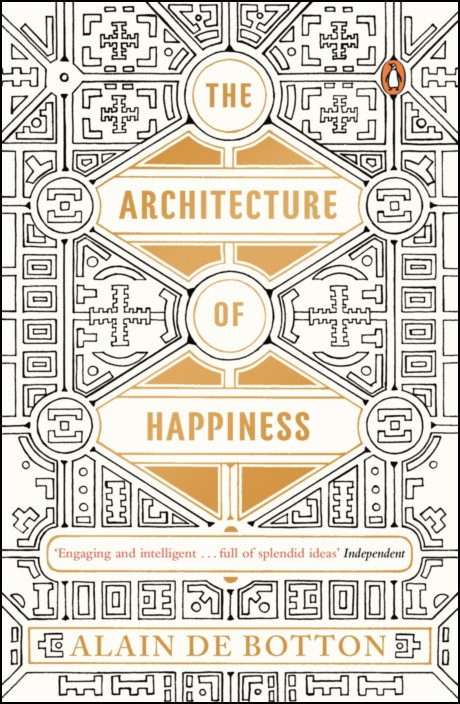
Architecture of Happiness

The Architecture of Happiness is Alain de Botton’s exploration of the hidden links between buildings and our well being.

In The Architecture of Happiness, bestselling author Alain de Botton explores one of our most intense but often hidden love affairs: with our houses and their furnishings. He asks:

What makes a house truly beautiful?

Why are many new houses so ugly?

Why do we argue so bitterly about sofas and pictures – and can differences of taste ever be satisfactorily resolved?

To answer these questions and many more, de Botton looks at buildings across the world, from medieval wooden huts to modern skyscrapers; he examines sofas and cathedrals, tea sets and office complexes, and teases out a host of often surprising philosophical insights. The Architecture of Happiness will take you on a beguiling tour through the history and psychology of architecture and interior design, and will change the way you look at your home.

‘Engaging and intelligent . . . full of splendid ideas, happily and beautifully expressed’ Independent

Alain de Botton was born in 1969 and is the author of non-fiction essays on themes ranging from love and travel to architecture and philosophy. His bestselling books include Essays in Love; The Romantic Movement; Kiss and Tell; Status Anxiety; How Proust Can Change Your Life; The Pleasures and Sorrows of Work; The Art of Travel; The Architecture of Happiness and Religion for Atheists. He lives in London and founded The School of Life (www.theschooloflife.com) and Living Architecture (www.living-architecture.co.uk). For more information, consult

Dice Academy

Who Did it Plastic Box

Why Nations Fail

(2012) Now shortlisted for the Financial Times and Goldman Sachs Business Book of the Year Award 2012. Why are some nations more prosperous than others? Why Nations Fail sets out to answer this question, with a compelling and elegantly argued new theory: that it is not down to climate, geography or culture, but because of institutions. Drawing on an extraordinary range of contemporary and historical examples, from ancient Rome through the Tudors to modern-day China, leading academics Daron Acemoglu and James A. Robinson show that to invest and prosper, people need to know that if they work hard, they can make money and actually keep it – and this means sound institutions that allow virtuous circles of innovation, expansion and peace. Based on fifteen years of research, and answering the competing arguments of authors ranging from Max Weber to Jeffrey Sachs and Jared Diamond, Acemoglu and Robinson step boldly into the territory of Francis Fukuyama and Ian Morris. They blend economics, politics, history and current affairs to provide a new, powerful and persuasive way of understanding wealth and poverty.

Buddha’s Brain

(2009) If you change your brain, you can change your life.

Great teachers like the Buddha, Jesus, Moses, Mohammed, and Gandhi were all born with brains built essentially like anyone else’s?and then they changed their brains in ways that changed the world. Science is now revealing how the flow of thoughts actually sculpts the brain, and more and more, we are learning that it’s possible to strengthen positive brain states.

By combining breakthroughs in neuroscience with insights from thousands of years of mindfulness practice, you too can use your mind to shape your brain for greater happiness, love, and wisdom. Buddha’s Brain draws on the latest research to show how to stimulate your brain for more fulfilling relationships, a deeper spiritual life, and a greater sense of inner confidence and worth. Using guided meditations and mindfulness exercises, you’ll learn how to activate the brain states of calm, joy, and compassion instead of worry, sorrow, and anger. Most importantly, you will foster positive psychological growth that will literally change the way you live in your day-to-day life.

This book presents an unprecedented intersection of psychology, neurology, and contemplative practice, and is filled with practical tools and skills that you can use every day to tap the unused potential of your brain and rewire it over time for greater well-being and peace of mind.