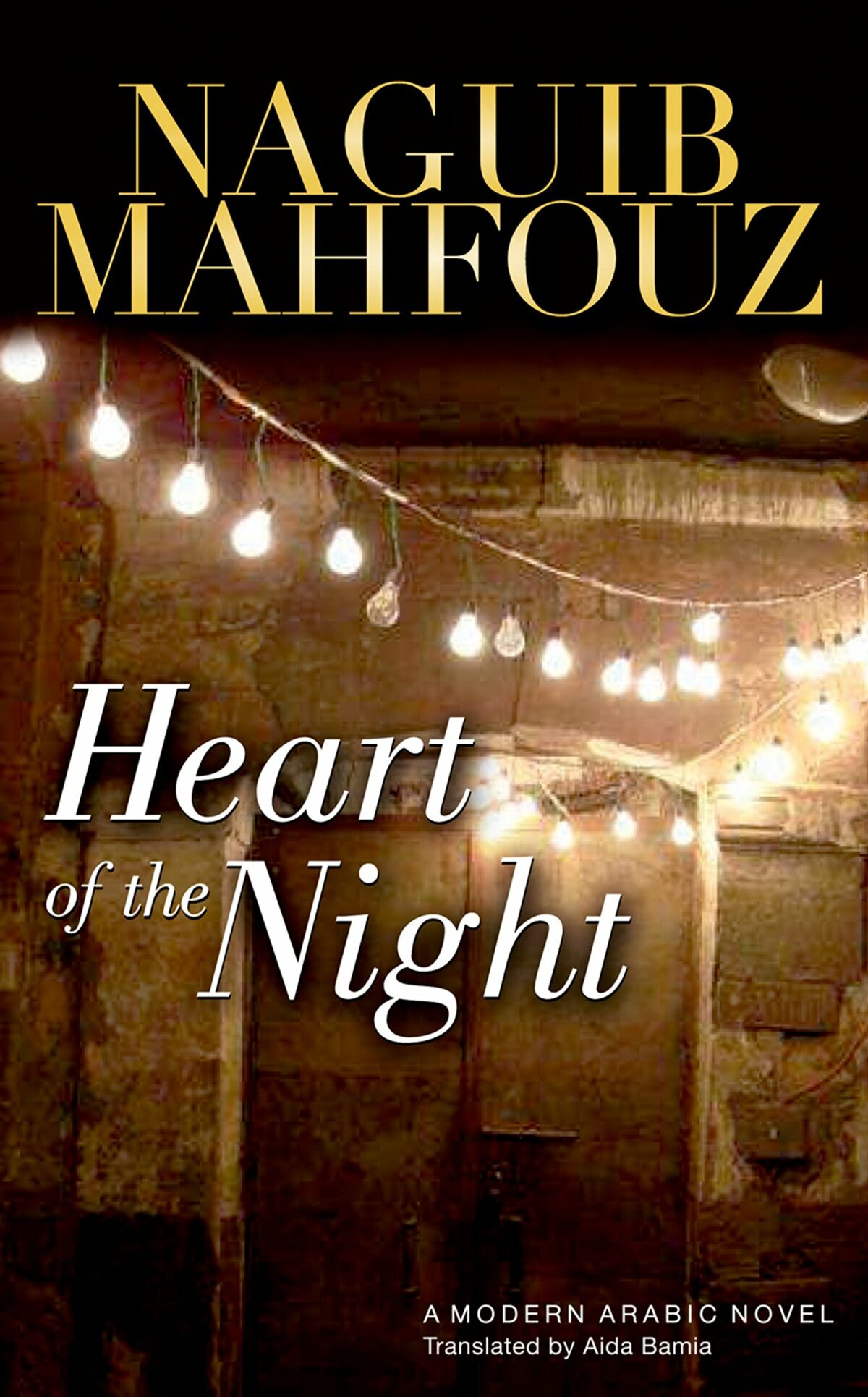
Heart of the Night

Nobel winning author, Naguib Mahfouz’s late-translated novella, Heart of the Night is now available for the first time in paperback

Jaafar Ibrahim Sayyed al-Rawi is guided by his motto, “let life be filled with holy madness to the last breath.” He narrates his life story to a friend during one long night in a café in old Cairo. Through a series of bad decisions, he has lost everything: his family, his position in society, and his fortune. A man driven by his passions, he married a beautiful Bedouin nomad for love, and as a consequence pays a punishingly high price. From a life of comfort with a promising future guaranteed by his wealthy grandfather, he descended to the spartan life of a pauper, after being disinherited. Jaafar faces his tribulations with surprising stoicism and hope, sustained by his strong convictions, his spirituality, his sense of mission, and his deep desire to bring social justice to his people.

Heart of the Night is a classic Mahfouz gem exploring marriage across class lines, spirituality, and the harsh realities of a precarious, life written by one of Egypt’s most celebrated literary masters.
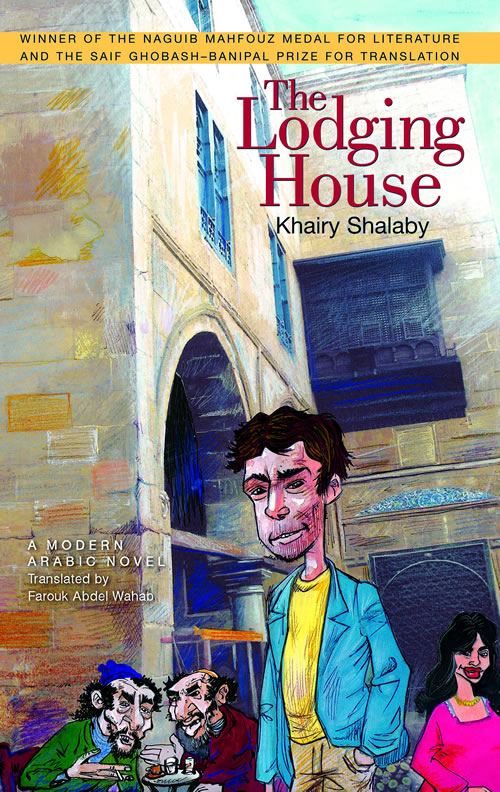
Lodging House

A young man’s dreams for a better future as a student in the Teachers’ Institute are shattered after he assaults one of his instructors for discriminating against him. From then on, he begins his descent into the underworld. Penniless, he seeks refuge in Wikalat ‘Atiya, a historic but now completely run-down caravanserai that has become the home of the town’s marginal and underprivileged characters. This award-winning novel takes on epic dimensions as the narrator escorts us on a journey to this underworld, portraying—as he sinks further into its intricate relationships—the many characters that inhabit it. Through a labyrinth of tales, reminiscent of the popular Arab tradition of storytelling, we are introduced to these denizens, whose lives oscillate between the real and the fantastic, the contemporary and the timeless. And while the narrator starts out as a spectator of these characters’ lives, he soon becomes an integral part of the lodging house’s community of rogues.

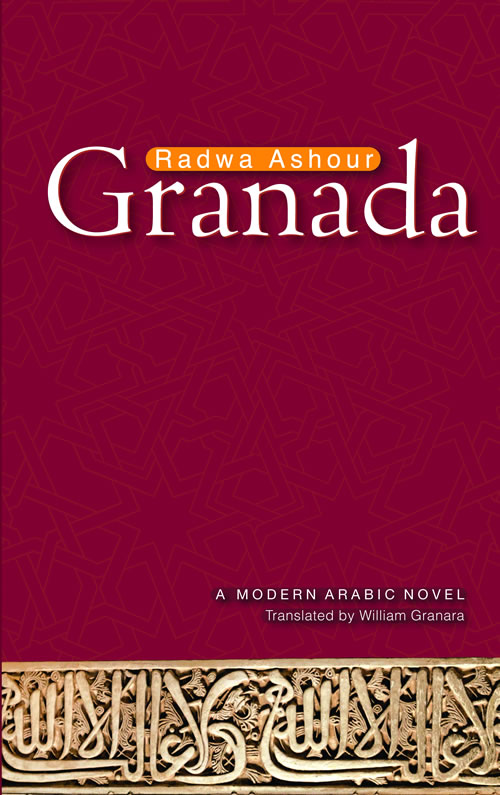
Granada

Radwa Ashour skillfully weaves a history of Granadan rule and an Arabic world into a novel that evokes cultural loss and the disappearance of a vanquished population. The novel follows the family of Abu Jaafar, the bookbinder, his wife, widowed daughter-in-law, her two children, and his two apprentices as they witness Christopher Columbus and his entourage in a triumphant parade featuring exotic plants and animals and human captives from the New World. Embedded in the narrative is the preparation for the marriage of Saad, one of the apprentices, and Saleema, Abu Jaafar’s granddaughter — a scenario that is elegantly revealed in a number of parallel scenes.

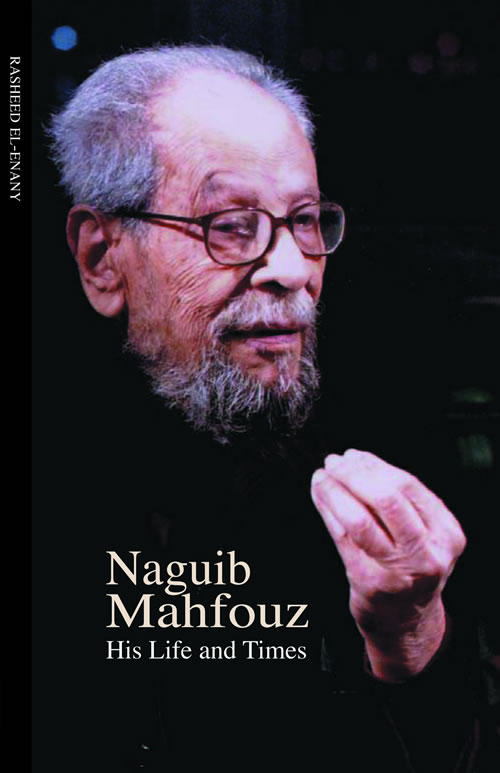
Naguib Mahfouz His Life and Time

Naguib Mahfouz (1911’2006) is the only Arab writer to have been awarded the Nobel prize for literature. In its citation for the Nobel prize, the Swedish Academy of Letters noted ‘through works rich in nuance’ “now clear-sightedly realistic, now evocatively ambiguous’ ” has formed an Arabic narrative art that applies to all mankind. The author of thirty-five novels, fifteen collections of short stories, twenty-five film screenplays, numerous critical works, and in his later years over five hundred short fictions based on his dreams (partly published as The Dreams and Dreams of Departure by the AUC Press in 2004 and 2007), he has been hugely influential on several generations of Arab writers, and his books are now read in more than forty languages around the world. In this first biography of Naguib Mahfouz in English, Rasheed El-Enany looks at the life of the man and the work of the writer, and assesses the oeuvre and legacy of a towering figure in the Egyptian and Arab literary world who was able to reach far beyond his own linguistic and cultural boundaries to an admiring readership across the globe.

Khan Al-Khalili

Khan Al-Khalili is a classic novel by the renowned Egyptian Nobel laureate Naguib Mahfouz, published in 1945. The novel is set in the bustling Khan Al-Khalili market in Cairo, Egypt, and follows the lives of several characters who work and live in the market.

The novel’s main character, Abbas, is a clerk in one of the shops in Khan Al-Khalili and is in love with a dancer named Hamida. However, Hamida is also courted by a wealthy businessman named Ibrahim Faraj, leading to a complex and riveting exploration of love, class, and tradition in Egyptian society.

Mahfouz’s masterful use of the setting of Khan Al-Khalili brings the market to life and immerses the reader in the vibrant atmosphere of Cairo. The novel has been translated into several languages and is considered a timeless classic of Egyptian literature.

Dreams of Departure

In this second collection of writing, based on his own dreams serialized in a Cairo magazine before his death in 2006, Egyptian Nobel laureate Naguib Mahfouz again displays his matchless ability to tell epic stories in uncannily terse form. As in the first volume (The Dreams, AUC Press, 2004), we meet more of the real (and unreal) figures that filled the author’s life with glory and worry, ecstasy and ennui, in tales dreamed by a mind too fertile to ever truly rest. In them, a man sent by a victorious invader to open a storehouse holding the statue of Egypt’s reawakening finds his access denied by a menacing reptile. An obscure writer dies, and a despairing inscription on his coffin turns his funeral into a massive demonstration. A man opens a stubborn gate to stare at a lake over which loom the illuminated faces of those he has loved, but who are no more—in search of the soul who made him long to live forever. The ever more condensed and poetic episodes in Dreams of Departure movingly carry on Mahfouz’s only major work after a knife attack in 1994 ironically inspired him to dream in print for his readers. NAGUIB MAHFOUZ was born in 1911 in the crowded Cairo district of Gamaliya. He wrote nearly 40 novel-length works, plus hundreds of short stories and numerous screenplays. He was awarded the Nobel Prize for Literature in 1988. He died in Cairo in 2006 at the age of 94. RAYMOND STOCK is writing a biography of Naguib Mahfouz. He is the translator of Naguib Mahfouz’s Voices from the Other World (2002), Khufu’s Wisdom (2003), The Dreams (2004), and The Seventh Heaven (2005), all published by the AUC Press.

Voices from the Other World

The forces of law and order disturb a district’s too-perfect peace at the dawn of Egyptian civilization. A wise and popular pharaoh is betrayed by his own son, and by his dearest friends – then makes a most peculiar decision. A mummy returns to life after three thousand years, to confront the arrogant new race that now rules the land. A favored prince flees to a faraway country when the king dies suddenly, leaving his true love behind – only to come back to question her about their forty lost years. A famous young writer, composer of a legendary epic of Pharaoh’s greatest battle with the Hittites, is carried off without warning by a mysterious disease – then speaks to us in this life from beyond the veil of death. Such are the tales that make up this volume of five masterly stories by the young Naguib Mahfouz, all inspired by the Egypt of the pharaohs. Like three novels set in ancient times that he also published early in his career, these stories reveal his wide reading of Egypt’s (and the world’s) oldest history and literature. All of these gems, however, are very much his own creations. Their voices speak with the familiar genius of Egypt’s greatest modern writer – though they call from a very different world than the one for which he is best known.

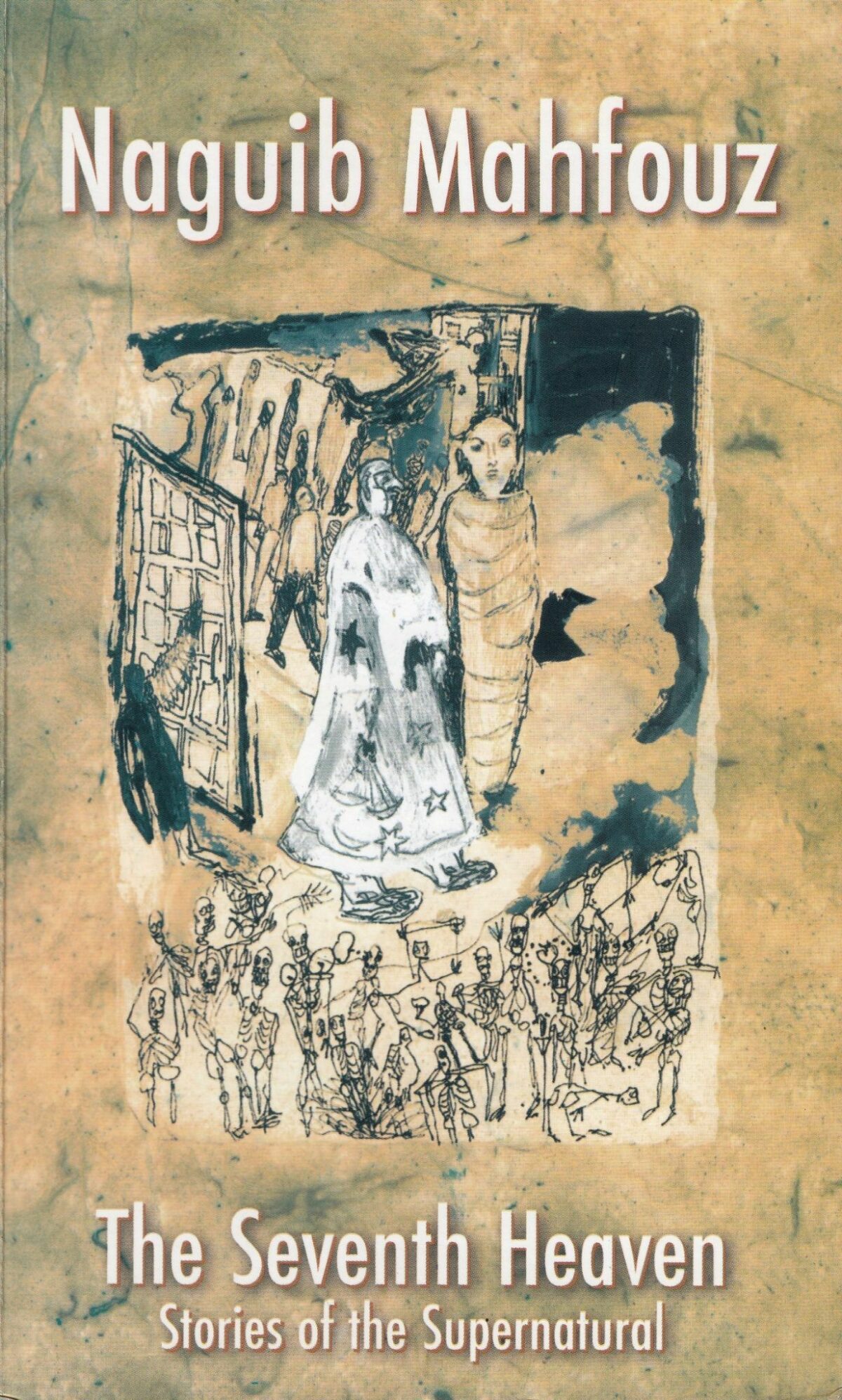
Seventh Heaven

Naguib Mahfouz, famed for his uncanny power to depict the real world, is equally ingenious at capturing the surreal, the otherworldly, and the supernatural. The ghostly side of Mahfouz’s fiction, though less well known than his other works, nonetheless remains a haunting presence. This collection of stories sifted from his later writings brings these restless spirits out of the Mahfouzian shadows together for the first time in English: A murdered man finds himself in the first level of what he mistakes for Paradise – where he faces, along with historical figures such as Akhenaten, Woodrow Wilson, and Gamal Abd al-Nasser, a strange system of earthly probation that may (or may not) get him to the fabled Seventh Heaven. A teenager is warned not to go near the allegedly haunted wood in his neighborhood, only to be drawn into the secret, enchanted life he finds within it. An honest perfume seller is accosted on a night out by angry skeletons, who threaten to march upon his alley as an avenging army if the sinners there do not change their ways. Satan speaks to us directly – to confess that there is still, despite the flood of evil in our times, an honorable man in the land. These and the other startling stories in The Seventh Heaven make a vivid contribution to the translated works of Egypt’s – and the Arab world’s – greatest modern author.

Hassan Fathy Earth and Utopia

(2018) Hassan Fathy is Egypt’s best-known 20th-century architect. He was also a man of contradictions. He came from a wealthy background and had a western-style training. Yet he embraced traditional, vernacular forms, techniques, and materials and throughout his career promoted their use as part of a campaign to improve the conditions of Egypt’s rural poor. Earth & Utopia chronicles this lifelong commitment through personal interviews conducted by the author, photographs, and drawings from the Hassan Fathy archives, and Fathy’s own writings on the subject, many of which are published for the first time. This beautiful, fascinating, and scholarly book will be essential reading for students, academics, and general readers interested in Fathy, and the development of Arab and vernacular architecture, earth construction, architecture for the poor, and sustainability.

Woman at Point Zero

(2015) Nawal El Saadawi’s highly acclaimed feminist novel, Woman at Point Zero, follows the life of Firdaus, an Egyptian peasant girl, from her childhood of incomprehensible cruelty and neglect to her end in a grimy Cairo prison cell. From her earliest memories, Firdaus suffered at the hands of men first her abusive father, then her violent, much older husband, to finally her deceitful boyfriend-turned-pimp. After a lifetime of abuse, she at last takes drastic action against the males ruling her life. Still as beautiful and cutting as it was when it was first published, this new edition will continue to resonate powerfully with readers for years to come.