Jerusalem without God

(2017) An intimate portrait of the daily realities of life in contemporary Jerusalem There is no escaping the Jerusalem of the religious imagination. Not once but three times holy, its overwhelming spiritual significance looms large over the city’s complex urban landscape and the diurnal rhythms and struggles that make up its earthbound existence. Nonetheless, writes Paola Caridi, in this intimate and hard-hitting portrayal of the city, it is possible to close one’s eyes and, “like the blind listening to sounds,” discern the conflict and plurality of belonging that mark out the city’s secular character. Jerusalem without God leads the reader through the streets, malls, suburbs, traffic jams, and squares of Jerusalem’s present moment, into the daily lives of the men and women who inhabit it. Caridi brings contemporary Jerusalem alive by describing it as a place of sights and senses, sounds and smells, but she also shows us a city riven by the harsh asymmetry of power and control embodied in its lines, limits, walls, and borders. She explores a cruel city, where Israeli and Palestinian civilians sometimes spend hours in the same supermarkets, only to return to the confines of their respective districts, invisible to each other; a city memorable for its ancient stones and shimmering sunsets but dotted with Israeli checkpoints, “postmodern drawbridges,” that control the movement of people, ideas, and potential attackers. Describing Jerusalem through the lenses of urban planners and politicians, anthropologists and archaeologists, advertisers and scholars, Jerusalem without God reveals a city that is as diverse as it is complex, and ultimately, argues its author, one whose destiny cannot be tied to any single religious faith, tradition, or political ideology.

Letters from an Englishwoman i

(2016) First published in 1844, these letters are the collected observations of Sophia Poole, who lived in Cairo from 1842 until 1849 with her brother, the well known Orientalist Edward Lane, and her two children. During her residence, Poole learned Arabic and adopted Egyptian clothing that enabled her not only to observe day-to-day life in the streets and markets but also to enter hammams and harems and interact on an intimate level with Egyptian women of different classes. Poole ultimately had access, in fact, to the highest levels of society, including the family of the viceroy Mohamed Ali Pasha, and recorded her experiences there with the same eye for detail and understanding of underlying customs as she brought to bear in the marketplace. She moves effortlessly from situation to situation-the pasha’s daughter smoking her jewel-encrusted pipe, the homesick slave-girl, the occupation of ladies of leisure-one scene after another is unfolded in her writing that reveals not only a mind that observes and records but a human being who attempts to feel and understand a different culture.In contrast to her brother’s dense works of research, Sophia Poole’s was cast in the form of letters to a friend. These letters cover her arrival in Alexandria and trip up the Nile to Cairo, as well as her life in Cairo, with its visits to surrounding villages. The Englishwoman in Egypt is at once entertaining and informative. If Edward Lane kept alive for posterity a post-medieval Cairo that has since disappeared, then his sister in her work no doubt complemented that great achievement by presenting the same world from a feminine perspective that he as a man could not have access to

Imagining the Middle East

(2011) The effect of past perception on current U.S. regional engagement Have American ideas and perspectives about the Middle East shaped, justified, and sustained U.S. cultural, economic, military, and political involvement there? Matthew Jacobs examines the ways in which an informal network of academic, business, government, and media specialists interpreted and shared their perceptions of the Middle East from the end of World War I through the late 1960s. During that period, Jacobs argues, members of this network imagined the Middle East as a region defined by certain common characteristics—religion, mass politics, underdevelopment, and an escalating Arab–Israeli–Palestinian conflict—and as a place that might be transformed through U.S. involvement. Thus, the ways in which specialists and policymakers imagined the Middle East of the past or present came to justify policies designed to create an imagined Middle East of the future. Jacobs demonstrates that an analysis of the intellectual roots of current politics and foreign policy is critical to comprehending the styles of U.S. engagement with the Middle East in a post-9/11 world.

From Cairo to Baghdad

(2012) Explorer’s tales from the golden age of travel in the Middle East Until the 1880s, British travelers to Arabia were for the most part wealthy dilettantes who could fund their travels from private means. With the advent of an imperial presence in the region, as the British seized power in Egypt, the very nature of travel to the Middle East changed. Suddenly, ordinary men and women found themselves visiting the region as British influence increased. Missionaries, soldiers, and spies as well as tourists and explorers started to visit the area, creating an even bigger supply of writers, and market for their books. In this elegantly crafted book, James Canton examines over one hundred primary sources, from forgotten gems to the classics of T.E. lawrence, Thesiger, and Philby. He analyzes the relationship between empire and author, showing how the one influenced the other, leading to a vast array of texts that might never have been produced had it not been for the ambitions of imperial Britain.

Urban Social History of the Mi

(2015) New ways of looking at the history of Middle Eastern cities The great cities of the Middle East and North Africa have long attracted the attention and interest of historians. With the discovery and wider use over the last few decades of the Islamic court records and Ottoman administrative documents, our knowledge of Middle Eastern cities between the seventeenth and early twentieth centuries has vastly expanded. Drawing upon a treasure trove of documents and using a variety of methodologies, the contributors succeed in providing a significant overview of the ways in which Middle Eastern cities can be studied, as well as an excellent introduction to current literature in the field, affording us a foundational volume that enriches our understanding of society in the late Ottoman and colonial periods. Contributors: Edmund Burke III, Leila Fawaz, Bernard Hourcade, Robert Ilbert, Dina Rizk Khoury, Gudrun Krنmer, Abdul-Karim Rafeq, Sarah D. Shields, Peter Sluglett, Sami Zubaida.

Suez, Britain’s End of Empire

On 26 July 1956, the British Empire received a blow from which it could never recover, when President Gamal Abdul Nasser nationalized the Suez Canal Company, one of the gems of Britain’s imperial portfolio. Britain, France, and Israel subsequently colluded in attacking Egypt, ostensibly—in the case of Britain and France—to protect the Suez Canal but in reality in an attempt to depose Nasser. The US opposition to this scheme forced an ignominious withdrawal, leaving Nasser triumphant and marking a decisive end to Britain’s imperial era. In this, the seminal work on the Suez Crisis, Keith Kyle draws on a wealth of documentary evidence to tell this fascinating political, military, and diplomatic story. Including new introductory material, this revised edition of a classic work will be essential reading for anyone interested in the history of the twentieth century and the end of empire. Keith Kyle worked as a journalist, broadcaster, author and scholar throughout the world over the course of his long career.

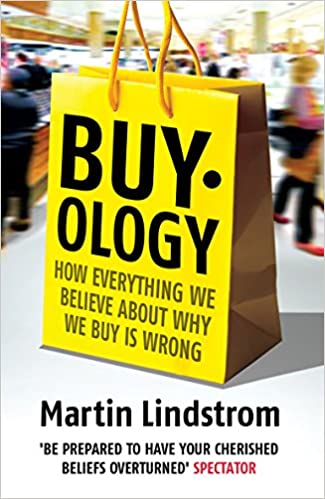
Buyology

(2008) Most anti-smoking campaigns inadvertently encourage people to smoke. The scent of melons helps sell electronic products. Subliminal advertising may have been banned, but it’s being used all the time. Product placement in films rarely works. Many multi-million pound advertising campaigns are a complete waste of time. These are just a few of the findings of Martin Lindstrom’s groundbreaking study of what really makes consumers tick. Convinced that there is a gulf between what we believe influences us and what actually does, he set up a highly ambitious research project that employed the very latest in brain-scanning technology and called on the services of some 2000 volunteers. Buyology shares the fruits of this research, revealing for the first time what actually goes on inside our heads when we see an advertisement, hear a marketing slogan, taste two rival brands of drink, or watch a programme sponsored by a major company. The conclusions are both startling and groundbreaking, showing the extent to which we deceive ourselves when we think we are making considered decisions, and revealing factors as varied as childhood memories and religious belief that come together to influence our decisions and shape our tastes.

Leader Who Had No Title

Robin Sharma believes there are certain skills and attitudes that allow you to rise to extraordinary success. In his powerful new parable, he offers a story designed to help people from all walks of life to achieve great things. Blake DiFranco is down on his luck, trying to make ends meet. His job is unsatisfying, and he is disenchanted with the world around him. One day, an enigmatic family friend offers him a life-altering opportunity: spend a day studying with a mysterious group of teachers and learn the secrets of limitless success. Blake is sceptical, but something compels him to take the opportunity seriously. The next morning, he embarks on a journey to discover the true meaning of the LWT philosophy – Lead Without a Title. He is ushered through the lessons of the four teachers: Anna, a maid who shows him that every job can be done with passion; Ty, a surfer who reminds him how important it is to rise to the riskiest challenges; Jackson, a former CEO who shows him the value of relationships; and Jet, a masseur who proves that greatness begins within. Blake’s world changes as the teachers make him realize his own potential to achieve greater things than he’d ever imagined. The book is packed with real-world lessons, catchy aphorisms and inspiring exercises that will help any business person realize extraordinary results. Sharma distils over fifteen years of working with high-performers to deliver real-world strategies and foster a winning mindset. Here are formulas that will build success amidst times of deep change and will help readers to make positive changes both at work and at home.

President is Missing

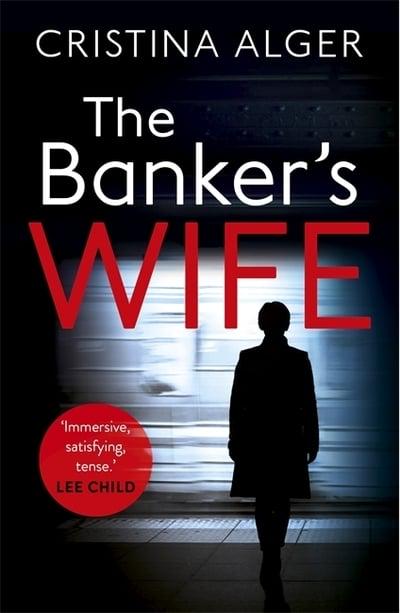
Banker’s Wife: The addictive

(2019) Annabel’s husband Matthew has just died in a plane crash. But was it really an accident or is there more to the story?

Marina’s boss has asked for her help on one last investigation – an exposé of a huge banking scandal. Shortly after, he is found murdered in his home.

Two women who have lost so much.

Two women with so much more to lose.

Two women who will stop at nothing to find out the truth.