Kalaam Gamiil Vol. 1

(2010) A new intermediate course that introduces students of Modern Standard Arabic to the most widely spoken and understood spoken dialect Based on the cumulative experience of three leading teachers of Arabic as a foreign language, Kalaam Gamiil builds and develops communicative skills in Egyptian Colloquial Arabic, along parallel tracks of vocabulary and grammar. It is designed for students who have reached the lower intermediate level of Modern Standard Arabic and are now ready to branch out into their first experience of a major spoken dialect. Structured around basic topics that crop up in daily conversations, lessons each include a situation, a vocabulary list, preparatory sentences using the new vocabulary items, explanations of grammar in English, cultural information, and a variety of mechanical drills and communicative exercises. The book, volume one of a two-part series, focuses on the speaking and listening skills that will enable intermediate students to handle a variety of uncomplicated communicative tasks with native speakers of Egyptian Arabic successfully. Volume two is scheduled to be published in 2010.

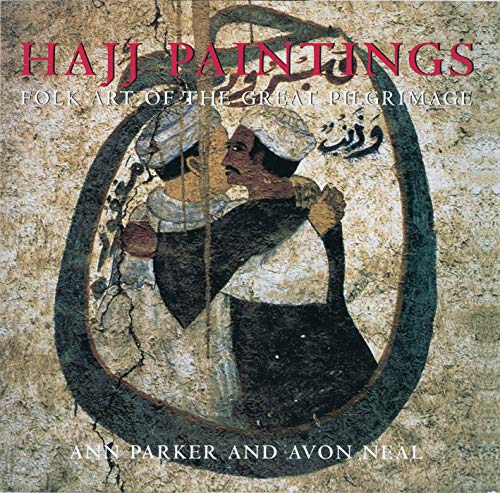
Hajj Paintings

Since the seventh century, the Hajj, or Great Pilgrimage to Mecca, has been a lifelong goal of devout Muslims throughout the world. Egyptian pilgrims traditionally celebrate their sacred journey by commissioning a local artist to depict their religious odyssey on the walls of their homes. Hajj Paintings is the first visual record of the richness and variety of this naive art form.

Al-kitab Al-asasi Volume 3

This three-part course in Modern Standard Arabic for non-native speakers approaches the language through a series of themed topics―daily life in the Arab world, politics and governance, literature and the arts, science and medicine, astronomy―concentrates principally on listening and speaking skills. In each section, vocabulary is built up as various linguistic structures and strategies are introduced and practiced in a clear introduction to Arabic grammar. A CD accompanies Volume 1, and a supplementary dictionary, al-Mu‘jam al-musa‘id, gives a complete key to the vocabulary of all three books in four languages: English, French, German, and Spanish. Comprehensive and easily digestible, varied and informative, these books make an ideal basis for a classroom-based course in Arabic anywhere in the world.

Al-kitab Al-asasi Volume 1

This three-part course in Modern Standard Arabic for non-native speakers approaches the language through a series of themed topics?¢daily life in the Arab world, politics and governance, literature and the arts, science and medicine, astronomy?¢concentrates principally on listening and speaking skills. In each section, vocabulary is built up as various linguistic structures and strategies are introduced and practiced in a clear introduction to Arabic grammar. A CD accompanies Volume 1, and in addition to a full glossary of vocabulary items at the end of each volume (with meanings in both English and French), a supplementary dictionary, al-Mu?¢jam al-musa?¢id, gives a complete key to the vocabulary of all three books in four languages: English, French, Spanish, and German. Comprehensive and easily digestible, varied and informative, these books make an ideal basis for a classroom-based course in Arabic anywhere in the world.

Kallimni ‘Arabi fi Kull Haaga

Drawing on her years of experience as an Arabic instructor and course developer, Samia Louis has used a functional approach to create a bright, innovative coursebook for the study of Egyptian colloquial Arabic – the spoken dialect most frequently studied and most widely understood in the Arab world. Designed according to the ACTFL guidelines for teaching Arabic as a foreign language, in ten highly structured lessons Kallimni Arabi trains students in the crucial skills, with particular emphasis on listening and speaking. The accompanying audio CD carries recordings of the dialogues and exercises in each chapter, made by Egyptian native speakers. From the basics of communicating (asking directions, the language of shopping) to more advanced conversations (future plans, hobbies and free time), Kallimni Arabi is structured so that students learn Egyptian Arabic using real-life situations and expressions. The key topics covered gradually lead students to understand, use, and speak Arabic, rather than simply memorize fixed phrases. Kallimni Arabi is aimed at students with some ability to read and write Arabic, who have had the equivalent of 30 hours of a beginner Colloquial Arabic class or 40 hours of a Modern Standard Arabic program.

Kallimni ‘Arabi Mazboot

Drawing on her years of experience as an Arabic instructor and course developer, Samia Louis has used a functional approach to create a bright, innovative coursebook for the study of Egyptian colloquial Arabic – the spoken dialect most frequently studied and most widely understood in the Arab world. Designed according to the ACTFL guidelines for teaching Arabic as a foreign language, in ten highly structured lessons “Kallimni Arabi” trains students in the crucial skills, with particular emphasis on listening and speaking. The accompanying audio CD carries recordings of the dialogues and exercises in each chapter, made by Egyptian native speakers. From the basics of communicating (asking directions, the language of shopping) to more advanced conversations (future plans, hobbies and free time), “Kallimni Arabi” is structured so that students learn Egyptian Arabic using real-life situations and expressions. The key topics covered gradually lead students to understand, use, and speak Arabic, rather than simply memorize fixed phrases. “Kallimni Arabi” is aimed at students with some ability to read and write Arabic, who have had the equivalent of 30 hours of a beginner Colloquial Arabic class or 40 hours of a Modern Standard Arabic program.

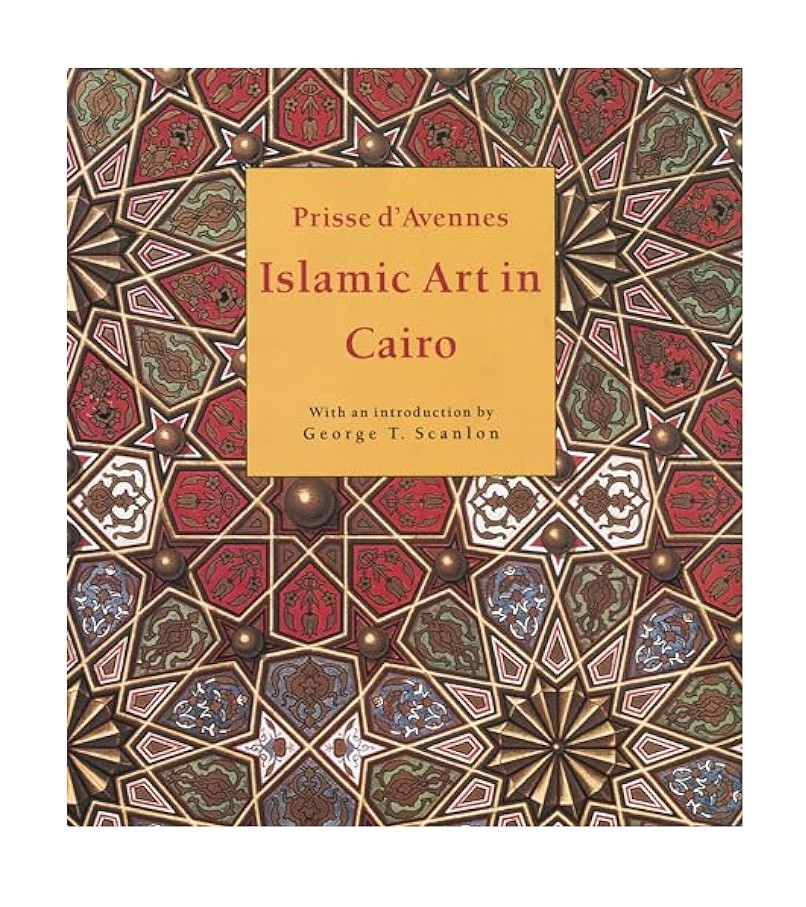
Islamic Art in Cairo

In 1827, a brilliant young French engineer and draftsman arrived in Alexandria at the start of a long and fruitful love affair with Egypt and its art, both ancient and contemporary. Emile Prisse dAvennes (1807-79) spent a total of nineteen years in Egypt, traveling throughout the country to collect the stunning images that he later published in Paris in two collections, Atlas de lhistoire de lart egyptien and LArt arabe. It is the illustrations from the latter that make up this volume. Prisses masterly renderings of Cairos mosques and their decorations more than retain their impact today: they still have the power to amaze and delight, while at the same time carrying valuable historical and artistic information for specialists studying Islamic art and architecture. As Professor George Scanlon says in his Introduction to the volume: For those passionate about the Islamic legacy of Egypt may they admire and stand grateful.

World of Islamic Art

Modern Standard Arabic Grammar

In a compact, easy-to-use format, this new book offers a convenient guide to grammar for any student of Modern Standard Arabic (MSA), the version of Arabic most commonly used in journalism, formal writing, and litera-ture. Drawing on over a decade of experience as a full-time teacher of Arabic, Azza Hassanein explains the rules in straight-forward English, illustrating usage with examples throughout. The book covers all the rules of grammar and morphology that students require for elementary, intermediate, and advanced levels of Arabic. As a compact guide, it is an ideal auxiliary, no matter what textbook the student is using. While students of the language will find Modern Standard Arabic Grammar extremely helpful, it is also a valuable tool for linguists who want to acquire a clear idea about the skeletal structure of the language, as well as translators who are working with written Arabic. Covering all the important grammatical rules of MSA, from nisba adjectives and nominal and verbal sentences to more complex constructions such as condi-tional sentences and the subjunctive, this unique handbook fills a real need for the growing number of people worldwide learning Arabic.

Beyond the Exotic

Most manifestations, research has accepted stereotypical images of Muslim women, treating their outward such as veiling, as passive and oppressive. Muslim women have been depicted as different, and by exoticizing (orientalizing) them—or Islamic society in general—“they” have been dealt with outside of general women’s history and regarded as having little to contribute to the writing of world history or to the life of their sisters worldwide. By approaching widely used sources with different questions and methodologies, and by using new or little-used research (with much primary research), this book redresses these deficiencies. Scholars revisit and reevaluate scripture and scriptural interpretation; church records involving non-Muslim women of the Arab world; archival court records dating from the present back to the Ottoman period; and the oral and material culture and its written record, including art and architecture, oral history, textbooks, Sufi practices, and the politics of dress. By deconstructing the past, these scholars offer fresh perspectives on women’s roles and aspirations in Middle East societies. Contributors: Diane Apostolos-Cappadona, Sheila S. Blair, Randi Deguilhem, Mamoun Fandy, Richard Freeland, Fatima Zohra Guechi, Nelly Hanna, Howayda al-Harithy, Mervat F. Hatem, Bernard Heyberger, Valerie J. Hoffman, Haifaa Khalafallah, Ramadan al-Khowli, Patricia Mihaly Nabti, Lisa Pollard, Mona Russell, Elyse Semerdjian, Selçuk Aksin Somel, Amira El-Azhary Sonbol, Denise A. Spellberg, Barbara Freyer Stowasser, Judith E. Tucker, Fariba Zarinebaf, Madeline Zilfi. Amira Sonbol is professor of Islamic history, law, and society at Georgetown University.