Modernism on the Nile

(2019) Analyzing the modernist art movement that arose in Cairo and Alexandria from the late nineteenth century through the 1960s, Alex Dika Seggerman reveals how the visual arts were part of a multifaceted transnational modernism. While the work of diverse, major Egyptian artists during this era may have appeared to be secular, she argues, it reflected the subtle but essential inflection of Islam, as a faith, history, and lived experience, in the overarching development of Middle Eastern modernity. Challenging typical views of modernism in art history as solely Euro-American, and expanding the conventional periodization of Islamic art history, Seggerman theorizes a “constellational modernism” for the emerging field of global modernism. Rather than seeing modernism in a generalized, hyperconnected network, she finds that art and artists circulated in distinct constellations that encompassed finite local and transnational relations. Such constellations, which could engage visual systems both along and beyond the Nile, from Los Angeles to Delhi, were materialized in visual culture that ranged from oil paintings and sculpture to photography and prints. Based on extensive research in Egypt, Europe, and the United States, this richly illustrated book poses a compelling argument for the importance of Muslim networks to global modernism..

Rameses III, King of Egypt

Rameses III—often dubbed the “last great pharaoh”—lived and ruled during the first half of the twelfth century bc, a tumultuous time that saw the almost complete overthrow of established order in the eastern Mediterranean, and among Rameses’s achievements was the preservation of Egypt as a nation-state in the face of external assault. However, his reign also saw economic challenges, and increasing dissatisfaction, which culminated in the king’s own assassination.
This richly illustrated book is the latest in a series that aims to provide accounts of key figures in ancient Egyptian history that covers not only their life-stories but also their rediscovery and reception in modern times. Accordingly, it follows the king from his birth to his resurrection through modern research, describing the key events of the reign, his major monuments, and the people and events that led to these becoming once again known to the world.

King Tutankhamun by Zahi Hawwas

(2018) The most sumptuously illustrated book ever on the boy-king’s tomb The tomb of Tutankhamun, with its breathtaking treasures, remains the most sensational archaeological find of all time. This brilliantly illustrated volume takes the reader through Tutankhamun’s tomb room-by-room in the order that it was discovered and excavated by Howard Carter, illuminating the tomb’s most magnificent artifacts. Zahi Hawass imbues the text with his own inimitable flavor, imagining how the uncovering and opening of the tomb must have felt for Carter, and addressing some of the questions that most intrigue the public: Did Carter steal objects from the tomb? Why did he damage the king’s mummy?

Orientalist Lives

(2017) The colorful story of the nineteenth-century artists who traveled and painted the Middle East for an eager audience in Europe and America In one of the most remarkable artistic pilgrimages in history, the nineteenth century saw scores of Western artists heading to the Middle East. Inspired by the allure of the exotic Orient, they went in search of subjects for their paintings. Orientalist Lives looks at what led this surprisingly diverse and idiosyncratic group of men—and some women—to often remote and potentially dangerous locations, from Morocco to Egypt, the Levant, and Turkey. There they lived, worked, and traveled for weeks or months on end, gathering material with which to create art for their clients back in the drawing-rooms of Boston, London, and Paris. Based on his research in museums, libraries, archives, galleries, and private collections across the world, James Parry traces these journeys of cultural and artistic discovery. From the early pioneer David Roberts through the heyday of leading stars such as Jean-Léon Gérôme and Frederick Arthur Bridgman, to Orientalism’s post-1900 decline, he describes how these traveling artists prepared for their expeditions, coped with working in unfamiliar and challenging surroundings, engaged with local people, and then took home to their studios the memories, sketches, and collections of artifacts necessary to create the works for which their audiences clamored. Excerpts from letters and diaries, including little-known accounts and previously unpublished material, as well as photographs, sketches, and other original illustrations, bring alive the impressions, experiences, and careers of the Orientalists and shed light on how they created what are now once again recognized as masterpieces of art.

Hassan Fathy An Architectural

(2018) A beautifully illustrated study of the life and times of the legendary Egyptian architect This fully illustrated volume represents the most comprehensive examination yet of the life and work of the great Egyptian architect Hassan Fathy (1900–89), and the regional and international significance of his contribution to the lived environment. Eleven Egyptian and international scholars reveal the man, his milieu, his goals and his passions, his concept of social living and his fight for a humane model for affordable housing in tune with the environment, the application of these concepts in his numerous plans and buildings, his relations with the establishment, the extent of his influence, and the lasting legacy of his completed projects. Generously illustrated with archival and color photographs and the architect’s own distinctive and beautifully decorated gouache plans and elevations, many never previously published. Contributors: Leila el-Wakil, Camille Abele, Jo Abram, Rémi Baudou, Ahmad Hamid, Nadia Radwan, Samir Radwan, Ola Seif, Jessica Stevens-Campos, Mercedes Volait, Nicholas Warner.

The Great Book of Ancient Egypt: Italian Edition

In this superbly illustrated volume, distinguished Egyptologist Zahi Hawass guides readers through the architectural landscape of pharaonic Egypt, from the houses and palaces of the living to the temples of the gods to the tombs of the dead.
Hundreds of color photographs and a compelling text unveil the mysteries of ancient Egypt as unearthed through major excavations, revealing fresh insight into how the ancient Egyptians lived, how they prepared for death, and how they perceived their own place within the universe. The Great Book of Ancient Egypt takes readers on a tour of the most important sites of ancient Egypt from the Pyramids of Giza to the Valley of the Kings to Abu Simbel. It recounts the history of the most famous kings and queens and sheds light on the everyday lives of the people.
Hawass shares details of his personal archaeological adventures and reveals his own sense of awe of the magic and mystery of the pharaohs. Through his narrative, accompanied by a wealth of outstanding photographs, readers will learn little-known facts about the lives of the people and royalty of ancient Egypt.

The Lady of Zamalek

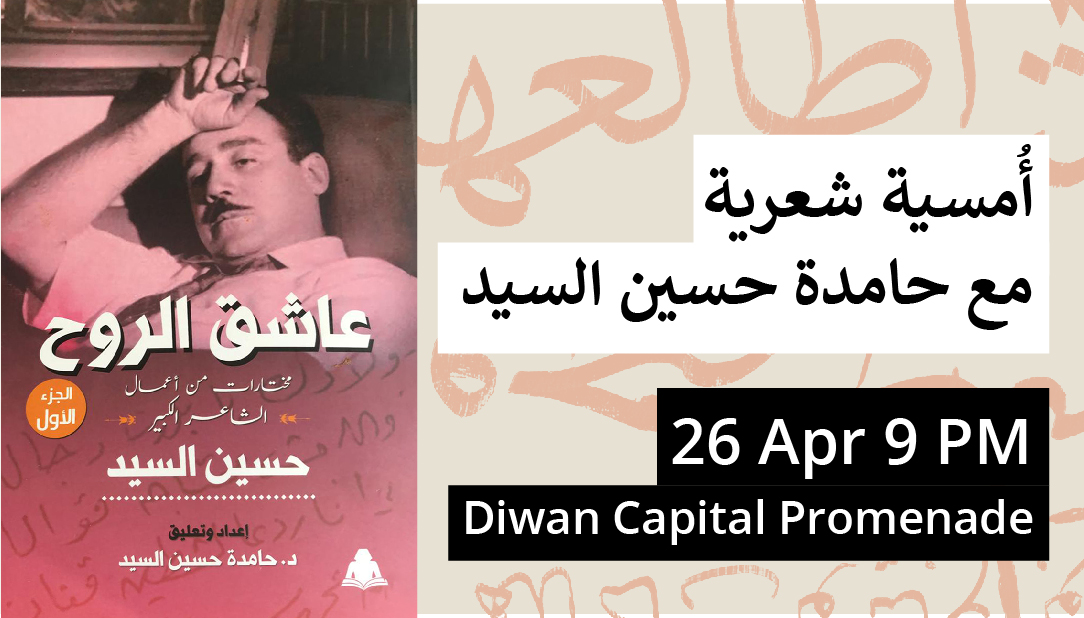
أُمسية شعرية مع حامدة حسين السيد

Becoming Supernatural

Apology

(2019) One of the most shatteringly brilliant books I have read. As soon as I finished it, I read it again, and again, and again’ Decca Aitkenhead, Sunday Times ‘A masterpiece. Truly one of the most courageous and original works of our time’ Naomi Klein ‘One of the most original and profound books of the decade’ Johann Hari Like millions of women, Eve Ensler has been waiting much of her lifetime for an apology. Sexually and physically abused by her father, Eve has struggled her whole life from this betrayal, longing for an honest reckoning from a man who is long dead. After years of work as an anti-violence activist, she decided she would wait no longer; an apology could be imagined, by her, for her, to her. The Apology, written by Eve from her father’s point of view in the words she longed to hear, attempts to transform the abuse she suffered with unflinching truthfulness, compassion and an expansive vision for the future.