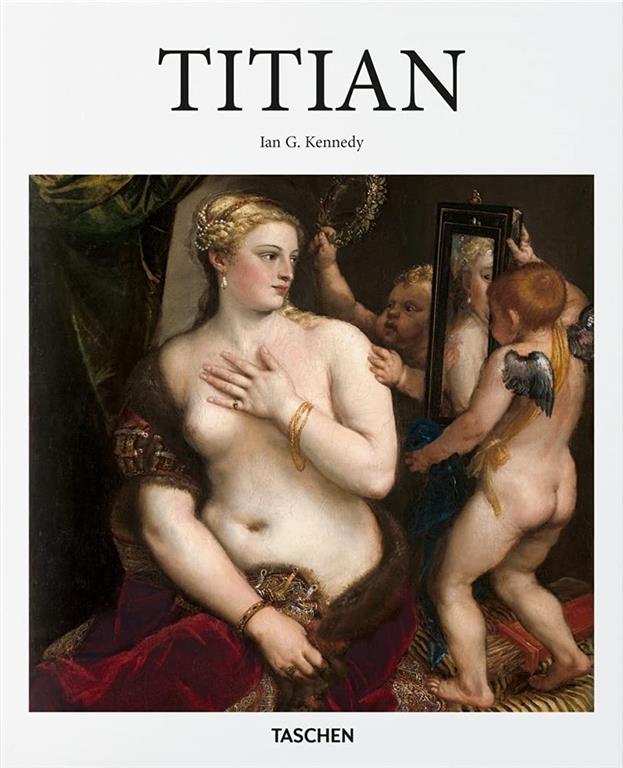
Titian

(2017) Immerse yourself in the rich shades and textures of Tiziano Vecellio (c. 1488-1576), commonly known as Titian, and the figurehead of 16th-century Venetian painting. With his bold approach to form and startling, opulent colors, Titian worked with a number of prestigious commissions and left behind an astonishing repertoire of portraits, mythological scenes, altarpieces, and landscapes that remains one of the most important legacies of Renaissance art. This dependable artist introduction traces Titian’s complete career and its trailblazing influence on successive generations of artists, from Diego Velazquez to van Dyck. From the rippling sensuality of Venus of Urbino (c. 1488-1576) to the airborne dynamism of Bacchus and Ariadne (1520-1523), all the major works are here, charting the artist’s stylistic experimentation over time as well as his consistent and unique ability to work across genres and to bring a defining new level of emotional and spiritual aspect to his subjects. “Titian has the finest talent and a very pleasant, vivacious manner.” – Michelangelo
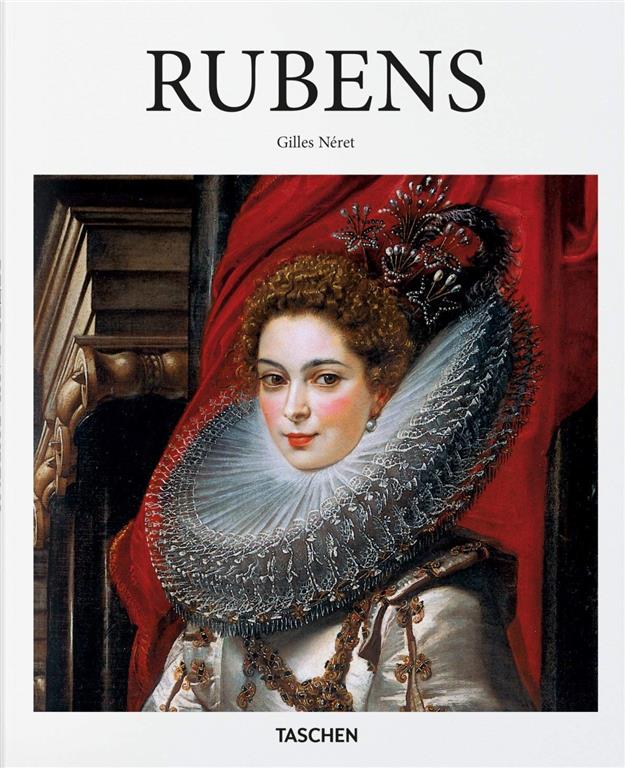
Rubens

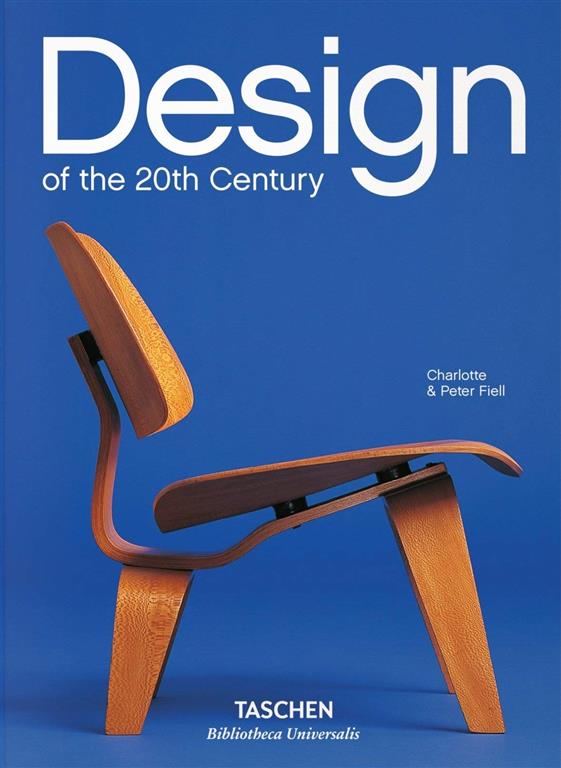
Design of the 20th Century (25)

Blaue Reiter (Basic Art Series 2.0)

(2016) Although it only lasted three turbulent years, the afterburn of the Blaue Reiter (1911-1914) movement exerted a tremendous influence on the development of modern European art. Named after a Kandinsky painting, The Blue Rider, this loose band of artists, grouped around Russian emigre Wassily Kandinsky and German painter Franz Marc, sought to reject establishment standards and charge into a new artistic unknown.Articulating spiritual values and concerns in an era of rapid industrialization, the artists of the Blaue Reiter were connected by a shared interest in painting, woodcuts, and prints, as well as the symbolic values of color and spontaneous approaches to artwork. Key pieces such as Franz Marc’s Blue Horse I (1911), Kandinsky’s Picture with a Black Arch (1912), and August Macke’s Woman in a Green Jacket (1913) reveal varying subjects, but all channel distorted perspectives, crude lines, and an emphatic, expressionist use of color.The Blaue Reiter was abruptly truncated by the onset of the First World War, which killed two of its leading artists, along with growing dissent between the group’s protagonists. This book reveals the movement’s remarkable influence despite its brevity, presenting key works, artists, and their reverberating effects.

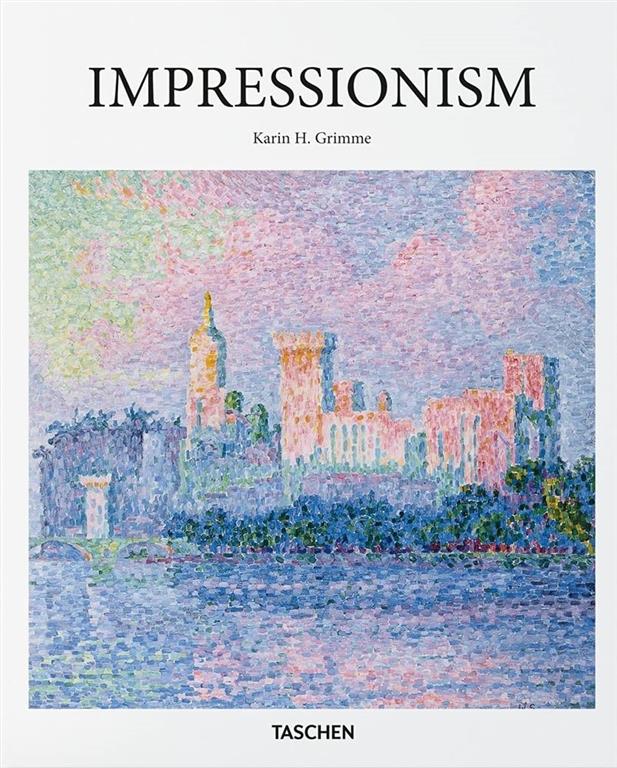
Impressionism

Degas

(2016) Dance class: The master of bodies in motionMost commonly associated with the birth of the Impressionist movement in mid-19th-century Paris, Edgar Degas (1834 1917) in fact defied easy categorization and instead developed a unique style, strongly influenced by Old Masters, the body in motion, and everyday urban life.The elder scion of a wealthy family, Degas cofounded a series of exhibitions of Impressionist art, but soon disassociated himself from the group in pursuit of a more realist approach. His subjects centered on the teeming, noisy streets of Paris, as well as its leisure entertainments, such as horse racing, cabarets, and, most particularly, ballet. With often ambitious, off-kilter vantage points, his images of ballerinas numbered approximately 1,500 works, all deeply invested in the physicality and the discipline of dance.Through illustrations of Foyer de la Danse (1872), Musicians in the Orchestra (1872) and many more, this book provides an essential overview of the artist who resisted categorization but created a category of his own, a world of classical resonance, bold compositions, and an endless fascination with movement, which together produced some of the most striking and influential works of the era.About the series: Each book in TASCHEN s Basic Art series features: a detailed chronological summary of the life and oeuvre of the artist, covering his or her cultural and historical importance a concise biography approximately 100 illustrations with explanatory captions”

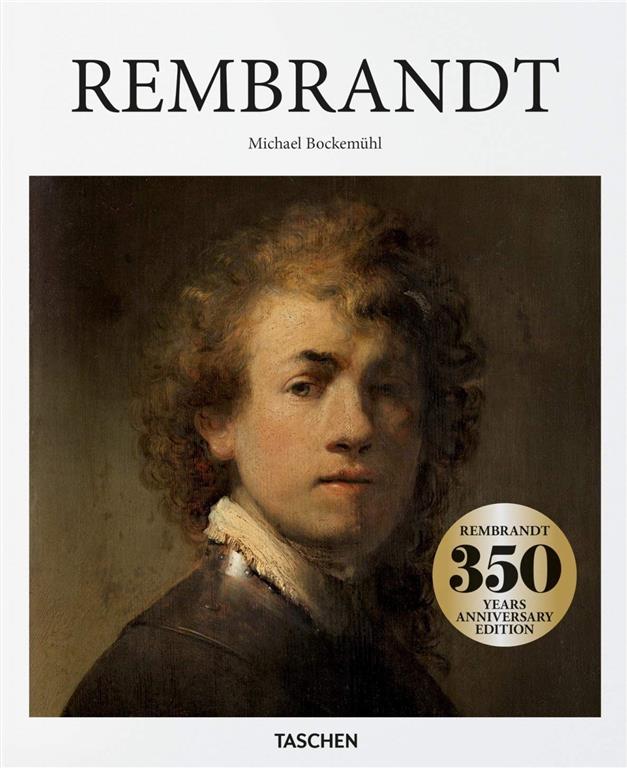
Rembrandt

(2016) Embrandt van Rijn (1606 1669) never left his homeland of the Netherlands but in his massive body of painting, drawing, and etching, he changed the course of Western art. His prolific oeuvre encompasses religious, historical, and secular scenes, as well as one of the most extraordinary series of portraits and self-portraits in history.

Rembrandt s work foregrounds texture, light, and acute observation. Like sudden, startling apparitions in a shadowy street, his subjects are illuminated against deep, dark backgrounds and rendered with immense physical as well as psychological scrutiny. Whether biblical or mythological figures, powerful patrons, or fellow citizens, each subject is bestowed not only with meticulous facial features but also with the intrigue of thoughts and feelings so that even time-old narratives such as the bible story of David and Bathsheba finds a new level of human drama. Rembrandt also left one of the most extensive series of self-portraits of any artist, chronicling his own face from his youth to the year of his death.

Rembrandt s rise coincided with the blossoming of the Dutch Golden Age, an era of prosperity in the Netherlands. He was encouraged by wealthy patrons, but was above all driven by a profound fascination with people. In this book, we tour some of Rembrandt s key paintings, etchings, and drawings to introduce his techniques, inspirations, and exceptional achievements. From the Baroque Belshazzar s Feast to the world-famous Night Watch we uncover a world of deep, rich tones, masterful draftsmanship, and a remarkable sensitivity for the human condition.

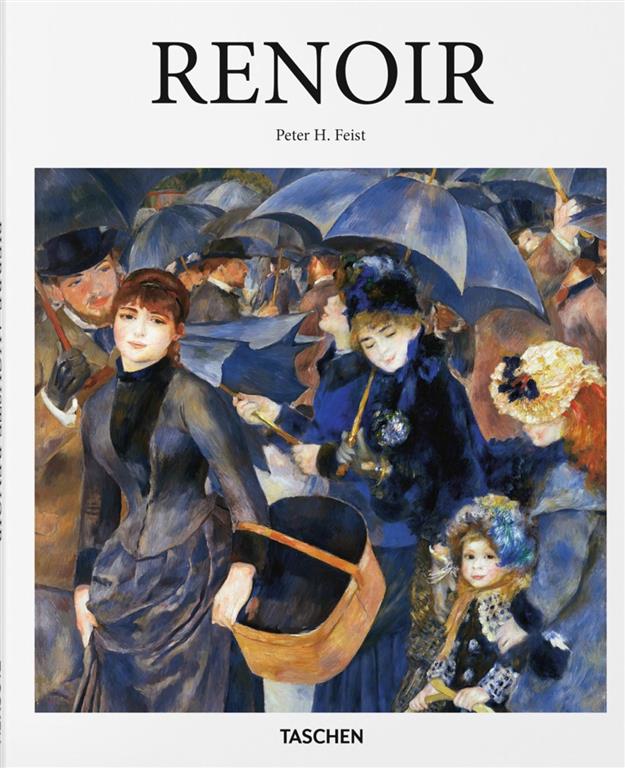
Renoir

(2016) Impressions of a sensualist: Painting life s pleasures

One of the leading lights of the Impressionist movement, Pierre-Auguste Renoir (1841 1919) remains a towering figure in art history with enduring public appeal. Sunbathed, charming, and sensual, his work shows painting at its most lighthearted and luminous, while championing the plein air and color innovations of his time.

Renoir s oeuvre was prolific, with some several thousand works in his lifetime. Much influenced by forerunners such as Courbet, Degas, Manet, Delacroix, he worked with contemporary peers such as Monet to explore fresh uses of color and brushwork, rendering texture and depth with different-hued daubs. Drawn to intimate and tender human scenes, his subjects include lovers, mothers, and numerous nudes.

As his career progressed, Renoir investigated different styles and techniques, shifting away from the feathery Impressionist touch to a more robust, classical corporeality, sometimes called his Ingres period, and later to monumental pieces such as The Bathers. From the abundant output of his lengthy career, this essential artist introduction selects key Renoir works to explore his innovations in the art of painting, as much as his traditions in pursuit of beauty, harmony, and the female form.

About the series:

Each book in TASCHEN s Basic Art series features:

a detailed chronological summary of the life and oeuvre of the artist, covering his or her cultural and historical importance

a concise biography

approximately 100 illustrations with explanatory captions

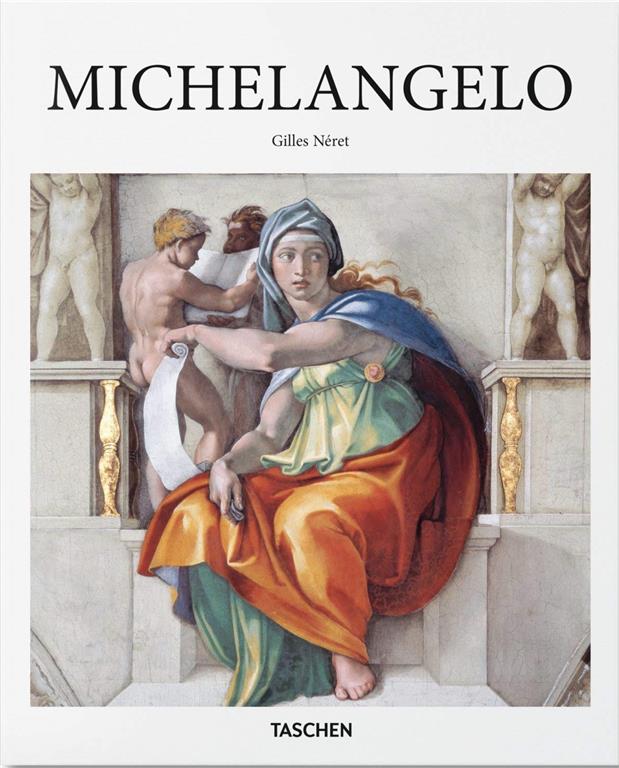
Michelangelo

(2016) Italian-born Michelangelo di Lodovico Buonarroti Simoni (1475 1564) was a tormented, prodigiously talented, and God-fearing Renaissance man. His manifold achievements in painting, sculpture, architecture, poetry, and engineering combined body, spirit, and God into visionary masterpieces that changed art history forever. Famed biographer Giorgio Vasari considered him the pinnacle of Renaissance achievement. His peers called him simply Il Divino ( the divine one ).

This book provides the essential introduction to Michelangelo with all the awe-inspiring masterpieces and none of the queues and crowds. With vivid illustration and accessible texts, we explore the artist s extraordinary figuration and celebrated style of terribilità (momentous grandeur), which allowed human and biblical drama to exist in compelling scale and fervor. Through the power hubs of Renaissance Italy, we take in his major commissions and phenomenal capacity for compositional schemes, whether the famous Medici library in Florence, or the extraordinary 500-square-meter ceiling (1508 1512) in the Vatican s Sistine Chapel.

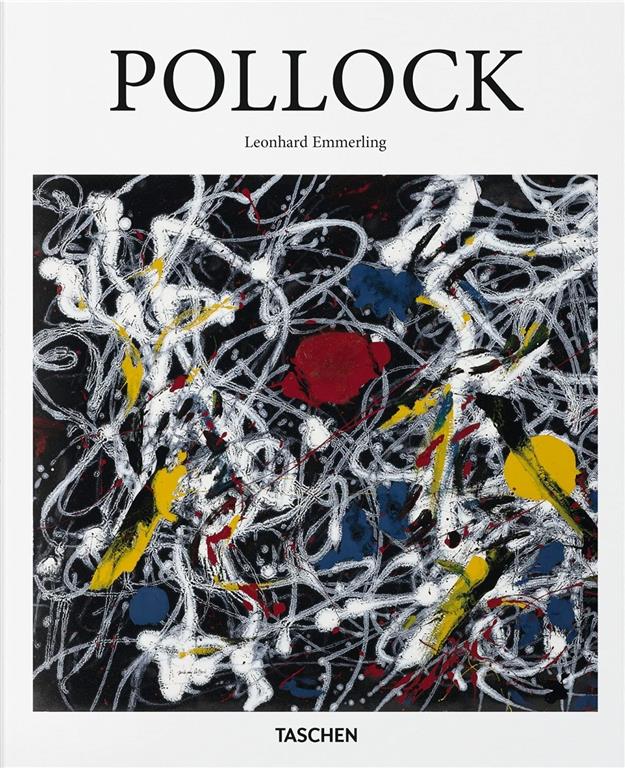
Pollock

(2016) Painting as a concept: The oft-misunderstood work of a brilliant artistA tragic icon of Abstract Expressionism, Jackson Pollock (1912 1956) took influences from Picasso and Mexican surrealism and developed his own way of seeing, interpreting, and expressing. Though his name inevitably conjures up images of the drip paintings for which he is most famous, this technique was only developed midway through his career. The progression from his earlier work to his final action paintings a veritable revolution of painting as a concept reveals the genius of this tortured artist whom many call the greatest modern American painter.About the series: Each book in TASCHEN s Basic Art series features: a detailed chronological summary of the life and oeuvre of the artist, covering his or her cultural and historical importance a concise biography approximately 100 illustrations with explanatory captions”