

Archives


(2018) Concrete? That characterless stuff of parking lots or Communist tower blocks, right? Well, yes. And no. Concrete is actually a name applied to a remarkably wide range of building substances, and, when properly handled, is one of the noble materials of contemporary architecture. A kind of “liquid stone” at the outset, it is malleable, durable, and capable of prodigious feats of engineering.
This Bibliotheca Universalis edition highlights the best work done in concrete of recent years. It includes such stars as Zaha Hadid, Herzog & de Meuron, and Steven Holl, but also surprising new architects like the Russians SPEECH and artists such as James Turrell, who turned the famous concrete spiral of Frank Lloyd Wright’s Guggenheim in New York into the setting of one of his most remarkable pieces.



(2017) The wooden structures of the 21st century Not so very long ago, some might have considered wood a material of the past, long since replaced by more modern components such as concrete and steel. The truth is radically different. Bolstered by new manufacturing techniques and ecological benefits, wood has seen a fabulous resurgence in contemporary construction. This Bibliotheca Universalis edition explores how architects around the world have created and invented with this elementary material. Featuring follies, very large buildings, and ambitious urban renewal schemes, it celebrates the diverse deployment of wood by architects around the world. We see how wood can at once transform urban spaces, as in the Metropol Parasol in Seville by Jurgen Mayer H., and allow for sensitive interventions in natural environments, such as at the Termas Geometricas Hot Springs Complex in Pucon, Chile, by German del Sol. True to all TASCHEN architecture titles, the book pays tribute to many emerging international talents as well as to such renowned figures as Tadao Ando to Renzo Piano. It celebrates each architect s vision and innovation, as well as investigating the techniques, trends, and principles that have informed their work with wood. It examines the computer guided milling that has allowed for novel new forms, the responsible harvesting that allows wood to align with our environmental concerns, and, above all, wood s enduring appeal to our senses and psyche, comforting hectic modern lives with a sense of Arcadian simplicity.About the series: Bibliotheca Universalis Compact cultural companions celebrating the eclectic TASCHEN universe at an unbeatable, democratic price!Since we started our work as cultural archaeologists in 1980, the name TASCHEN has become synonymous with accessible, open-minded publishing. Bibliotheca Universalis brings together nearly 100 of our all-time favorite titles in a neat new format so you can curate your own affordable library of art, anthropology, and aphrodisia.Bookworm s delight never bore, always excite!Text in English, French, and German”

(2015) Gaudi s ravishing symbiosis between built environment and natural world
From the towering Sagrada Famيlia to the shimmering, textured facade of Casa Batllَ and the enchanting landscape of Park Güell, it s easy to see why Antoni Gaudي (1852 1926) gained the epithet God s architect . With fluid forms and mathematical precision, his work extols the wonder of natural creation: columns soar like tree trunks, window frames curve like flowering branches, and ceramic tiling shimmers like scaly, reptilian skin.
With this outstanding attention to natural detail, his inspirations from both neo-Gothic and Orientalist aesthetics, and a lifelong commitment to Catalan identity, Gaudي created a unique brand of the Modernista movement which transformed, and defines, Barcelona s cityscape.
With seven of Gaudي s projects listed as UNESCO World Heritage Sites, this book introduces the architect s extraordinary vision and unique legacy, exploring the influences and the details which allow his buildings to impress, inspire, and amaze, one century after their construction.
About the Series:
Each book in TASCHEN s Basic Architecture series features: an introduction to the life and work of the architect
the major works in chronological order
information about the clients, architectural preconditions as well as construction problems and resolutions
a list of all the selected works and a map indicating the locations of the best and most famous buildings
approximately 120 illustrations (photographs, sketches, drafts and plans)
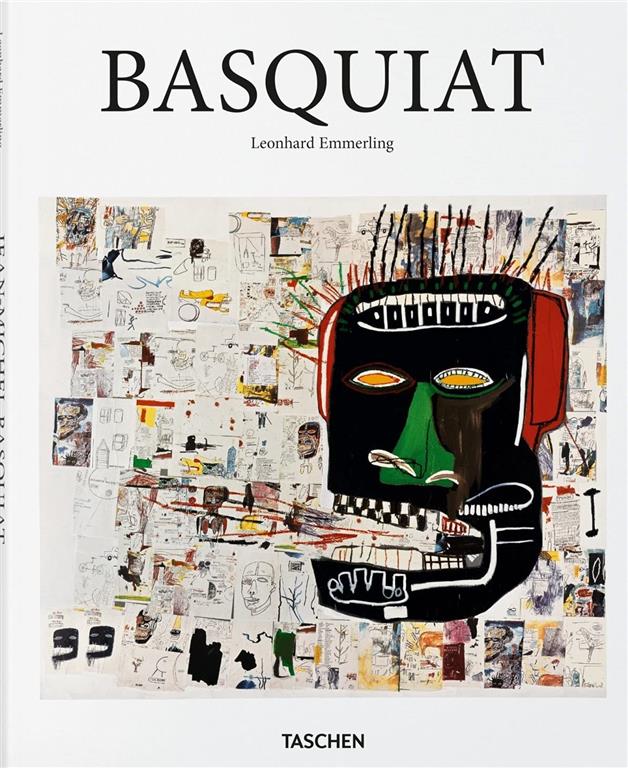
(2015) An icon of 1980s New York, Jean-Michel Basquiat (1960-1988) first made his name under the graffiti tag “SAMO,” before establishing his studio practice and catapulting to fast fame at the age of 20. Although his career lasted barely a decade, he remains a cult figure of artistic social commentary, and a trailblazer in the mediation of graffiti and gallery art. Basquiat’s work drew upon diverse sources and media to create an original and urgent artistic vocabulary, biting with critique against structures of power and racism. His practice merged abstraction and figuration, poetry and painting, while his influences spanned Greek, Roman, and African art, French poetry, jazz,and the work of artistic contemporaries such as Andy Warhol and Cy Twombly. The results are vivid, visceral mixtures of words, African emblems, cartoonish figures, daubs of bold color, and beyond. This book presents Basquiat’s short but prolific career, his unique style, and his profound engagement with ever-relevant issues of integration and segregation, poverty and wealth.