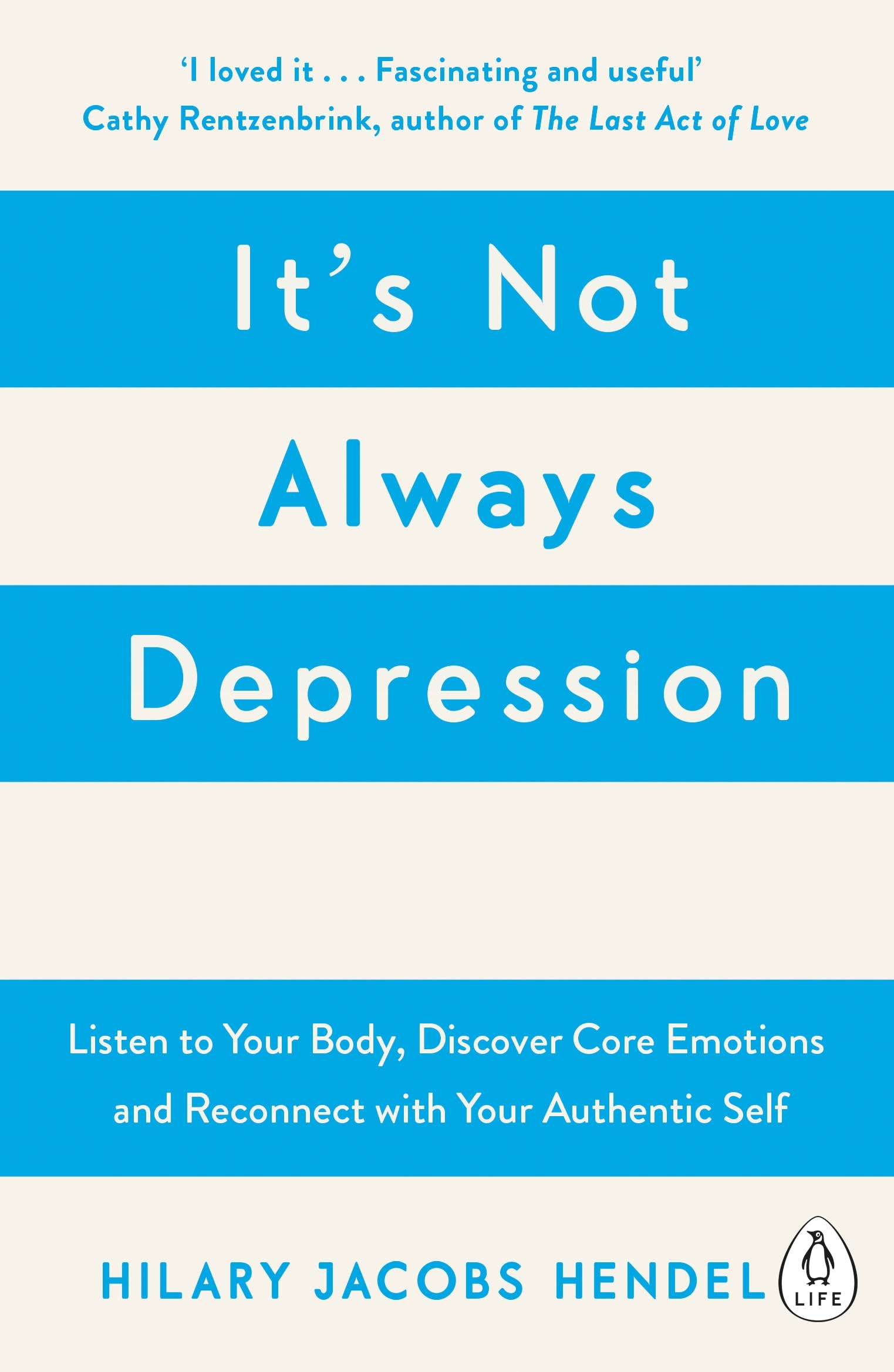
It’s Not Always Depression

(2018) ‘I loved it … I have drawn my own picture of the change triangle – both fascinating and useful’ – Cathy Rentzenbrink

We were all taught that our thoughts affect our emotions, but in truth it is largely the other way around: we have to experience our emotions to truly understand our thoughts, and our full selves. This is why we should think not only about cognitive behavioural therapy or medication, but also about our emotions, when addressing psychological suffering.

In It’s Not Always Depression, pioneering psychotherapist Hilary Jacobs Hendel reveals the most effective techniques for putting us back in touch with the emotions we too often deny – methods which can be used by anyone, any time, anywhere. Drawing on stories from her own practice, she sheds light on the core emotions (such as joy, sadness and fear), defences (anything we do to avoid feeling) and inhibitory emotions (anxiety, shame and guilt), and how understanding their interaction can help us return to mental well-being.

This is the basis of ‘accelerated experiential dynamic psychotherapy:’ it accelerates healing through having an emotional experience in the here and now. It allows you to reacquaint yourself with your feelings, to recover a more authentic self and to be more calm, curious and connected.

Examined Life

(2014) This book is about learning to live.

In simple stories of encounter between a psychoanalyst and his patients, The Examined Life reveals how the art of insight can illuminate the most complicated, confounding and human of experiences.

These are stories about our everyday lives: they are about the people we love and the lies that we tell; the changes we bear, and the grief. Ultimately, they show us not only how we lose ourselves but how we might find ourselves too.

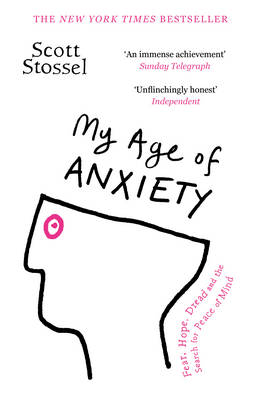
My Age of Anxiety

2014 THE NEW YORK TIMES BESTSELLER

As recently as thirty-five years ago, anxiety did not exist as a diagnostic category. Today, it is the most common form of officially classified mental illness. Scott Stossel gracefully guides us across the terrain of an affliction that is pervasive yet too often misunderstood.

Drawing on his own long-standing battle with anxiety, Stossel presents an astonishing history, at once intimate and authoritative, of the efforts to understand the condition from medical, cultural, philosophical and experiential perspectives. He ranges from the earliest medical reports of Galen and Hippocrates, through later observations by Robert Burton and S?ren Kierkegaard, to the investigations by great nineteenth-century scientists, such as Charles Darwin, William James and Sigmund Freud, as they began to explore its sources and causes, to the latest research by neuroscientists and geneticists. Stossel reports on famous individuals who struggled with anxiety, as well as the afflicted generations of his own family. His portrait of anxiety reveals not only the emotion’s myriad manifestations and the anguish it produces, but also the countless psychotherapies, medications and other (often outlandish) treatments that have been developed to counteract it. Stossel vividly depicts anxiety’s human toll – its crippling impact, its devastating power to paralyse – while at the same time exploring how those who suffer from it find ways to manage and control it.

My Age of Anxiety is learned and empathetic, humorous and inspirational, offering the reader great insight into the biological, cultural and environmental factors that contribute to the affliction.

Guns, Germs and Steel

This book answers the most obvious, the most important, yet the most difficult question about human history: why history unfolded so differently on different continents. Geography and biography, not race, moulded the contrasting fates of Europeans, Asians, Native Americans, sub-Saharan Africans, and aboriginal Australians. An ambitious synthesis of history, biology, ecology and linguistics, Guns, Germs and Steel is one of the most important and humane works of popular science.

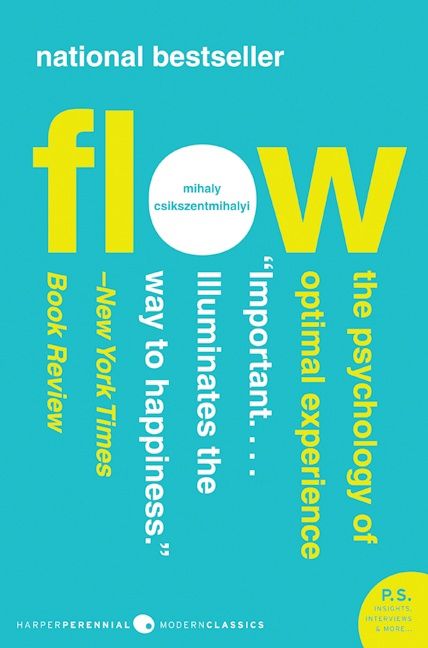
Flow

(2008) Psychologist Mihaly Csikszentmihalyi’s famous investigations of “optimal experience” have revealed that what makes an experience genuinely satisfying is a state of consciousness called flow. During flow, people typically experience deep enjoyment, creativity, and a total involvement with life. In this new edition of his groundbreaking classic work, Csikszentmihalyi (“the leading researcher into ‘flow states’” —Newsweek) demonstrates the ways this positive state can be controlled, not just left to chance. Flow: The Psychology of Optimal Experience teaches how, by ordering the information that enters our consciousness, we can discover true happiness and greatly improve the quality of our lives.

How to Talk So Teens Will List

Adele Faber and Elaine Mazlish examine the inevitable stresses faced by parents of teenagers. Through role play and discussion, they show how to keep communication open with rebellious offspring, how to let go gracefully and yet retain respect and some degree of co-operation throughout these difficult years.

Cairo Cosmopolitan

This is a new paperback edition of the first collected volume from the Cairo School of Urban Studies. Bringing together a distinguished interdisciplinary group of scholars, this volume explores what happens when new forms of privatization meet collectivist pasts, public space is sold off to satisfy investor needs and tourist gazes, and the state plans for Egypt’s future in desert cities while stigmatizing and neglecting Cairo’s popular neighborhoods. These dynamics produce surprising contradictions and juxtapositions that are coming to define today’s Middle East. The original publication of this volume launched the Cairo School of Urban Studies, committed to fusing political-economy and ethnographic methods and sensitive to ambivalence and contingency, to reveal the new contours and patterns of modern power emerging in the urban frame.

Gypsies in Contemporary Egypt

(2017) A sociological study of Gypsies in modern-day Cairo and Alexandria Little is known about Egypt’s Gypsies, called Dom by scholars, but variously referred to by Egyptians as Ghagar, Nawar, Halebi, or Hanagra, depending on their location. Moreover, most Egyptians are oblivious to the fact that there are today large numbers of Gypsies dispersed from the outskirts of villages in Upper Egypt to impoverished neighborhoods in Cairo and Alexandria. In Gypsies in Contemporary Egypt sociologist Alexandra Parrs draws on two years of fieldwork to explore how Dom identities are constructed, negotiated, and contested in the specifically Egyptian national context. With an eye to the pitfalls and evolution of scholarly work on the vastly more studied European Roma, she traces the scattered representations of Egyptian Dom, from accounts of them by nineteenth-century European Orientalists to their portrayal in Egyptian cinema as belly-dancers in the 1950s and beggars and thieves more recently. She explores the boundaries—religious, cultural, racial, linguistic—between Dom and non-Dom Egyptians and examines the ways in which the Dom position themselves within the limitations of media discourses about them and in turn differentiate themselves from the dominant population. This interplay of attitudes, argues Parrs, sheds light on the values and markers of belonging of the majority population and the paradigms of nation-state formation at the governmental level. Based on extensive interviews with government workers and ordinary individuals in routine contact with the Dom, as well with Dom engaged in a variety of trades in Cairo and Alexandria, Gypsies in Contemporary Egypt is about the search for the fragments of identity of the Egyptian Dom.

Frankissstein

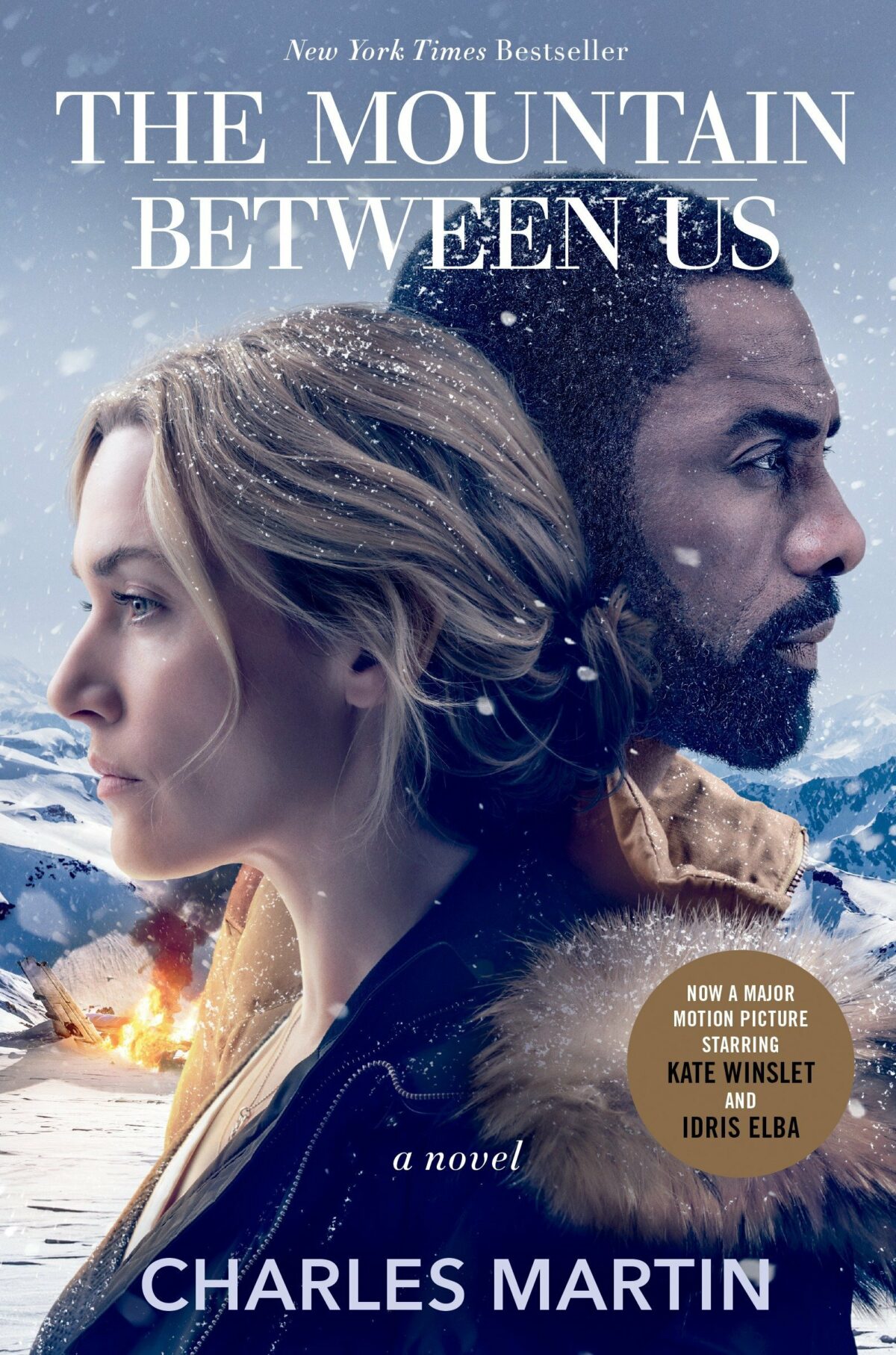
The Mountain Between Us