Life of Pi

“One boy, one boat, one tiger . . .

After the tragic sinking of a cargo ship, a solitary lifeboat remains bobbing on the wild, blue Pacific. The only survivors from the wreck are a sixteen-year-old boy named Pi, a hyena, a zebra (with a broken leg), a female orang-utan – and a 450-pound Royal Bengal tiger. The scene is set for one of the most extraordinary and best-loved works of fiction in recent years.”

Blizzard Besties

(2018) Vanesa Campos can’t wait for winter vacation. Skiing on the slopes, sipping hot cocoa . . . her week at Pinecloud Lodge promises to be cozy and perfect. And maybe she can make some new friends! Never mind that glamorous Beck writes off Vanesa right away; twins Emma and Eric are ready to join the fun out in the snow.

But when the flakes start falling, everything changes. Vanesa’s little brother, Hunter, might be stranded out in the blizzard! Vanesa will have to team up with all the kids — plus one giant dog — to rescue him. Can she save her brother and discover which real friends will weather the storm with her?

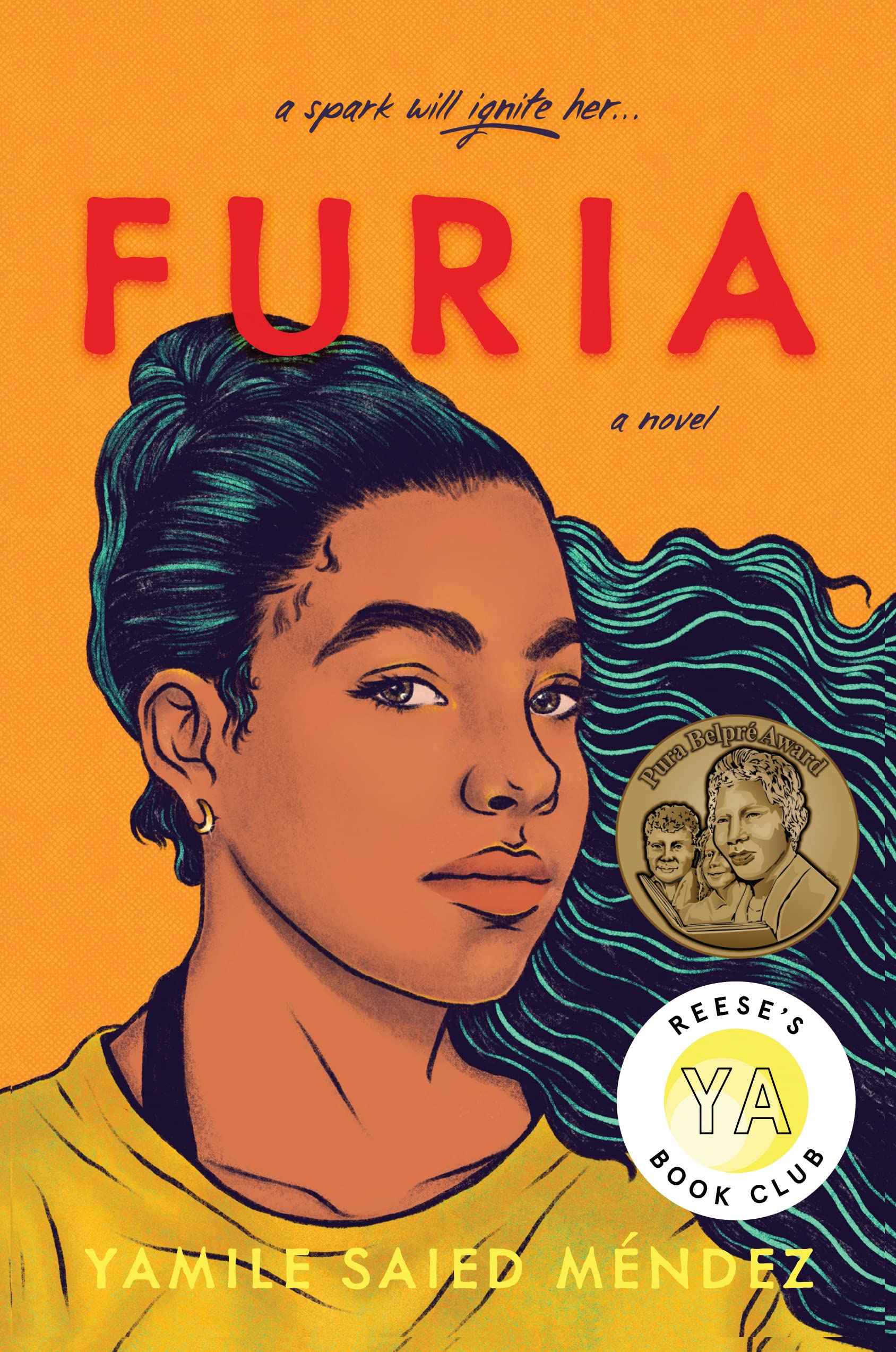
Furia

“At home, she is a careful daughter, living within her mother’s narrow expectations, in her rising-soccer-star brother’s shadow, and under the abusive rule of her short-tempered father.

On the field, she is La Furia, a powerhouse of skill and talent. When her team qualifies for the South American tournament, Camila gets the chance to see just how far those talents can take her. In her wildest dreams, she’d get an athletic scholarship to a North American university.

But the path ahead isn’t easy. Her parents don’t know about her passion. They wouldn’t allow a girl to play f?tbol—and she needs their permission to go any farther. And the boy she once loved is back in town. Since he left, Diego has become an international star, playing in Italy for the renowned team Juventus. Camila doesn’t have time to be distracted by her feelings for him. Things aren’t the same as when he left: she has her own passions and ambitions now, and La Furia cannot be denied. As her life becomes more complicated, Camila is forced to face her secrets and make her way in a world with no place for the dreams and ambition of a girl like her.

Filled with authentic details and the textures of day-to-day life in Argentina, heart-soaring romance, and breathless action on the pitch, Furia is the story of a girl’s journey to make her life her own.”

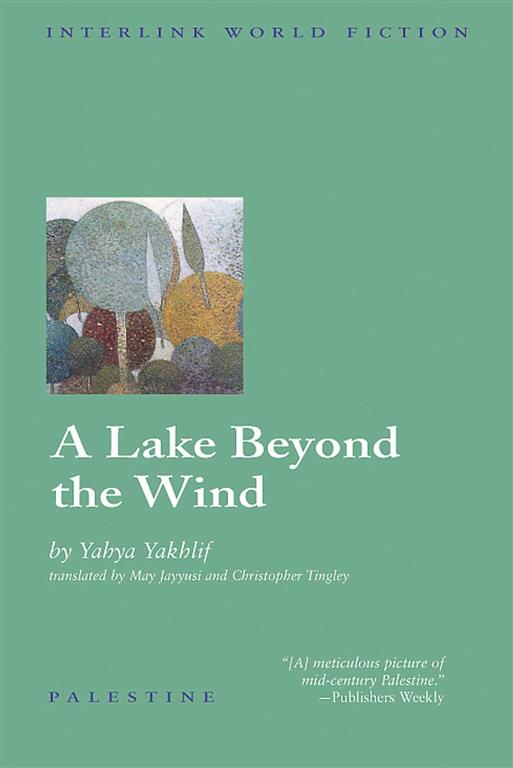
A Lake Beyond the Wind

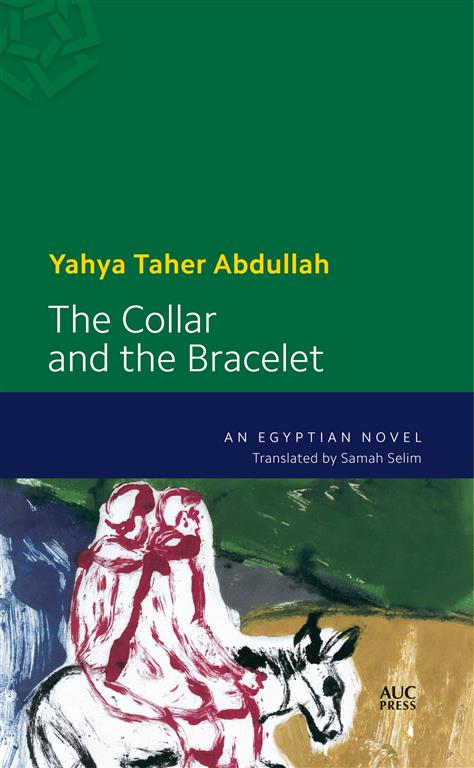
Collar and the Bracelet

(2013) Set in the ancient Upper Egyptian village of Karnak against the backdrop of the British campaigns in Sudan, the Second World War, and the war in Palestine, The Collar and the Bracelet is the stunning saga of the Bishari family—a family ripped apart by the violence of history, the dark conduits of human desire, and the rigid social conventions of village life. In a series of masterful narrative circles and repetitions, the novella traces the grim intrigues of Hazina al-Bishari and the inexorable destinies of her son, the exile and notorious bandit Mustafa, her daughter Fahima, tortured by guilt and secret passion, and the tragic doom of her beautiful granddaughter Nabawiya. Yahya Taher Abdullah’s haunting prose distills the rhythmic lyricism of the folk story and weaves it into a uniquely modernist narrative tapestry of love and revenge that beautifully captures the timeless pharaonic landscapes of Upper Egypt and the blind struggles of its inhabitants against poverty, exploitation, and time—themes that are echoed and amplified in the short stories included in this volume, which span the breadth of Abdullah’s tragically short career as one of Egypt’s most brilliant writers of modern fiction.

The Collar and the Bracelet

Egypt’s Housing Crisis The Shaping of Urban Space

Along with football and religion, housing is a fundamental cornerstone of Egyptian life: it can make or break marriage proposals, invigorate or slow down the economy, and popularize or embarrass a ruler. Housing is political. Almost every Egyptian ruler over the last eighty years has directly associated himself with at least one large-scale housing project. It is also big business, with Egypt currently the world leader in per capita housing production, building at almost double China’s rate, and creating a housing surplus that counts in the millions of units.
Despite this, Egypt has been in the grip of a housing crisis for almost eight decades. From the 1940s onward, officials deployed a number of policies to create adequate housing for the country’s growing population. By the 1970s, housing production had outstripped population growth, but today half of Egypt’s one hundred million people cannot afford a decent home.
Egypt’s Housing Crisis takes presidential speeches, parliamentary reports, legislation, and official statistics as the basis with which to investigate the tools that officials have used to ‘solve’ the housing crisis—rent control, social housing, and amnesties for informal self-building—as well as the inescapable reality of these policies’ outcomes. Yahia Shawkat argues that wars, mass displacement, and rural–urban migration played a part in creating the problem early on, but that neoliberal deregulation, crony capitalism and corruption, and neglectful planning have made things steadily worse ever since. In the final analysis he asks, is affordable housing for all really that hard to achieve?

Desert Songs

“Lababidi seems to have something other, and otherworldly, in mind. The poet crafts a mythic Egypt… a land abundant with connotation, fertile with image and nuance. Its mountains are an “imperishable memory of the desert/craniums exposed, crumbling horribly” and a “school of inscrutable sphinxes/master storytellers sworn to secrecy.” The desert “is a cemetery/picking its teeth with bones.”

Words are an imperfect tool with which the poet tries to reflect a spirit that is the poem’s true subject… Perhaps he will approach more closely the unreachable goal of mining the spirit that in his view masses beneath the surface of what a poet can directly observe or his words precisely describe.

Fever Dreams

(2011) Fever Dreams is a collection of poetry by Yahia Lababidi, with illustrations by John Tillson.

Yahia Lababidi is a Pushcart-nominated poet, aphorist and essayist with work appearing in such publications as AGNI, Harper’s, Rain Taxi, New Internationalist, and Philosophy Now. His work has also appeared in several anthologies, such as Geary’s Guide to the World’s Great Aphorists, where he is the only contemporary Arab poet featured, and the best-selling US college textbook, Literature: An Introduction to Reading and Writing. To date, Lababidi’s writing has been translated into Arabic, Slovak, Italian, Dutch, Swedish, Turkish and Spanish. He was chosen as a Juror for the 2012 Neustadt International Prize for Literature.

Lababidi’s first book Signposts to Elsewhere (Jane Street Press) was selected as a 2008 Book of the Year by The Independent, UK. His next book was a critically-acclaimed collection of twenty-one literary and cultural essays, Trial by Ink: From Nietzsche to Belly-dancing (Common Ground).?

Uzbekistan Silk & Gold: The Magnificent Art of Costume