Candygirl

(2012) فتاة الحلوى (English) From the author of Murder in the Tower of Happiness Trying to evade intelligence agencies out to assassinate him, the Cerebellum, an Egyptian scientist with a past association with the Iraqi nuclear program, rents a room on the roof of a brothel in a Cairo slum. His interaction with the other residents is limited; instead he spends most of his time in the virtual world, where he has a love affair with candygirl, a gorgeous avatar. On the other side of the planet, an ex-NSA agent has joined a secret organization whose mission is to assassinate Iraqi scientists. He does not allow his doubts about the legality—or the ethics—of his mission to interfere with his work. He chases his victim relentlessly, but when his top-of-the-line equipment fails to locate the Cerebellum in Cairo’s slums, he takes the chase to the virtual world.

Days in the Diaspora

(2012) ايام الشتات (English) The quest for identity of a Muslim Jewish Egyptian immigrant in 1960s Paris “How could a good Muslim boy like you be born into a Jewish family!” For Galal, forced to leave Egypt in the 1960s Jewish exodus with his family, the Diaspora has none of the beauty of a rich tapestry of history; it is a day-to-day struggle to fit into his new life in Paris, reconcile the conflicting demands of family and friends, and come to terms with who he is. The quest for belonging and identity is at the heart of this sensitive and tender narrative. Earthy, rambunctious supporting characters burst from the page, spontaneous, emotional, yet, for all their façade of confidence, no less adrift than Galal himself. Ruhayyim’s Paris of the 1960s is startlingly relevant: then, as now, religion offers an illusory source of community and identity for migrants to the west, not fitting in, yet cut off from their roots. Deeply personal, this unusual, uplifting coming-of-age novel takes us into the heart of an ordinary young man in the grip of an unforgiving historical moment.

Sayyid Qutb and the Origins of

A new biography of the founder of modern Islamist thought Sayyid Qutb (1906–66) was an influential Egyptian ideologue credited with establishing the theoretical basis for radical Islamism in the post-colonial Sunni Muslim world. lacking a pure understanding of his life and work, the popular media have conflated Qutb’s moral purpose with the aims of Bin Laden and al-Qaeda. He is often portrayed as a terrorist, Islamo-Fascist, and advocate of murder. This book rescues Qutb from misrepresentation, tracing the evolution of his thought within the context of his time, recounting Qutb’s life from the small village in which he was raised to his execution at the behest of Abd al-Nasser’s regime. His study remains sensitive to the cultural, political, social, and economic circumstances that shaped Qutb’s thought—major developments that composed one of the most eventful periods in Egyptian history. Only in response to his harrowing experience in prison did Qutb come to regard Islam and kufr (infidelity) as oppositional, antithetical, and therefore mutually exclusive. Calvert shows how Qutb repackaged and reformulated the Islamic heritage to pose a challenge to authority, including those who claimed (falsely, he believed) to be Muslim.

Heart of the Night

Nobel winning author, Naguib Mahfouz’s late-translated novella, Heart of the Night is now available for the first time in paperback

Jaafar Ibrahim Sayyed al-Rawi is guided by his motto, “let life be filled with holy madness to the last breath.” He narrates his life story to a friend during one long night in a café in old Cairo. Through a series of bad decisions, he has lost everything: his family, his position in society, and his fortune. A man driven by his passions, he married a beautiful Bedouin nomad for love, and as a consequence pays a punishingly high price. From a life of comfort with a promising future guaranteed by his wealthy grandfather, he descended to the spartan life of a pauper, after being disinherited. Jaafar faces his tribulations with surprising stoicism and hope, sustained by his strong convictions, his spirituality, his sense of mission, and his deep desire to bring social justice to his people.

Heart of the Night is a classic Mahfouz gem exploring marriage across class lines, spirituality, and the harsh realities of a precarious, life written by one of Egypt’s most celebrated literary masters.

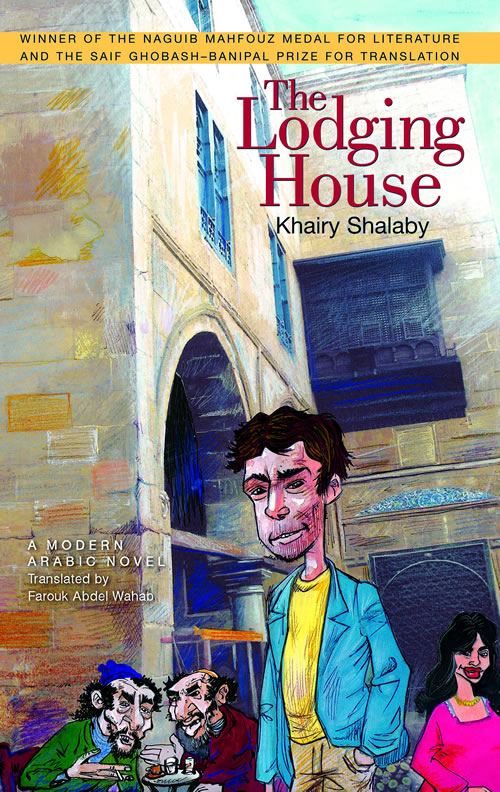
Lodging House

A young man’s dreams for a better future as a student in the Teachers’ Institute are shattered after he assaults one of his instructors for discriminating against him. From then on, he begins his descent into the underworld. Penniless, he seeks refuge in Wikalat ‘Atiya, a historic but now completely run-down caravanserai that has become the home of the town’s marginal and underprivileged characters. This award-winning novel takes on epic dimensions as the narrator escorts us on a journey to this underworld, portraying—as he sinks further into its intricate relationships—the many characters that inhabit it. Through a labyrinth of tales, reminiscent of the popular Arab tradition of storytelling, we are introduced to these denizens, whose lives oscillate between the real and the fantastic, the contemporary and the timeless. And while the narrator starts out as a spectator of these characters’ lives, he soon becomes an integral part of the lodging house’s community of rogues.

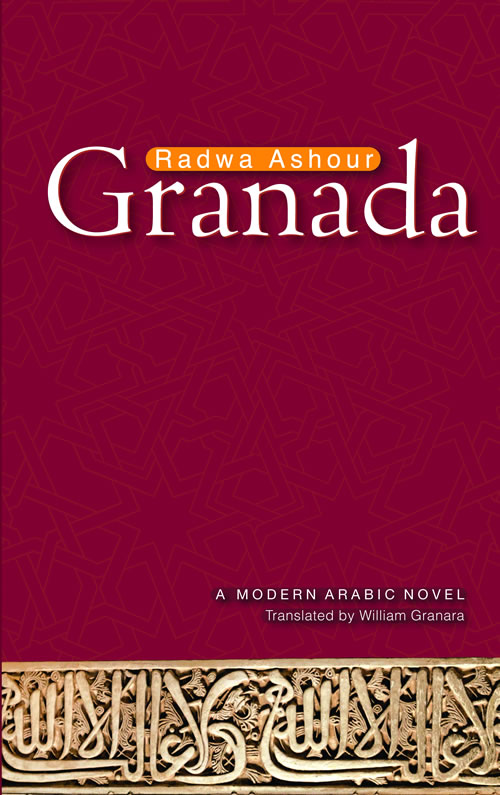
Granada

Radwa Ashour skillfully weaves a history of Granadan rule and an Arabic world into a novel that evokes cultural loss and the disappearance of a vanquished population. The novel follows the family of Abu Jaafar, the bookbinder, his wife, widowed daughter-in-law, her two children, and his two apprentices as they witness Christopher Columbus and his entourage in a triumphant parade featuring exotic plants and animals and human captives from the New World. Embedded in the narrative is the preparation for the marriage of Saad, one of the apprentices, and Saleema, Abu Jaafar’s granddaughter — a scenario that is elegantly revealed in a number of parallel scenes.

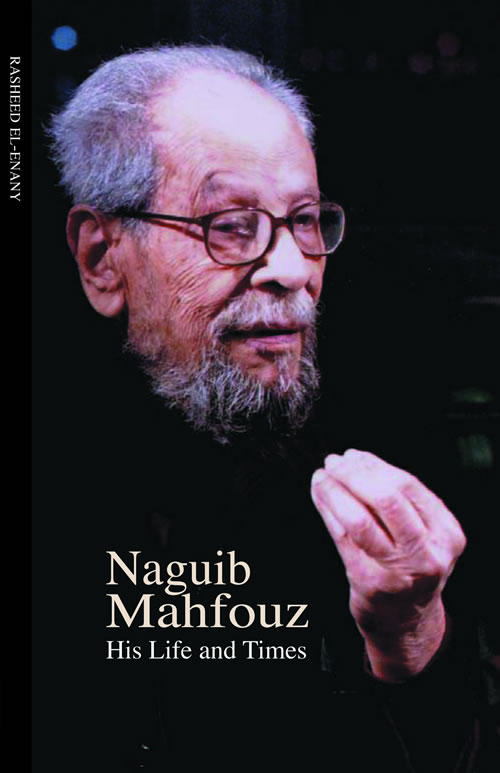
Naguib Mahfouz His Life and Time

Naguib Mahfouz (1911’2006) is the only Arab writer to have been awarded the Nobel prize for literature. In its citation for the Nobel prize, the Swedish Academy of Letters noted ‘through works rich in nuance’ “now clear-sightedly realistic, now evocatively ambiguous’ ” has formed an Arabic narrative art that applies to all mankind. The author of thirty-five novels, fifteen collections of short stories, twenty-five film screenplays, numerous critical works, and in his later years over five hundred short fictions based on his dreams (partly published as The Dreams and Dreams of Departure by the AUC Press in 2004 and 2007), he has been hugely influential on several generations of Arab writers, and his books are now read in more than forty languages around the world. In this first biography of Naguib Mahfouz in English, Rasheed El-Enany looks at the life of the man and the work of the writer, and assesses the oeuvre and legacy of a towering figure in the Egyptian and Arab literary world who was able to reach far beyond his own linguistic and cultural boundaries to an admiring readership across the globe.

Khan Al-Khalili

Khan Al-Khalili is a classic novel by the renowned Egyptian Nobel laureate Naguib Mahfouz, published in 1945. The novel is set in the bustling Khan Al-Khalili market in Cairo, Egypt, and follows the lives of several characters who work and live in the market.

The novel’s main character, Abbas, is a clerk in one of the shops in Khan Al-Khalili and is in love with a dancer named Hamida. However, Hamida is also courted by a wealthy businessman named Ibrahim Faraj, leading to a complex and riveting exploration of love, class, and tradition in Egyptian society.

Mahfouz’s masterful use of the setting of Khan Al-Khalili brings the market to life and immerses the reader in the vibrant atmosphere of Cairo. The novel has been translated into several languages and is considered a timeless classic of Egyptian literature.

Dreams of Departure

In this second collection of writing, based on his own dreams serialized in a Cairo magazine before his death in 2006, Egyptian Nobel laureate Naguib Mahfouz again displays his matchless ability to tell epic stories in uncannily terse form. As in the first volume (The Dreams, AUC Press, 2004), we meet more of the real (and unreal) figures that filled the author’s life with glory and worry, ecstasy and ennui, in tales dreamed by a mind too fertile to ever truly rest. In them, a man sent by a victorious invader to open a storehouse holding the statue of Egypt’s reawakening finds his access denied by a menacing reptile. An obscure writer dies, and a despairing inscription on his coffin turns his funeral into a massive demonstration. A man opens a stubborn gate to stare at a lake over which loom the illuminated faces of those he has loved, but who are no more—in search of the soul who made him long to live forever. The ever more condensed and poetic episodes in Dreams of Departure movingly carry on Mahfouz’s only major work after a knife attack in 1994 ironically inspired him to dream in print for his readers. NAGUIB MAHFOUZ was born in 1911 in the crowded Cairo district of Gamaliya. He wrote nearly 40 novel-length works, plus hundreds of short stories and numerous screenplays. He was awarded the Nobel Prize for Literature in 1988. He died in Cairo in 2006 at the age of 94. RAYMOND STOCK is writing a biography of Naguib Mahfouz. He is the translator of Naguib Mahfouz’s Voices from the Other World (2002), Khufu’s Wisdom (2003), The Dreams (2004), and The Seventh Heaven (2005), all published by the AUC Press.

Voices from the Other World

The forces of law and order disturb a district’s too-perfect peace at the dawn of Egyptian civilization. A wise and popular pharaoh is betrayed by his own son, and by his dearest friends – then makes a most peculiar decision. A mummy returns to life after three thousand years, to confront the arrogant new race that now rules the land. A favored prince flees to a faraway country when the king dies suddenly, leaving his true love behind – only to come back to question her about their forty lost years. A famous young writer, composer of a legendary epic of Pharaoh’s greatest battle with the Hittites, is carried off without warning by a mysterious disease – then speaks to us in this life from beyond the veil of death. Such are the tales that make up this volume of five masterly stories by the young Naguib Mahfouz, all inspired by the Egypt of the pharaohs. Like three novels set in ancient times that he also published early in his career, these stories reveal his wide reading of Egypt’s (and the world’s) oldest history and literature. All of these gems, however, are very much his own creations. Their voices speak with the familiar genius of Egypt’s greatest modern writer – though they call from a very different world than the one for which he is best known.